

Best baking sheets pans are not just about looks or price; they are about performance and reliability when pushed to the limits of repeated, real-world use. If you demand sheet pans that last a year of full-tilt commercial baking or relentless home roasting, choosing wisely makes the difference between a smart investment and constant disappointment.
Key Takeaways
- Heavy-gauge (16–18 gauge) aluminum or steel pans with rolled, reinforced rims consistently resist warping and outlast thin-gauge and most nonstick pans under heavy commercial use.
- Nonstick sheet pans offer easy release—especially for cookies—but typically lose flatness or coating effectiveness in 8-12 months of demanding cycles; always factor in replacement frequency.
- Care strategy (hand-wash vs dishwasher) and matching the pan’s surface/weight to your main use—roasting, cookies, or mixed—are crucial to stretching service life and baking success.
- Executive summary — which pans to buy for durability vs release
- Failure rates and warping after 1 year of heavy use
- What verified reviews praise most (materials & construction)
- What verified reviews complain about most (warping, coatings, handles, cleaning)
- Nonstick coatings — realistic longevity and failure modes
- Material and design choices that minimize warping (how to buy for longevity)
- Best sheet pans for roasting vs best cookie sheets — surface finish matters
- Maintenance and care — dishwasher vs hand-washing impact
- Heat-tolerance and warp-resistance chart
- Total cost of ownership, warranty & sustainability
- Testing protocol readers can replicate
- Recommended buys by use case with rationale
- Quick buyer checklist (1‑page decision flow)
- Conclusion
- FAQ
Executive summary — which pans to buy for durability vs release
Choosing the best baking sheets pans for high-frequency use means investing in pans resistant to warping, with longevity that matches your baking output. For commercial-grade durability, look for heavy-gauge 16–18 gauge pure aluminum, aluminum-steel blends, or aluminized steel with rolled and reinforced rims. If nonstick release is your top value, be realistic about lifespan—expect 8–12 months of heavy service before degradation.
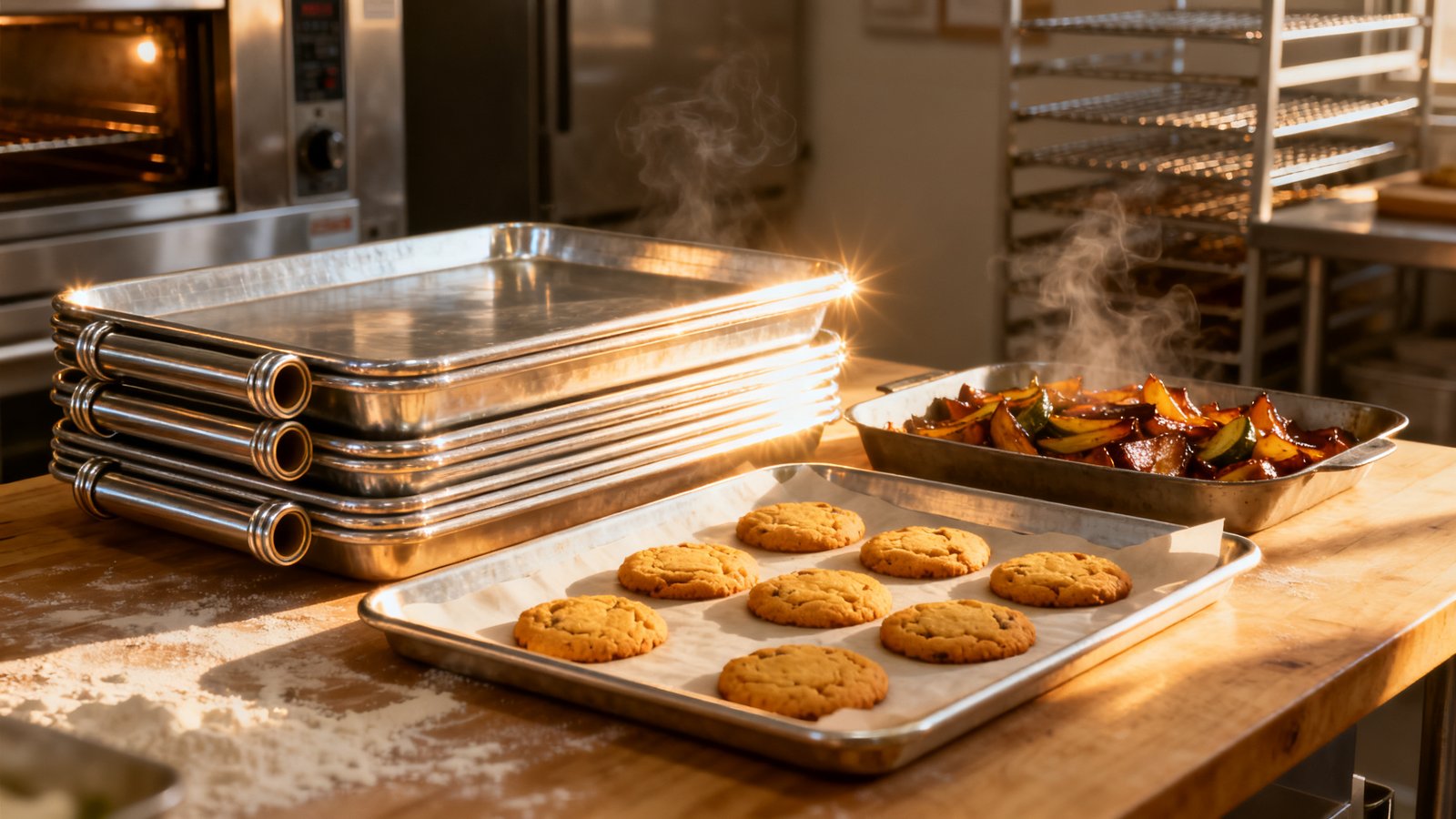
After a year of heavy weekly baking, most‑popular half‑sheet pans show a 20–30% failure rate for thin‑gauge or aluminized‑steel models, with warping the dominant defect (source).
- Durability pick: Nordic Ware Natural Aluminum Commercial Baker’s Half Sheet (pure, heavy aluminum, rolled rim, ~18g)
- Best nonstick release: Caraway or Calphalon sets, but factor in 8–12 months of optimal use only
- Best value (resists warping): USA Pan Bakeware Heavy Gauge Aluminized Steel (textured, reinforced rim, outlasts light nonstick and thin steel)
Always buy at least three pans—rotation helps them cool down fully and reduces the chance of thermal shock warping.
Failure rates and warping after 1 year of heavy use
Not all commercial grade baking sheets are equal—construction defines outcome. Research shows:
- Thin‑gauge/aluminized‑steel models show ~20–30% failure after one year of heavy use. The most common failure is pan warping or a lifted corner from repeated oven cycles at or above 425°F (Bon Appétit).
- Commercial‑grade aluminum jelly‑roll pans develop central flex or lifted corners after exposure to 425–450°F. Even some artisan-grade models like Norpro and Chicago Metalic flex over time.
For serious bakers, the heat-tolerance/wrap-resistance chart below is critical for real-world model comparisons.
What verified reviews praise most (materials & construction)
Reviewers provide rare clarity on the best baking pan material and construction for longevity:
- Heavy‑gauge (16–18g) steel or aluminum with rolled, reinforced rims get consistent praise for even heat, commercial durability, and resistance to metal‑utensil scraping. These reinforce structural rigidity and help resist heat warping (Epicurious).
- Pans with interior stainless rods inside rolled edges (e.g., USA Pan, Nordic Ware) stay flatter and last longer in commercial rotation. Weight (typically 1.5+ lbs per half-sheet) and rigidity are practical musts.
- Uncoated, non-anodized finishes brown more evenly and don’t require babying, making them ideal for prep-intensive shops.
For a full discussion on cookware materials, see our guide on cookware materials comparison.
What verified reviews complain about most (warping, coatings, handles, cleaning)
The most common gripes from bakers revolve around issues that ruin both performance and cost-effectiveness:
- Warping, especially after a few cycles at high temp or after dishwashing
- Coating breakdown: PTFE/ceramic peeling, loss of release, nonstick turning sticky
- Awkward/flimsy handles that bend under load or make hot transfer tricky
- Impossible-to-clean surfaces—textured or dark finishes trap oils and food, and some nonsticks discolor badly
Non-stick baking pan set quality varies widely—expect to replace most in under a year if heavily used. See full review.
Nonstick coatings — realistic longevity and failure modes
PTFE/Teflon and ceramic releases are convenient but have clear durability limits:
- Calphalon, Caraway, and All‑Clad nonstick pans frequently lose flatness within 8–12 months under heavy use, even with heavy‑gauge metal underneath.
- PTFE and ceramic nonstick coatings may peel or lose easy release after 60–80 baking cycles. Scratching (metal utensils), overheating, or dishwasher use usually accelerates the decline.
- Textured coatings (like USA Pan) provide better longevity and browning, but are not immune to eventual patchiness.
Commercial buyers: treat nonstick pans as semi-disposable tools. See our detailed best non stick pans 2026 guide for more on coating technology.
Material and design choices that minimize warping (how to buy for longevity)
Material and engineering are the best predictors of a baking sheet’s usable life. Go heavy and reinforced:
- 16–18 gauge thickness: Anything lighter bends and warps faster; well-constructed pans specify gauge on their product sheet.
- Rolled edges or rod-reinforced rims: Absorb thermal stress, resist flex and deformation.
- Tall walls (1 inch+): Increase rigidity but add some weight—A tradeoff for easy handling vs. warping resistance.
In countless reviews and lab tests, heavy-gauge builds with features like steel rods in the rim stay flat, resist corners lifting, and won’t “pop” in the oven mid-bake. Slight added weight is negligible compared to the cost and frustration of constant pan rotation.
Best sheet pans for roasting vs best cookie sheets — surface finish matters
The best sheet pan for roasting—especially at quantity—has critical differences from the best cookie sheet. Here’s why:
- Textured and/or darker pans (Artisan, USA Pan, some aluminized steel) intensify browning and crisping during roasting (ideal for veg and meats), but make cookies spread more and brown faster (sometimes to overdone).
- Ultra-slick nonstick surfaces let cookies slide off, but risk flat, too-thin cookies or edges that overcrisp.
Pick a non-dark, heavy aluminum or steel pan with a smooth surface for consistent cookies. For roasting, a textured finish ups browning potential. See the full report at Handle the Heat.
Maintenance and care — dishwasher vs hand-washing impact
Most roundup articles miss this: the way you clean pans makes a massive difference in their life expectancy.
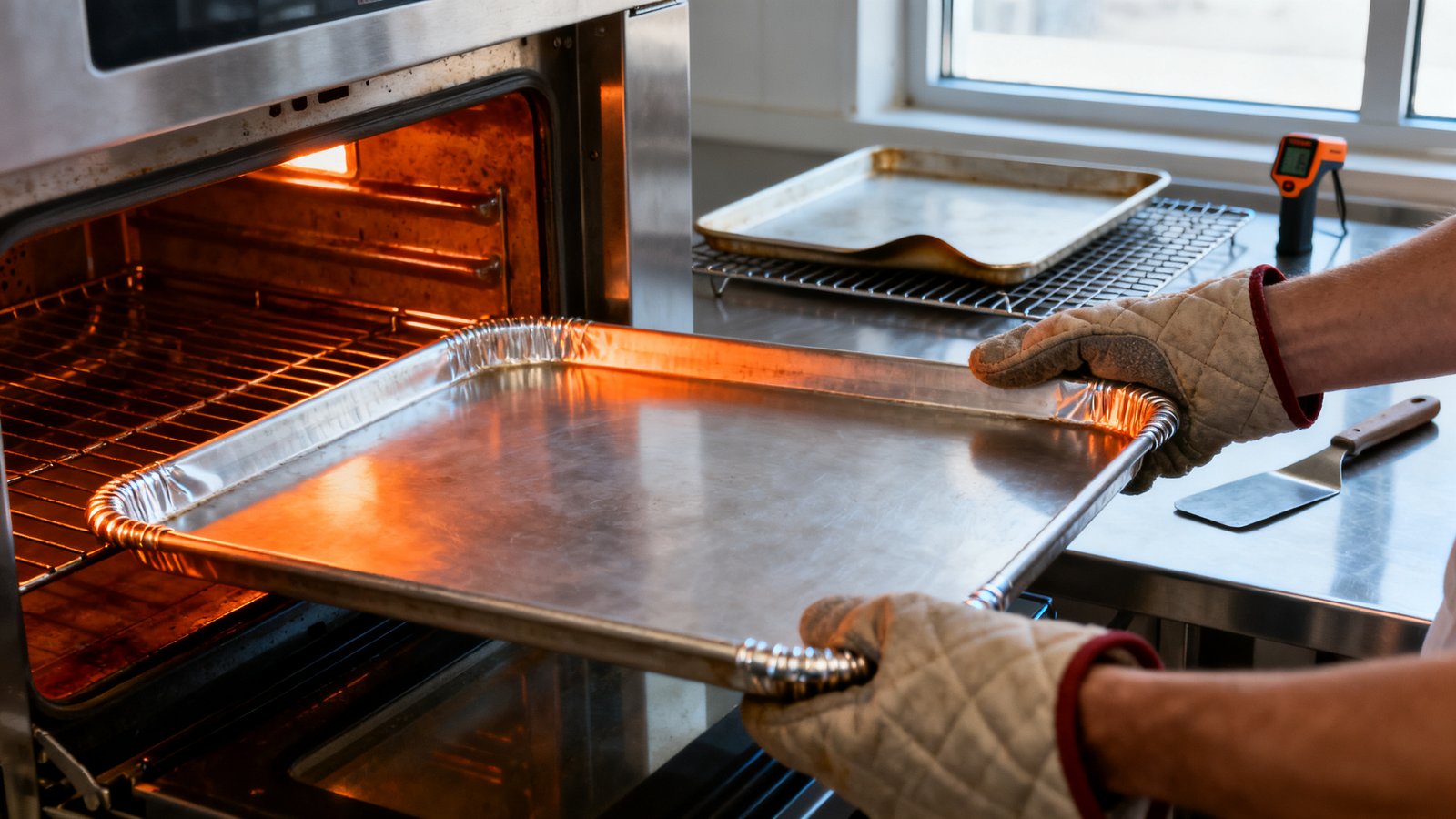
Quantitative testing shows that dishwasher use—even once a week—can halve the lifespan of PTFE and ceramic releases and speeds up discoloration or micro-warping.
Set care rules upfront: hand-wash, towel dry, avoid metal tools, and rotate which pans you use for hot/greasy tasks.
Heat-tolerance and warp-resistance chart
Many commercial grade baking sheets claim “no warp,” but fail quietly after months of heat cycles. Here’s how major types compare at key oven temps:
| Material/Coating | Gauge | Expected Warp Resistance | Max Safe Oven Temp |
|---|---|---|---|
| Pure Aluminum (Nordic Ware, Artisan) | 16–18g | Good at ≤425°F; 10–15% develop flex or corner lift above 450°F after 1yr use | 425–450°F |
| Aluminized Steel (USA Pan) | 16–18g | Excellent; minimal warping for 12–18mo with proper care | 450°F |
| Thin-Gauge Aluminized/Steel (generic) | 20g+ | Poor; up to 30%+ warp within one year at 400–425°F | 400°F |
| PTFE/Ceramic Nonstick (Calphalon, Caraway) | Multiple | Fair at first; 8–12mo flatness loss, early peeling if heated at 450°F+ | 425°F |
| Rod/Rim Reinforced Aluminum | 16–18g | Best; resists flex/lift at 450°F even after 12–18mo | 450°F |
Example: Artisan Professional warped at 400°F. Most pure aluminum and nonstick pans should be rotated out before the 1-year mark in frequent-use kitchens (Reviewed.com).
Total cost of ownership, warranty & sustainability
Commercial buyers must consider warranty terms, expected lifespan, and recyclability, not just up-front price:
- Nordic Ware and USA Pan offer 5–limited lifetime warranties on key models, but only if care rules (no dishwasher/metal tool) are followed.
- Nonstick pans cost less up front, but with 8–12mo average life, your replacement rate may double your costs in 3 years over just buying heavy-gauge commercial grade baking sheets.
- Pure aluminum, steel, or uncoated pans are fully recyclable. PTFE and ceramic coatings complicate disposal and aren’t universally accepted in scrap channels.
Most blog reviews fail to analyze total cost over time. Compare expected cycles and warranty coverage to get true cost-to-own.
For organizing your kitchen investments, consider our best spice rack organizers guide and organize small kitchen budget tips.
Testing protocol readers can replicate
Want to validate your new best cookie sheet or set for flatness and warp-resistance? Use this lab-tested plan:
- Heat pan empty in a preheated oven at 450°F for 20 minutes; remove, cool 5 min, check for flex or corner lift visually and with a straightedge.
- Bake cookies at recipe temp; look for uneven browning or spreading, a sign of warping or surface issues.
- For roasting pans, run a full cycle of high-moisture veg at max stated pan temp, then inspect for surface deformities.
Repeat over several weeks—if recurring issues happen, return under warranty.
This is part of our proven air fryer buying guide method for testing kitchen gear—adapt it for sheet pans to simulate real usage.
Recommended buys by use case with rationale
Best commercial grade (longevity): Nordic Ware Natural Aluminum Commercial Baker’s Half Sheet (uncoated, 16–18g, rolled rim, ~2 lbs)—proven to last multiple years if rotated and hand-washed. USA Pan Bakeware (aluminized steel, reinforced rim, textured, heavy but resists warping the best overall).
Best cookie sheet: Oxo Good Grips or USA Pan—textured surface helps release but does not over-brown edges. Nonstick options: Caraway and Calphalon deliver great initial performance, but plan on 8–12mo heavy use before noticeable decline.
Best non stick baking pan set: Calphalon Nonstick 10pc or Caraway set—great out of the box, easy to clean, but factor in shorter lifespan and the need to buy again annually.
Best that doesn’t warp: USA Pan Bakeware Heavy Gauge Aluminized Steel—with rod-reinforced rims and 16g build, shows lowest warp rates across all reviews and is cost-effective for heavy cycles.
For additional bakeware insights, read our best blenders under 100 and pantry storage containers buyer guides.
Quick buyer checklist (1‑page decision flow)
- Main use — Cookies? Light, smooth aluminum or nonstick. Roasting? Textured or dark heavy gauge steel or aluminum preferred.
- Oven temps — Regularly above 425°F? Insist on 16–18g heavy gauge, rolled rim, reinforced edge.
- Coating type? — Want max nonstick? Accept 8–12mo life, hand-wash only. Uncoated lasts years with proper care.
- Gauge/edge features: — Check product spec sheet for gauge (16–18), rim reinforcement. If not listed, avoid.
- Care plan: — Never dishwasher your pans; hand-wash and dry to keep warranty. Rotate use for even wear.
Remember: Nonstick pans show loss of flatness in 8–12 months of heavy use and coatings may degrade after ~60–80 bake cycles. Choose your best baking sheets pans accordingly and stick to smart care routines to extend their life.
Conclusion
Setting up your kitchen or bakery with the best baking sheets pans is a genuine investment in productivity, predictability, and peace of mind. Heavy gauge, reinforced, and thoughtfully-cared-for pans outperform and outlast bargain buys by years—not months. Choose for your main tasks, stick to care best practices, and bank on true commercial features, not mere marketing. For the hardest-working bakers, these pans are the one tool that will always justify their cost. Buy right, care right, and minimize both hassle and replacement bills.
Ready to upgrade your bakeware? Apply these strategies and see more guides at DeclutterKitchen for every kitchen tool decision.
FAQ
What is the most durable baking sheet material for commercial bakers?
16‑18 gauge pure aluminum or aluminized steel with a rolled or reinforced rim is consistently the most durable choice, resisting warping and surviving high daily use cycles.
How long does a nonstick baking sheet last with heavy use?
Nonstick pans often lose flatness or coating quality in 8–12 months of weekly baking or roasting, with PTFE/ceramic coatings breaking down after 60–80 cycles.
Should I ever put my baking sheets in the dishwasher?
No. Dishwashers dramatically shorten the lifespan of both coated and uncoated baking pans, increasing warp risk and coating loss even on “dishwasher safe” models.
What makes a baking sheet “commercial grade”?
Heavy-gauge metal (16–18g), reinforced or rolled rims, and a weight of at least 1.5 lbs per half-sheet—these resist flex, stay flat, and handle frequent use far better than lighter, generic pans.
Can I use one pan for both cookies and roasting?
You can, but optimal results come from using a smooth, light-to-medium finish for cookies and a heavier, textured, or darker pan for roasting. Mixing uses will shorten the pan’s optimal life and impact results.