

Cookware materials guide—this is what every health-conscious home cook needs in 2026. With new research shedding light on the real safety, toxicity, and tradeoffs of stainless steel, cast iron, and ceramic-coated pans, it’s more important than ever to make smart, practical choices based on actual evidence—not marketing hype. Here, you’ll get a concise, actionable overview on how to choose the best pan material for your health and cooking habits, with realistic solutions and maintenance strategies.
Key Takeaways
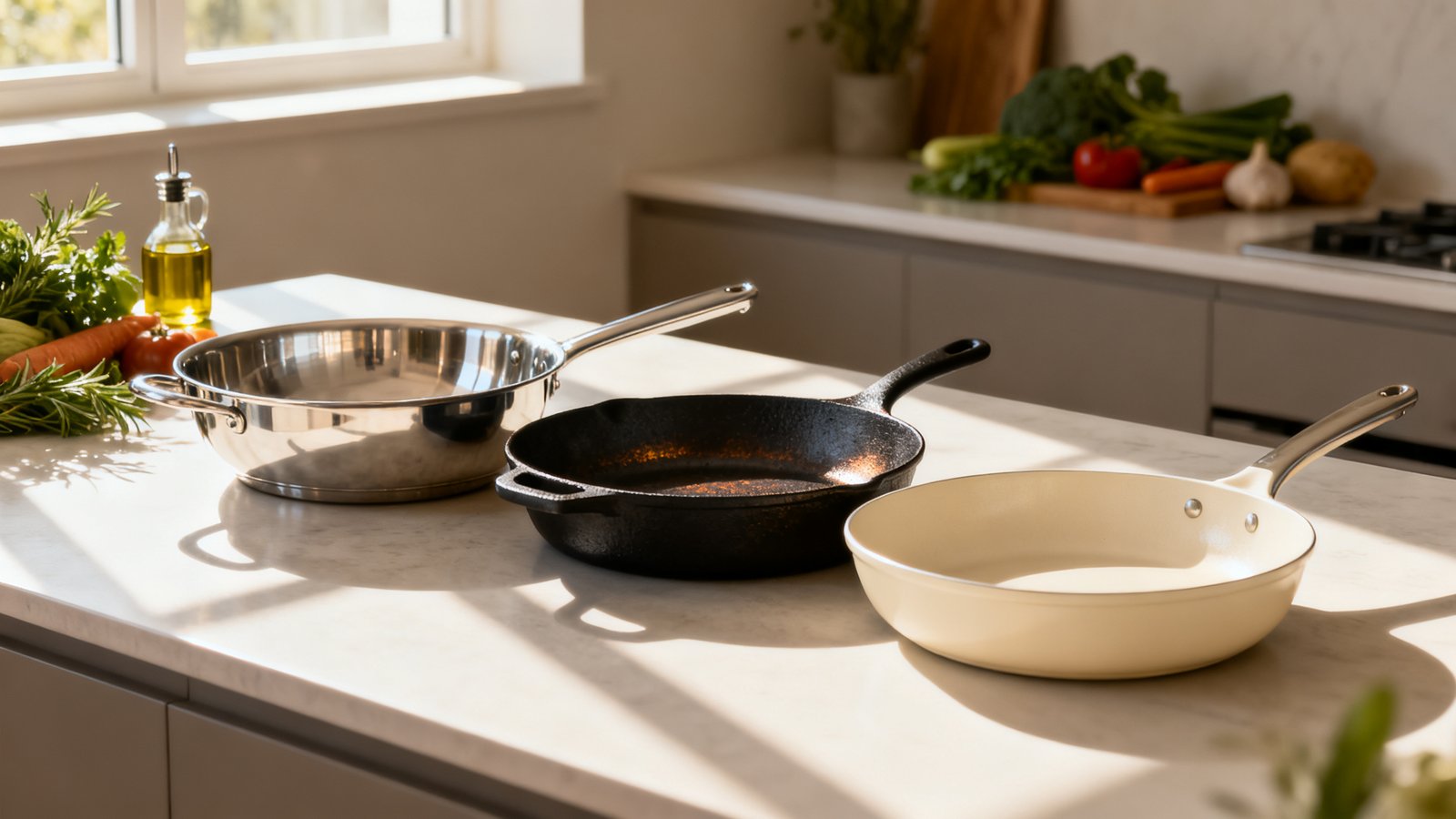
- Stainless steel, cast iron, and modern PFAS-free ceramic are all safe for most home cooks—each with specific strengths and ideal use cases.
- Brand-new pans and acidic foods are the riskiest for leaching, but toxicity stays very low after about six cooking cycles.
- The healthiest cookware material depends on your personal health profile (e.g., iron levels, nickel allergies), cooking habits, and willingness to maintain pans properly.
- Quick answer — which cookware material is “best” for health (TL;DR)
- How modern 2026 studies change the conversation about cookware safety
- Advanced analysis & common pitfalls (+ comparison)
- Bottom line & recommended next steps
- FAQ
Quick answer — which cookware material is “best” for health (TL;DR)
There’s no single “best cookware material” that outperforms in every area for every person. Here’s the verdict according to current research:
- Stainless steel offers the best overall durability and versatility. “Stainless‑steel cookware can release trace amounts of nickel and chromium, especially when brand‑new or when cooking highly acidic foods, but leaching drops sharply after about six cooking cycles and remains well below established dietary exposure limits.” (source)
- Cast iron consistently leaches small quantities of iron—beneficial for those with iron-deficiency anemia, but potentially problematic if you have iron overload (hemochromatosis) or cook a lot of acidic dishes. The amount leached is higher with new, unseasoned pans and acidic foods.
- High-quality ceramic-coated cookware (PFAS-free), such as GreenPan Valencia Pro, “exhibits negligible heavy‑metal leaching and no detectable PFAS,” but durability is limited and chipping risks exposing underlying metals. (source)
In short: For most home cooks, a mix of stainless steel and high-quality PFAS-free ceramic nonstick pans is the safest, most practical combo. Cast iron is great, especially for those needing extra dietary iron—just know the health and maintenance tradeoff.
How modern 2026 studies change the conversation about cookware safety
Recent analyses have shifted how we talk about pan safety. The focus is now on actual leaching levels in real home kitchens, not worst-case lab exposure or decades-old concerns. Here’s what matters:
- “Stainless steel leaches the most in the first 6 uses, especially with acidic recipes (tomato, vinegar, citrus). After this break-in phase, trace metal release becomes negligible.”
- “Cast iron pans consistently leach small quantities of iron—beneficial for people with iron‑deficiency anemia but potentially problematic for those with hemochromatosis or other iron‑overload conditions—while the amount leached is proportional to cooking time, acidity, and whether the pan is seasoned.”
- “Modern ceramic‑coated cookware (PFAS‑free formulations such as GreenPan Valencia Pro) exhibits negligible heavy‑metal leaching and no detectable PFAS, though low‑quality ceramic layers can chip and expose underlying metal, leading to occasional aluminum or titanium release under extreme heat.”
For deep-dive specifics by material:
- Stainless steel vs cast iron vs ceramic: Stainless is nearly maintenance-free but can stick (more on that below). Cast iron needs seasoning but adds iron to food and can rust. Ceramic nonstick is easy to clean (if you avoid scratches and chipping), but doesn’t last as long.
- Want a handy buying checklist? Look for tri-ply/five-ply stainless, PFAS-free certified ceramic, and heavy, well-finished cast iron (avoid light, rough, or uneven pans). Brand reputation matters.
Advanced analysis & common pitfalls (plus cookware material comparison chart)
Let’s break down the real-world issues and current research for each major pan type, with solutions you can start using tonight.
Stainless Steel—Pros, Cons, Fixes
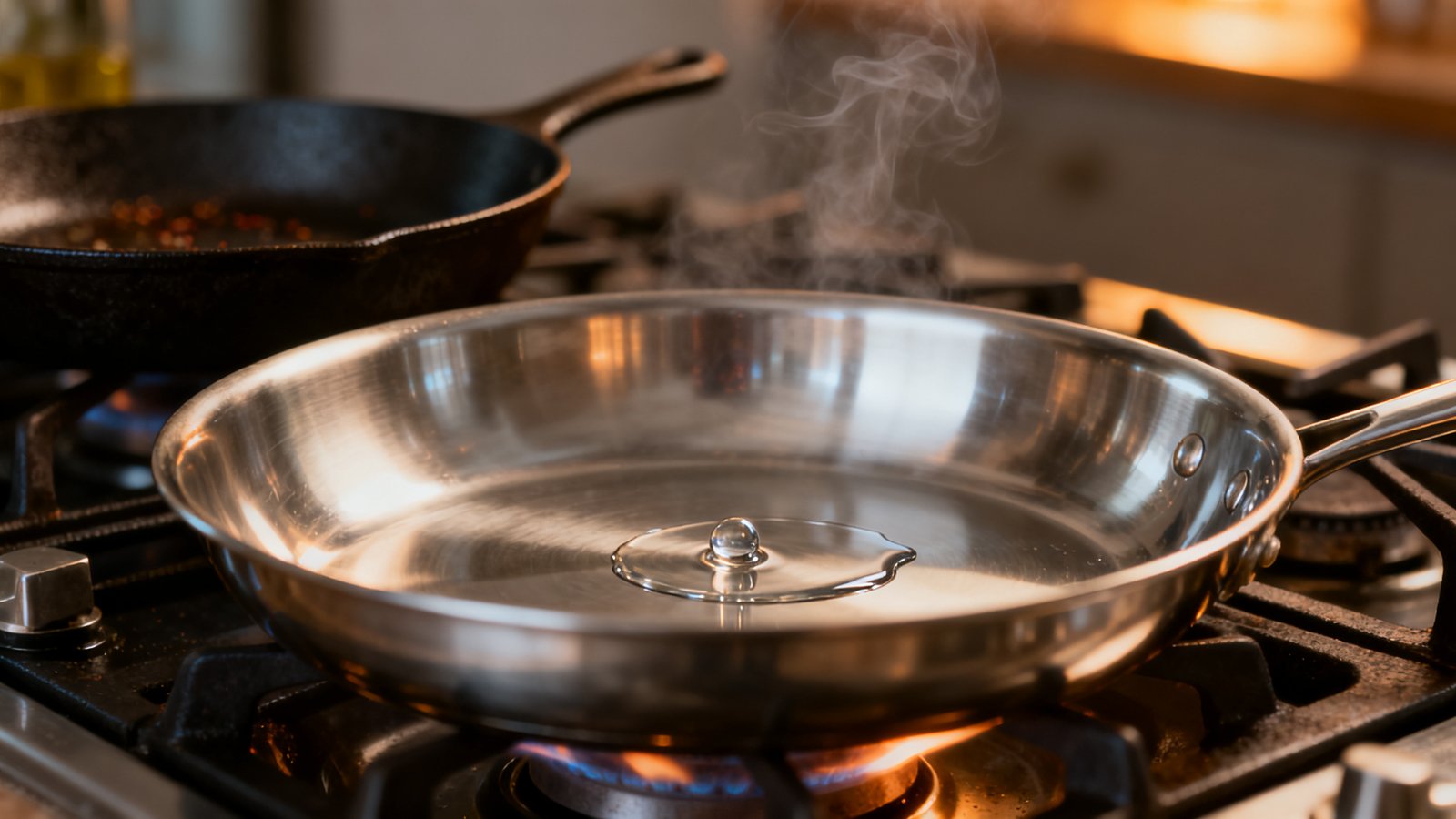
- Most common complaint: “Food sticks.” In 99% of cases, this is a heat management issue. Preheat your pan, then add oil, then food—don’t rush. (source)
- After the first six uses, “leaching drops sharply and remains well below established dietary exposure limits.”
- Fix water spots and discoloration by soaking in warm water and using a baking-soda paste—not steel wool.
- Hand-wash for longevity, but occasional dishwasher use is okay if manufacturer allows.
More: Cast Iron vs. Stainless Steel—what’s best for you?
Cast Iron—Tradeoffs and Safety
- Consistently adds iron to your food. This is beneficial for those with iron deficiency, but if you have hemochromatosis (iron overload), it’s best to limit use.
- React with acidic foods: More iron leaching occurs when cooking things like tomato sauce—best to use well-seasoned pans and limit acid-heavy recipes if iron is a concern.
- Heaviest to handle—many users tire of the weight.
- Needs regular seasoning and is prone to rust if not dried quickly.
- Can last forever with care—see real user reports.
Learn next-level care in our Season Cast Iron Science Guide.
Ceramic-Coated—Modern Safety & Limits
- PFAS-free ceramic coatings like GreenPan Valencia Pro are a win—“negligible heavy‑metal leaching and no detectable PFAS…though low‑quality ceramic can chip and expose underlying metal, leading to occasional aluminum or titanium release under extreme heat.”
- Risks: Once chipped, retire the pan; performance declines rapidly.
- Never use metal utensils and avoid dishwasher/wire scrubbers for best lifespan.
Need a deeper non toxic cookware guide? See Best Non Stick Pans 2026.
Break-in, First Uses, and Leaching Reduction
- Brand new pans (especially stainless and cast iron) leach most on their first six uses. “Leaching drops sharply after about six cooking cycles.”
- Avoid highly acidic foods at first and season cast iron by oiling and baking. Stainless just needs use—boil water, sauté onions, etc., to speed the break-in process.
- Ceramic is safe out of the box but still avoid major temperature shocks.
See more on break-in care in our cast iron seasoning guide.
Who Should Avoid Which?
- If you have a nickel allergy, avoid stainless and opt for ceramic or enamel-coated cast iron.
- For those with iron overload, limit or avoid cast iron—ceramic or stainless is safer.
- Pregnant women and young children: Stick to high-quality stainless or PFAS-free ceramic.
- Highly acidic diets: Lean toward ceramic to minimize leaching from other pans.
What to Look for When Buying
- Stainless: Choose tri-ply or five-ply, with a smooth, even finish. Avoid thin, lightweight, or no-brand pans.
- Ceramic: Only buy PFAS-free, reputable brands. Low-cost, “no name” ceramic pans chip quickly.
- Cast iron: Buy heavy, smooth-finished pans. Chips or rust spots are red flags.
Buying on a budget? Compare options in our Best Blenders Under 100 round-up where we also touch on kitchen basics gear.
Cookware Material Comparison Chart
| Cookware Material | Toxicity/Leaching Risk | Performance | Maintenance Level | Lifespan | Best For | Cost |
|---|---|---|---|---|---|---|
| Stainless Steel | Trace nickel/chromium at first; drops after ~6 uses |
Searing, browning, high-heat, all-purpose | Low (avoid harsh scrubbers) | Decades (rarely wears out) | Everyday cooking, most dietary needs |
Mid-high (for quality) |
| Cast Iron | Consistent iron leaching; great for deficiency, bad for overload |
Unmatched heat retention; can be “nonstick” with seasoning | Medium-high (needs drying & seasoning) | Generations (if seasoned & cared for) | Searing, baking, iron boost | Low-mid |
| Ceramic-Coated (PFAS-free) | Negligible leaching (unless chipped); PFAS-free |
Excellent nonstick, easy clean-up |
Low (avoid metal utensils & high heat) | 1-5 years (coating wears) | Low-fat & delicate foods | Low-high (brand matters) |
Rationales: Stainless steel is reliable after break-in; cast iron is unmatched for iron delivery or heat; ceramic is easy but less durable.
Want to see more organizing hacks for a safe kitchen? Check out our spice rack organizer guide.
Safety Facts and Visuals Most Guides Miss
- Leaching is proportional to cooking time, acidity, and pan age—graphing this helps reveal where real risks are highest.
- Compared side by side, exposure from all three pan types remains far below dietary limits for most people, especially after the six-use break-in.
- A “health condition vs. pan material” matrix saves you time: iron-deficient? Use cast iron! Nickel allergy? Avoid stainless!
- Most competitor guides skip the unique “break-in timeline” showing how pan safety improves with each cycle.
Bottom line & recommended next steps (choose for your kitchen)
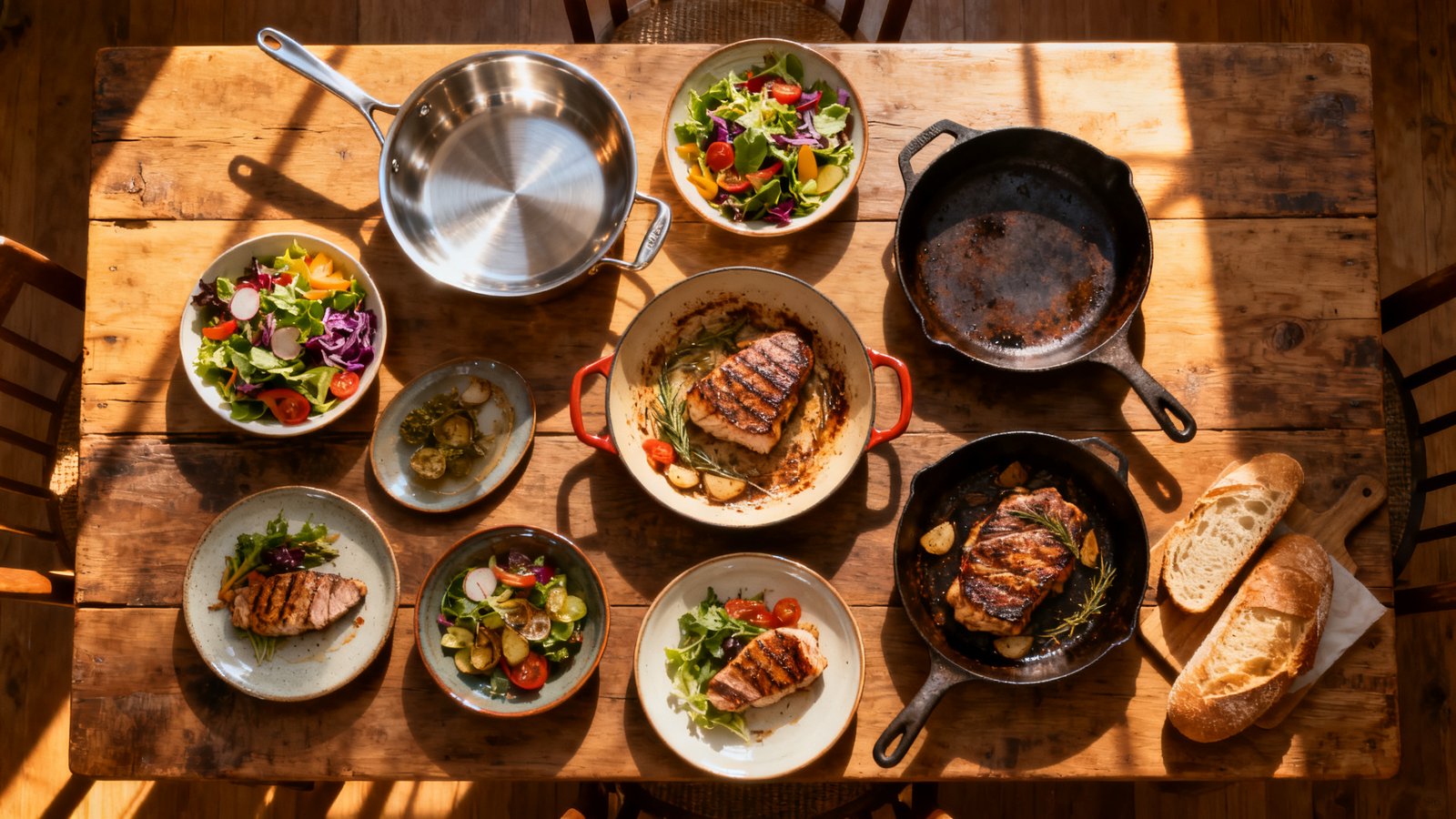
The best cookware material for your health is context dependent—take your health history (iron/nickel sensitivity), cooking style, and willingness to maintain pans into account. Stainless steel and cast iron are safe for most home cooks after break-in, with high-quality PFAS-free ceramic nonstick pans providing a great low-toxicity option for delicate, low-fat cooking.
Want to start now? Equip your kitchen with:
- A tri-ply stainless steel skillet or saucepan for versatile daily cooking
- An enameled or well-seasoned cast iron pan for searing and oven dishes (skip it if you’re iron-overloaded)
- A PFAS-free ceramic nonstick pan (from a trusted brand) for eggs, pancakes, or sticky foods
See your next move? Browse our complete cookware materials guide archive, or check out our best air fryers 2026 post for more healthy cooking essentials.
Ready to upgrade? Use this cookware materials guide to make smart, health-first decisions—and check back for more kitchen safety updates every month.
FAQ
Does stainless steel cookware leach harmful metals?
Stainless steel can release trace amounts of nickel and chromium, mainly during the first six uses and when cooking highly acidic foods. After the initial break-in, leaching drops sharply and remains well below established dietary exposure limits.
Is cast iron safe for everyone?
Cast iron consistently leaches small amounts of iron, which can be beneficial for people with iron deficiency. However, those with iron overload disorders like hemochromatosis should avoid frequent use.
How do I keep food from sticking to stainless steel pans?
The “food sticks” complaint is almost always a heat management issue. Properly preheat your pan, add oil, then add food—this creates a natural nonstick surface.
What is the safest nonstick pan?
Modern PFAS-free ceramic-coated pans (e.g., GreenPan Valencia Pro) exhibit negligible heavy metal leaching and no detectable PFAS. Avoid pans with chipped coatings and always buy from reputable brands.
How often should I replace my cookware?
Replace any pan with a chipped ceramic coating or pitted stainless surface. Well-maintained stainless and cast iron pans can last decades or generations, while ceramic-coated pans may need replacement after 1-5 years, depending on care.