

Finding the best non stick pans 2026 isn’t just about slick marketing claims or pretty colors. It’s about knowing what you’re actually cooking on, how long it will last, and whether the coating is safe for your family. After digging through Consumer Reports lab tests, Bon Appétit kitchen trials, and independent safety analyses, one thing is clear: the safest nonstick pan in 2026 is almost certainly ceramic, not traditional PTFE. But not all ceramic pans are built to last, and the evidence has real gaps you should know about before spending your money.
Key Takeaways
- Ceramic nonstick pans are the safest recommendation for 2026 because they avoid PTFE and PFAS entirely, though durability varies widely by brand.
- Consumer Reports found the GreenPan Spectra released four eggs with zero oil using gravity alone, making it the top egg pan pick for most home cooks.
- Cost per year matters more than sticker price: a $45 Oxo pan costs about $11.25 per year over four years, while a $199 Alva Maestro runs nearly $50 per year. Longer warranties can offset this.
- Quick Verdict — Which Nonstick to Buy for Most People
- Why Safety and Chemistry Matter in 2026
- How to Evaluate a Nonstick Pan — Practical Tests and Checks
- Durability, New Technologies, and True Cost Per Year
- Conclusion — Your Next Steps
- Frequently Asked Questions
Quick Verdict — Which Nonstick to Buy for Most People
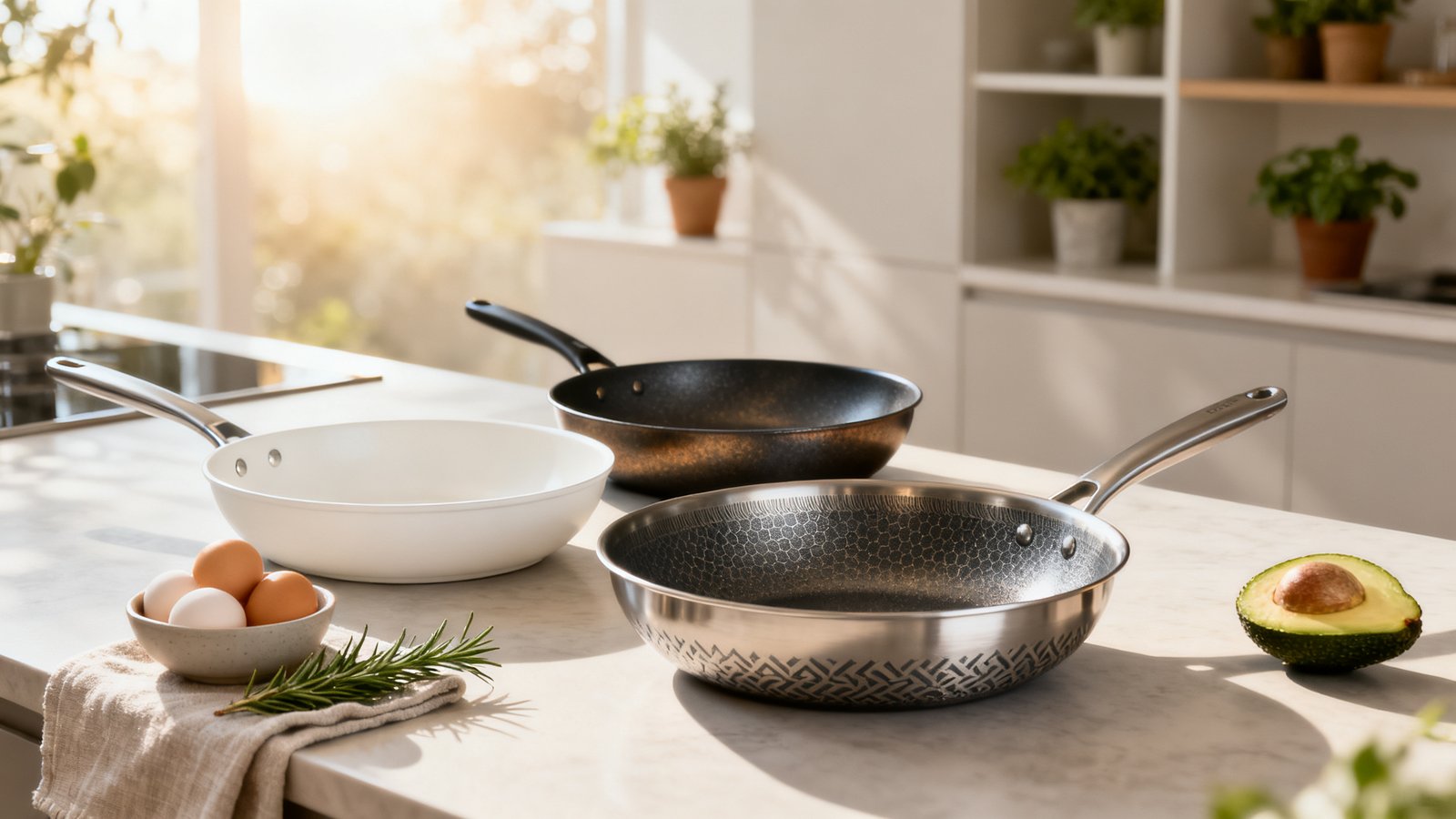
If you want one safe, reliable nonstick pan for daily eggs and sautés, the GreenPan Spectra Thermobond Hybrid is our top recommendation. Consumer Reports praised its egg release, noting that four eggs fried consecutively with no oil slid right off the pan. It uses a ceramic coating over stainless steel and is completely PFAS free.
For budget conscious buyers who still want PFAS free cooking, the Oxo Professional Ceramic 10 inch pan delivers solid performance at roughly $11.25 per year over its expected lifespan. Bon Appétit recommends it as an affordable entry point that doesn’t cut corners on safety.
If warranty matters most, the Alva Maestro offers a 10 year warranty on its ceramic coating, per Organic Authority. At roughly $49.75 per year it’s the priciest option on our list, but the warranty signals manufacturer confidence in durability.
For those open to a non coated approach, the Misen Carbon steel pan builds natural nonstick through seasoning. Bon Appétit reported fried eggs slid off with minimal oil and the pan seemed practically allergic to eggs. It requires more care but contains zero synthetic coatings.
Why Safety and Chemistry Matter in 2026
Traditional nonstick pans rely on PTFE, a type of PFAS chemical best known by the brand name Teflon. When PTFE pans overheat, they can off gas potentially toxic fumes. That’s not theoretical. It’s a documented risk that has led both Consumer Reports and Bon Appétit to now recommend ceramic nonstick over PTFE due to health and environmental concerns.
Here’s what makes the safety conversation complicated in 2026: the evidence is incomplete. No 2026 specific laboratory PFAS leaching results comparing ceramic and traditional nonstick pans were found in any of the major testing sources we reviewed. The recommendations to avoid PTFE are based on what we know about PFAS chemistry and the precautionary principle, not on new 2026 lab data showing specific leaching levels from cookware.
This evidence gap doesn’t mean PTFE pans are definitely unsafe. It means buyers deserve transparency. If a brand says their pan is “PFOA free,” that’s essentially meaningless. PFOA was already banned. Some manufacturers rename their PTFE coatings with proprietary brand names and slap “PFOA free” on the label to appear safe while still using fluoropolymer based nonstick. You want “PFAS free” or “PTFE free” specifically, not just “PFOA free.”
Ceramic coatings, by contrast, are made without PTFE, PFOA, or any PFAS compounds. The coating is silica based, essentially derived from sand. The tradeoff is durability, which we’ll cover in detail below. But from a pure chemistry standpoint, ceramic eliminates the PFAS concern entirely.
How to Evaluate a Nonstick Pan — Practical Tests and Checks
Most buyers rely on Amazon ratings or brand websites, but neither tells you what actually matters. Here’s how to assess a pan like a reviewer would, using methods you can replicate at home.
The Egg Test — Your Most Reliable Home Metric
Consumer Reports and Bon Appétit both use egg frying as their primary nonstick benchmark, and for good reason. Eggs are unforgiving. If a pan can release eggs cleanly, it can handle almost any delicate food. No quantitative slide angle measurements were reported in any of the major 2026 reviews, so the practical egg test remains your best at home evaluation tool.
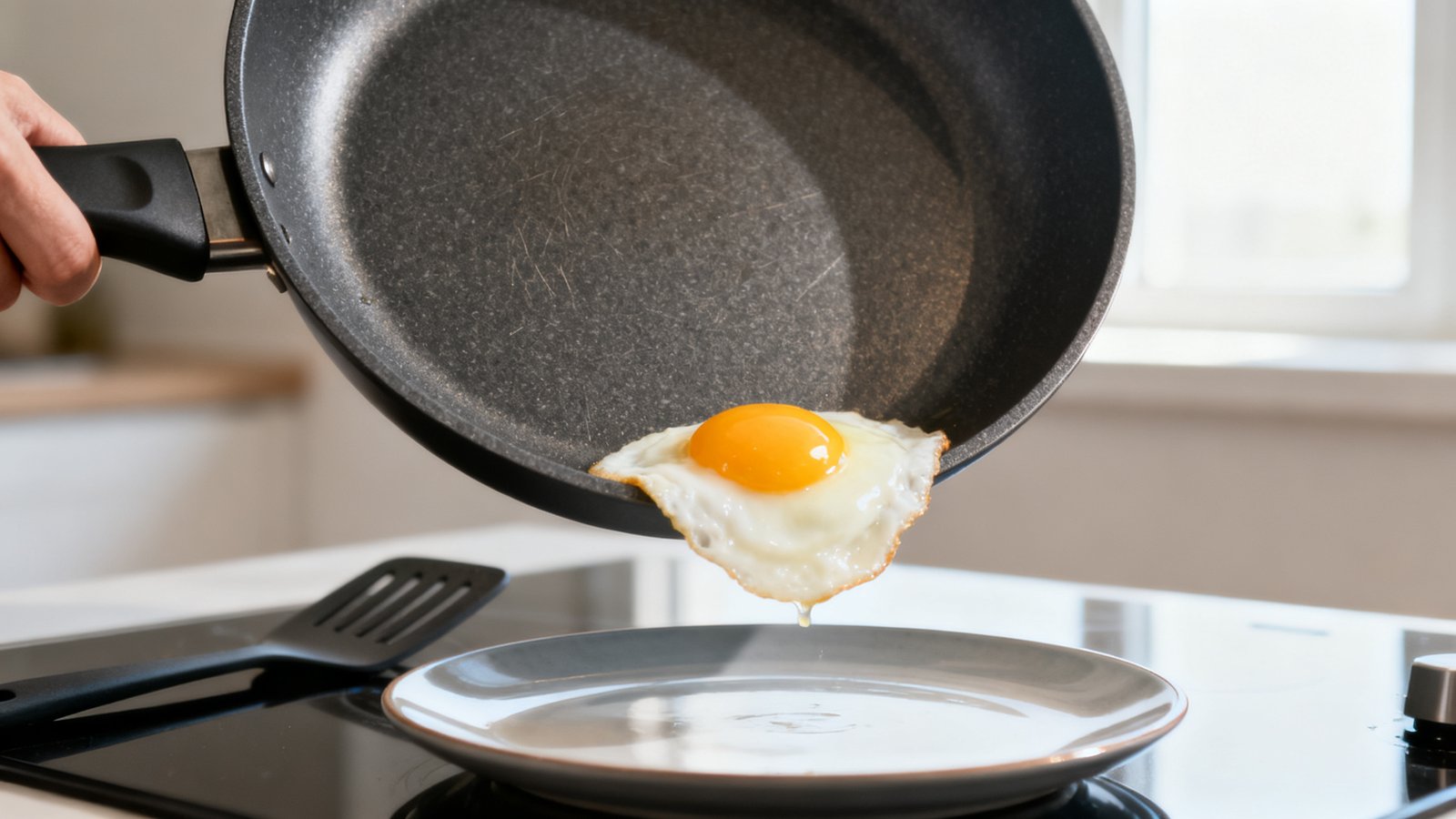
Here’s the protocol: crack a cold egg into a cold, unoiled pan. Turn the heat to medium low. Let the egg cook undisturbed until the white sets. Tilt the pan. A truly nonstick surface will let the egg slide freely. Consumer Reports found the GreenPan Spectra released four consecutive eggs with no oil using only gravity. That’s the gold standard.
Check Coating Chemistry, Not Just Labels
In store or online, look past the marketing. Verify the coating chemistry explicitly. If the brand says “PFOA free” but doesn’t say “PFAS free” or “PTFE free,” assume it contains PTFE. Organic Authority warns that some cookware companies rename their PTFE coatings with proprietary brand names to obscure what’s actually in the pan.
Also check the core material. Many ceramic coated pans use an aluminum core. Anodized aluminum is generally considered safe, but cheap unanodized aluminum may pose leaching concerns that most reviews completely overlook. If the brand doesn’t specify “anodized aluminum” or “stainless steel” for the core, ask before buying.
Durability, New Technologies, and True Cost Per Year
Durability is where ceramic nonstick pans show their biggest weakness. Multiple sources report significant wear issues with popular brands. Bon Appétit found that Caraway’s cooking surface scuffed and scratched fairly quickly, losing its nonstick utility after just a few months even with careful use. Our Place’s original Always Pan underwhelmed consistently on longevity, and Kyocera’s ceramic surface deteriorated quickly.
Yet there’s nuance here. Consumer Reports gave Caraway a “very good” score in a 2,000 stroke steel wool durability test, suggesting lab results and real world user experience can diverge. The GreenPan Valencia Pro, according to Organic Authority, has been reported “going strong after years of use” by some owners. Higher end ceramic lines genuinely hold up better than budget alternatives.
General lifespan expectations from Heal Nourish Grow and Bon Appétit suggest ceramic nonstick lasts 3 to 5 years with proper care. A high quality nonstick pan may reach up to five years with TLC. Heat abuse and abrasive cleaning dramatically shorten this timeline.
New PTFE Free Technologies Worth Watching
Several innovative nonstick approaches emerged for 2026 that don’t rely on traditional PTFE:
- Made In CeramiClad: A silicone based ceramic coating made without fluoropolymers. PFAS free, produced in the USA. This is a fundamentally different chemistry from traditional sol gel ceramic.
- GreenPan Spectra Thermobond Hybrid: Ceramic over stainless steel with a laser etched pattern. The hybrid construction addresses the durability concerns of pure ceramic on aluminum.
- Our Place Thermakind (Always Pan 2.0): An updated ceramic formula claimed to last 50% longer than the previous version. Independent verification of this claim is still pending.
- Misen Carbon Steel: Not a coating at all. The nitrided carbon steel surface develops natural nonstick through seasoning, similar to cast iron but lighter. Completely PTFE and PFAS free.
- Taima Titanium: A coating free titanium surface with a SlipScale patterned design. PFAS free and potentially more durable than any coated pan.
Each of these represents a different bet on what replaces PTFE. None has years of independent durability data yet, so early adopters should keep their receipts and track performance over time.
Cost Per Year — The Real Value Metric
Sticker price tells you almost nothing. A $45 pan that lasts two years costs more per year than a $149 pan that lasts six. Using a midpoint lifespan assumption of four years, here’s how the top ceramic pans compare:
| Pan (Size) | Price | Est. Lifespan | Cost/Year |
|---|---|---|---|
| Oxo Professional Ceramic (10″) | $45 | 4 years | ~$11.25 |
| GreenPan Valencia Pro (11″) | $70 | 4 years | ~$17.50 |
| Caraway Fry Pan (10.5″) | ~$111 | 4 years | ~$27.75 |
| Made In CeramiClad (10″) | $149 | 4 years | ~$37.25 |
| Alva Maestro (11″) | $199 | 4 years | ~$49.75 |
These figures shift dramatically based on actual care and usage. A well maintained GreenPan might stretch to five or six years, dropping its annual cost below $14. A mistreated Caraway could fail in 18 months, pushing its cost per year past $70. The single biggest variable in cost per year is how you treat the pan.
Care and Use Tips to Maximize Lifespan
What labs and reviewers implicitly recommend for extending ceramic nonstick life comes down to a few non negotiable rules:
- Never heat an empty ceramic pan on high. Medium and medium low heat are your default settings.
- Avoid metal utensils entirely. Use wood, silicone, or nylon.
- Hand wash only, even if the pan claims to be dishwasher safe. Dishwasher detergents are abrasive and accelerate coating wear.
- For carbon steel like the Misen, follow the seasoning approach: thin oil layers, gradual heating, and never soak in water.
- Store pans with a cloth or paper towel between stacked pans to prevent surface scuffing.
Heal Nourish Grow notes that ceramic nonstick degrades with heat abuse and abrasive cleaning. Bon Appétit concurs that high quality nonstick can last up to five years with TLC. The difference between a two year pan and a five year pan is almost entirely in how you use and clean it.
Conclusion — Your Next Steps
The best non stick pans 2026 are ceramic, not because ceramic is perfect, but because it eliminates the PFAS question entirely while delivering comparable nonstick performance for the lifespan most home cooks actually need. The GreenPan Spectra leads for egg performance, the Oxo Professional leads for value, and the Alva Maestro leads for warranty confidence.
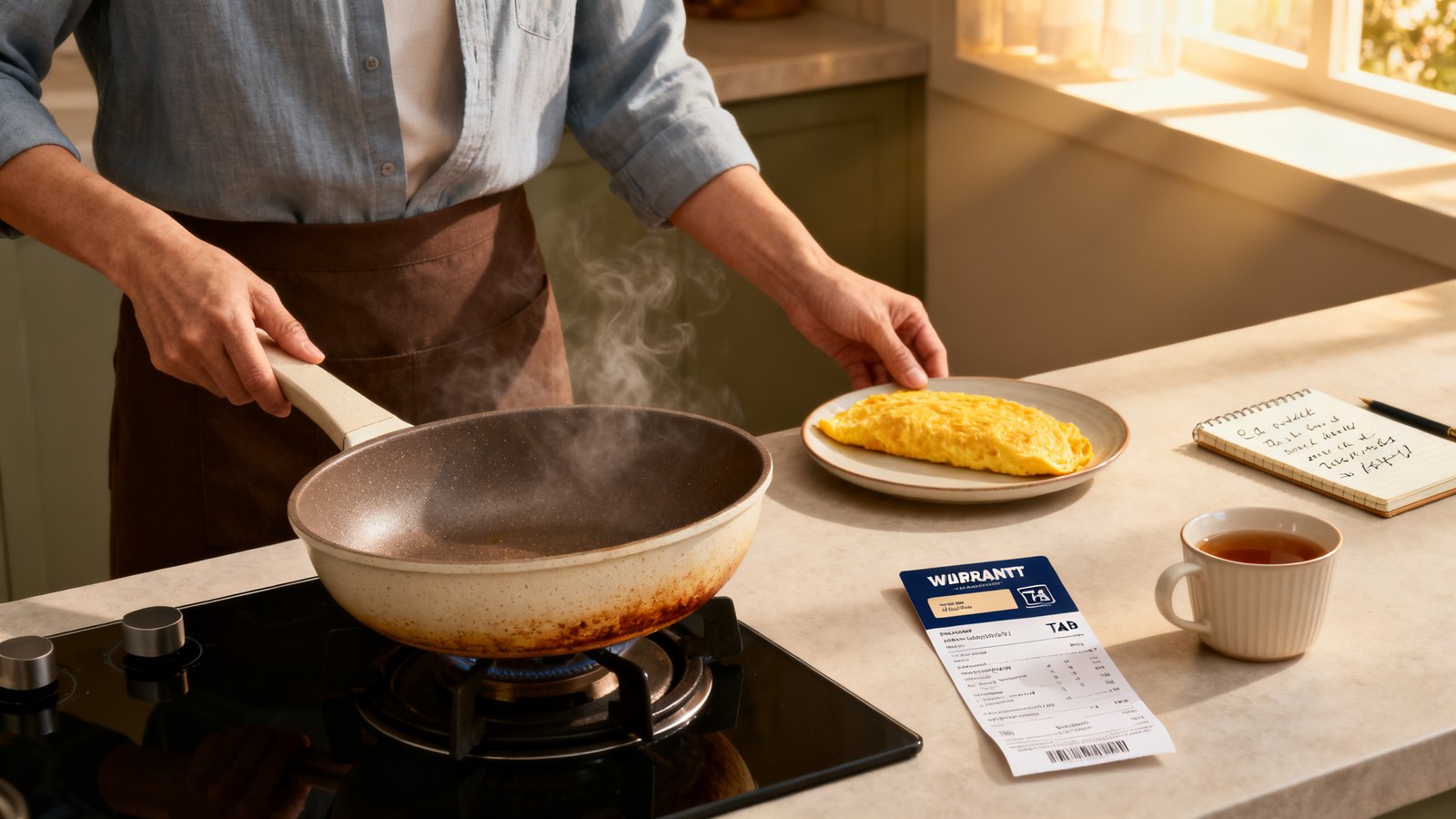
Here’s your action plan. Pick one pan from the shortlist above based on your priority: budget, egg performance, or warranty. Run the cold egg test on day one and document the result. Keep your receipt and warranty information somewhere accessible. If the pan shows significant wear within the first year, warranty it. If it holds up, you’ve found your daily driver.
And while you’re equipping your kitchen thoughtfully, consider the other tools that make daily cooking easier. Our best blenders under 100 guide covers affordable options that actually crush ice, and our coffee maker buying guide walks through the drip versus pour over decision. If counter space is tight, our organize small kitchen budget guide has practical storage solutions that won’t require a renovation.
No nonstick pan lasts forever. But with the right choice and proper care, a good ceramic pan will give you three to five years of reliable, PFAS free cooking. That’s worth the investment.
Frequently Asked Questions
What is the safest nonstick pan material in 2026?
Ceramic nonstick coatings are widely considered the safest option because they are made without PTFE, PFOA, or any PFAS compounds. Both Consumer Reports and Bon Appétit now recommend ceramic over traditional PTFE nonstick due to health and environmental concerns. Alternative PFAS free options include seasoned carbon steel and titanium surfaces.
How long do ceramic nonstick pans actually last?
Most sources estimate ceramic nonstick pans last between 3 and 5 years with proper care. Heat abuse, metal utensils, and dishwasher cleaning can shorten this significantly. Higher end lines like GreenPan Valencia Pro have user reports of lasting longer, while budget ceramics from brands like Kyocera have documented early wear issues.
Does “PFOA free” mean a pan is safe?
No. PFOA was already banned, so “PFOA free” is essentially a meaningless marketing claim. Many brands use this label while still including PTFE (a type of PFAS) under a proprietary brand name. Look specifically for “PFAS free” or “PTFE free” to ensure the pan contains no fluoropolymer nonstick chemicals.
Which nonstick pan is best for cooking eggs?
Consumer Reports found the GreenPan Spectra released four consecutive eggs with no oil using only gravity, making it the top egg performer in independent testing. Bon Appétit praised the Misen Carbon steel pan for egg release with minimal oil. Both are PFAS free options with strong egg performance track records.
Is it worth paying more for a ceramic nonstick pan with a longer warranty?
A longer warranty can offset higher upfront costs if it reflects genuine durability. The Alva Maestro offers a 10 year warranty at roughly $49.75 per year over four years. If the pan actually lasts eight to ten years under warranty replacement, the cost per year drops below $25, making it competitive with mid tier pans that lack warranty protection.