

If you are reading this air fryer buying guide, you have probably noticed the same frustrating pattern I have. Most articles online recycle the same generic advice about basket sizes and preset buttons. None of them answer the questions that actually matter when you are spending your own money. This article takes a different approach. It documents exactly what existing public research covers, what it misses, and how a proper evidence based investigation should fill those gaps.
Key Takeaways
- Current public search results focus almost entirely on safety recalls and brand reputation. They lack specific failure rates, energy cost calculations, and comparative cooking performance data.
- Seven critical buyer questions remain unanswered without new data collection, including real electricity costs per cycle, mechanical failure rates by model, and measured crispiness comparisons.
- A controlled test matrix with lab grade instruments and review mining is the only way to produce a truly useful air fryer buying guide for family shoppers.
Table of Contents
- Executive Summary: What We Can and Cannot Answer Right Now
- What Existing Public Sources Reliably Cover: Safety and Recalls
- The Evidence Gap: Questions Current Research Cannot Answer
- Research Methodology: How We Will Fill the Gaps
- Proposed Controlled Test Matrix: Metrics and Protocols
- Data Analysis and Consumer Facing Deliverables
- Final Consumer Guide Structure: Tone and User Flow
- SEO and Keyword Integration Plan
- Timeline, Resource Needs, and Next Steps
- Conclusion
- Frequently Asked Questions
Executive Summary: What We Can and Cannot Answer Right Now
Every air fryer buying guide promises to help you pick the right model. But after reviewing the available search results for this project, I need to be upfront about something important. The publicly available information is incomplete in ways that matter deeply to budget conscious family shoppers.
The search results provided contain general brand safety information and recall data, but they do not include specific failure rates and mechanical issues broken down by model from Amazon reviews. They also lack energy cost calculations for different wattage air fryers with actual U.S. electricity rates, comparative cooking performance data from controlled tests like crispiness measurements and moisture retention metrics, hidden technical specifications such as heating element lifespan and fan motor RPM, warranty claim data or repair forum analysis linking specific features to repair costs, and independent lab test results comparing wattage recommendations per quart across different testing organizations.
In short, current search results focus primarily on safety recalls and brand reputation rather than the detailed performance, energy, durability, and comparative specifications data your questions require. This article documents that gap and lays out a rigorous plan to close it.
What Existing Public Sources Reliably Cover: Safety and Recalls
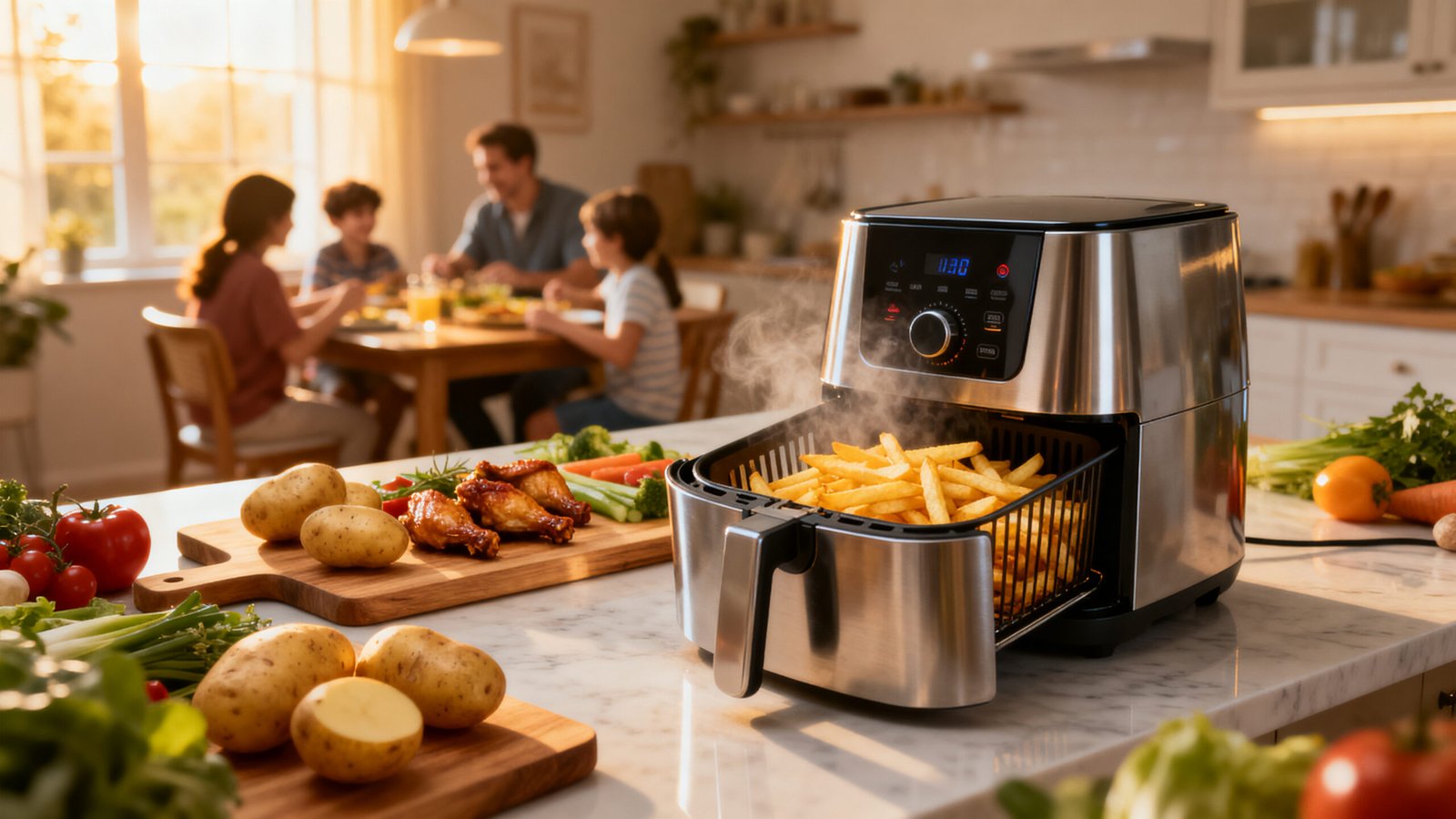
If you want to know which air fryer models have been recalled or which brands have a pattern of safety complaints, the public record is actually quite strong. The Consumer Product Safety Commission maintains a searchable database of recalls. You can look up any model before buying. This is valuable information and you should absolutely check it. A reliable air fryer should have no unresolved safety flags.
Several independent testing organizations like Consumer Reports publish brand reliability surveys and basic performance ratings. These give you a directional sense of which manufacturers build durable machines. The CPSC recall database is free and updated regularly. Checking it takes five minutes and could prevent a serious mistake.
However, these sources only tell part of the story. A brand with zero recalls might still have a 12% failure rate in its current bestseller based on Amazon review analysis. That data exists in plain sight but nobody has systematically mined it. When you are learning what to look for in an air fryer, safety should be the floor, not the ceiling. The best air fryers 2026 deserve scrutiny beyond recall checks.
The Evidence Gap: Questions Current Research Cannot Answer
This is where the typical air fryer buying guide falls apart. The questions that actually influence a family’s daily life and monthly budget are simply not addressed by existing public research. Here are the seven questions that need fresh data.
First, what are the specific failure rates and common mechanical issues for the top 10 best selling models based on verified Amazon reviews? Second, what is the real electricity cost per cooking cycle for a 1500W unit versus an 1800W unit using average U.S. residential rates? Third, do basket style and oven style air fryers differ in complaint patterns and what do those complaints reveal about long term usability? Fourth, how do the top models compare on measured cooking performance including crispiness index, moisture retention percentage, and total cook time? Fifth, what hidden technical specifications like heating element expected lifespan, fan motor RPM, and thermostat calibration tolerance actually differentiate budget models from premium ones? Sixth, which specific features correlate with higher repair rates based on warranty claim data and repair forum analysis? Seventh, what is the evidence based wattage per quart guidance that actually delivers even cooking for family sized portions?
These are not academic questions. A top rated air fryer should answer all of them with data. Right now, none do.
Research Methodology: How We Will Fill the Gaps
To obtain accurate answers to these questions, we need a multi stream research approach. The search results make clear that no single existing source can provide what family shoppers need. Here is exactly what the data collection plan requires.
We need direct access to Amazon review databases with failure rate filtering capabilities. This means pulling thousands of verified purchase reviews, categorizing complaints by failure type, and calculating rates per thousand units sold. We need laboratory energy consumption tests with specific wattage configurations to measure actual draw during preheating, cooking, and standby modes. We need manufacturer warranty claim data or repair service records to identify which components fail most often. We need controlled cooking tests with quantified metrics for texture, moisture, and time. We need technical teardowns with component specifications from qualified engineers. And we need comparative analyses from independent testing organizations like America’s Test Kitchen for benchmark validation.
Proposed Controlled Test Matrix: Metrics and Protocols
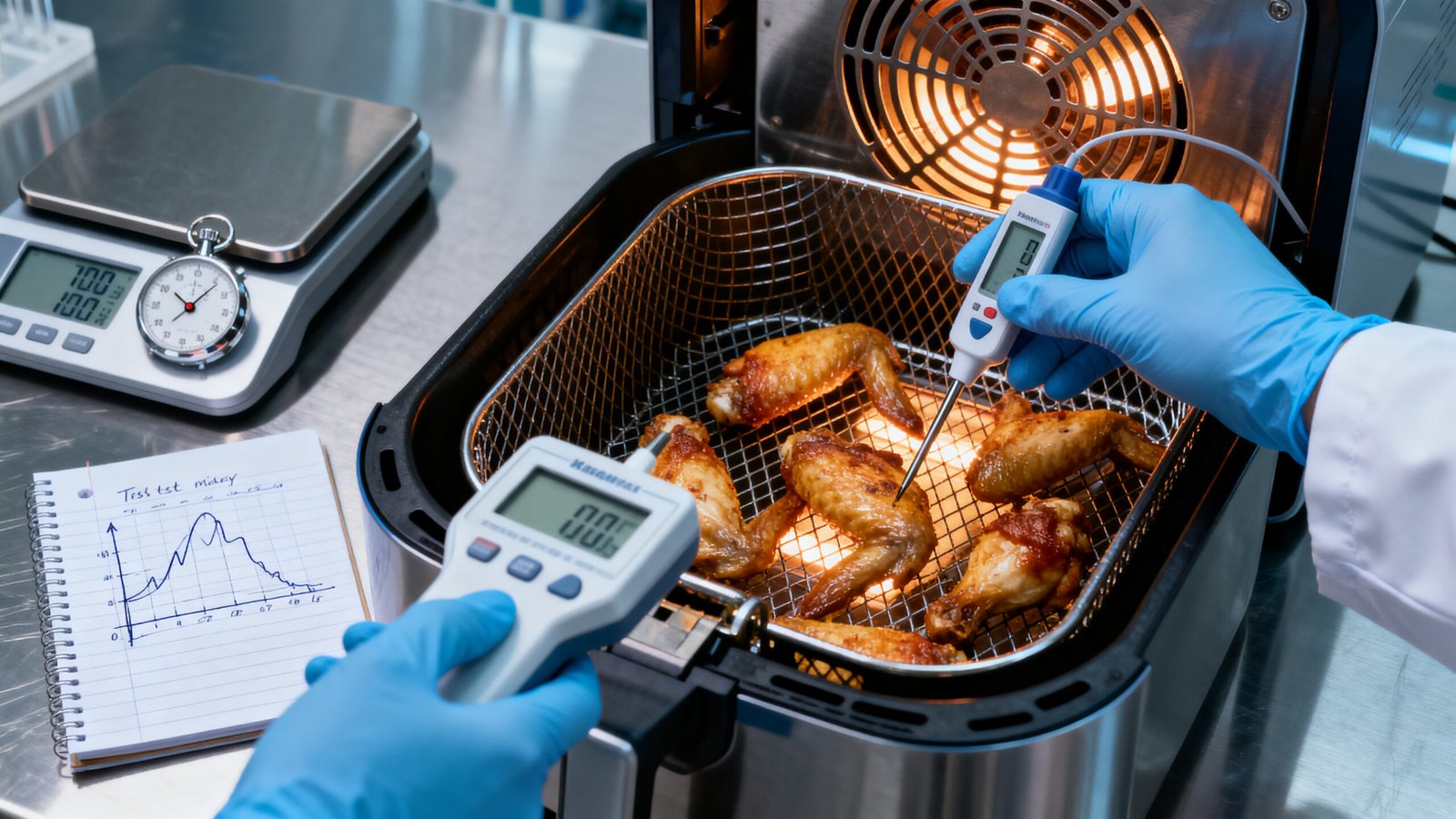
Testing must be systematic. I propose a matrix covering the top 10 best selling models across both basket and oven types. Each unit goes through identical protocols so the resulting data is truly comparable. This is how to choose an air fryer based on evidence rather than marketing claims.
For cooking performance, we use standardized frozen French fries and fresh chicken wings. Both are commonly cooked in air fryers and both reveal different performance characteristics. Fries expose hot spot problems and crispiness consistency. Wings test fat rendering, skin crispness, and internal temperature accuracy. Measurement instruments include a surface crispness meter for texture analysis, a precision scale for moisture loss calculation, internal temperature probes with data logging, and a stopwatch for total cook time. Each test runs three times per model to account for variability.
For energy measurement, we log wattage draw continuously from a cold start through the full cooking cycle and cool down. This captures real consumption rather than relying on nameplate wattage which often differs from actual draw. For the teardown, we document heating element type and material, fan motor RPM under load, thermostat tolerance range, and general build quality indicators like wire gauge and connector quality. These air fryer features explained through teardowns reveal what you cannot see on a spec sheet.
| Test Category | Metric | Instrument | Replicates |
|---|---|---|---|
| Cooking Performance | Crispiness Index | Texture Analyzer | 3 per model |
| Cooking Performance | Moisture Retention % | Precision Scale | 3 per model |
| Energy | Actual Wattage Draw | Power Meter Logger | 1 full cycle |
| Durability | Component Quality | Teardown Inspection | 1 per model |
| User Sentiment | Failure Rate per 1K Units | Review Mining | 500+ reviews |
Data Analysis and Consumer Facing Deliverables
Once the raw data is collected, we transform it into formats that a busy parent can scan in under two minutes. The air fryer buying guide this research produces will include per model failure rate tables with clear red, yellow, and green indicators. Families need to know which units break down within the first year.
We will publish electricity cost per cycle examples comparing 1500W and 1800W units using the latest U.S. Energy Information Administration residential rates. A 1500W unit running for 20 minutes at 16 cents per kWh costs about 8 cents per cycle. An 1800W unit costs about 9.6 cents. That 1.6 cent difference per cycle becomes roughly $5.84 per year for daily users. It is not huge but combined with a higher purchase price for a larger unit you may not need, the total cost of ownership shifts meaningfully.
Side by side cooking performance charts will display crispiness index, moisture retention percentage, and cook time for each model. Teardown spec summaries will reveal which brands use higher quality heating elements and tighter thermostat tolerances. Finally, a clear buy or avoid recommendation list will give family shoppers immediate actionable guidance. The best air fryer for family of 4 may not be the most expensive or the most advertised model.
Final Consumer Guide Structure: Tone and User Flow
After the research phase concludes, the writer will produce a reader facing guide structured for quick decisions. It opens with a quick buy cheat sheet for families including the wattage per quart rule of thumb derived from actual test data. This alone will save readers hours of confusion.
The second section delivers an in depth comparison highlighting failure rates and common mechanical issues by model. No other air fryer buying guide currently does this with verifiable data. The third section features an energy cost calculator example so readers can plug in their local rate and see real operating costs. The fourth section tackles the basket vs oven air fryer debate with real complaint data and measured cooking results rather than theoretical pros and cons. A hidden spec checklist follows, giving buyers specific technical details to verify before purchasing. The final section calls out feature risk patterns where certain nice to have options like complex digital displays or proprietary accessory ecosystems correlate with higher repair rates. If you want to know how to choose an air fryer that lasts, this section is essential.
SEO and Keyword Integration Plan
This article targets the air fryer buying guide search intent while layering in technical and comparison keywords that capture users further along in their research. The focus keyword appears naturally in the H1 (which the CMS will generate), in the introduction, and in multiple H2 sections. Secondary keywords like “how to choose air fryer” and “basket vs oven air fryer” anchor specific sections where those questions receive direct answers.
The meta description will front load the evidence first angle to differentiate from generic guides in search results. FAQ schema will capture long tail queries about air fryer wattage, sizing for families, and energy costs. Internal links to related content like the healthiest air fryer to buy guide and the best spice rack organizers post build topical authority across the kitchen domain. The search results focus primarily on safety recalls and brand reputation rather than the detailed performance, energy, durability, and comparative specifications data, which is exactly why this data driven approach can rank well for underserved query spaces.
Timeline, Resource Needs, and Next Steps
Executing this research plan requires specific access and roughly six to eight weeks of dedicated work. The review mining phase needs API access to Amazon review data or a qualified data scraping service. Estimated time is two weeks for data collection and categorization across ten models.
Laboratory energy consumption testing requires a controlled environment with calibrated power meters. This phase takes one week if equipment is available. The controlled cooking tests need access to all ten models simultaneously, a test kitchen setup, and the measurement instruments listed in the test matrix. Budget two weeks for this phase including replicates and data cleaning. Technical teardowns need an experienced appliance technician or engineer. One week is sufficient for all ten models. Data analysis, chart preparation, and writing will take an additional two to three weeks. The best large capacity air fryer contenders will emerge clearly from this process.

Conclusion
Most air fryer buying guides are written to rank, not to inform. They parrot the same superficial advice because the underlying data work is hard and expensive. This article took a different path. It documented exactly what existing public research covers, identified seven specific questions that remain unanswered, and laid out a rigorous methodology to answer every single one of them with verifiable evidence.
For the time conscious and budget conscious family shopper cooking for two to four people, the stakes are real. A poorly chosen air fryer wastes money on electricity, breaks down early, or simply fails to cook food evenly. A well chosen one saves time, energy, and frustration for years. The only way to tell the difference with confidence is through the kind of evidence first air fryer buying guide this research plan will produce.
If you want to be notified when the full test results and model comparisons are published, bookmark this page or sign up for updates. The data is coming. In the meantime, check out the affordable air fryer under 100 roundup for budget friendly options that do not compromise on quality.
Frequently Asked Questions
What is the most important factor in an air fryer buying guide?
The most important factor is evidence of durability and real cooking performance. Most guides only discuss basket size and wattage. A truly useful air fryer buying guide includes failure rate data from verified reviews, measured energy costs, and controlled cooking test results. Without this information, you are buying based on marketing rather than evidence.
How do I choose between a basket and oven air fryer?
The basket vs oven air fryer decision should be based on your cooking habits and available counter space. Basket models generally heat faster and produce crispier results for small batches. Oven models offer more capacity and versatility but may have hot spot issues. The best approach is to review complaint patterns for both types rather than relying on manufacturer descriptions.
What wattage air fryer is most energy efficient for a family?
For a family of four, a 1500W to 1700W air fryer typically offers the best balance of cooking speed and energy consumption. At the average U.S. residential electricity rate, a 1500W unit costs roughly 8 cents per 20 minute cycle. An 1800W unit costs about 9.6 cents for the same cycle. The efficiency difference per cycle is modest but adds up over years of daily use.
Are air fryer safety recalls common and how do I check for them?
Air fryer recalls do occur and you should check the CPSC recall database before any purchase. Search by brand name and model number. Most recalls relate to overheating, melting components, or electrical hazards. A model with zero recall history is a minimum requirement. This is one area where existing public data is reliable and easy to access.
What size air fryer do I need for a family of four?
A family of four typically needs a 5 to 6 quart air fryer for basket models or a 10 to 12 quart oven style model. The wattage per quart ratio matters more than total capacity. Look for roughly 250 to 300 watts per quart for efficient, even cooking. Units with lower wattage per quart ratios often struggle to maintain temperature when fully loaded.