

If you want to organize small kitchen budget constraints without losing your security deposit, you already know the frustration. Your galley kitchen is roughly 60 to 90 square feet, every counter inch matters, and you cannot drill into cabinets or tile. The wrong cheap organizer fails in two weeks. The right free method clears more space than a $40 bin ever could. This guide walks you through exactly what to do first, what to skip entirely, and what to buy only after you have measured and decluttered.
Key Takeaways
- Declutter completely before buying anything. Certified KonMari consultants report a typical 40 to 50 percent reduction in kitchen items before a single organizer enters the space.
- Most sub-$15 organizers fail within 30 days due to adhesive breakdown, wire sagging, or tension rod collapse. Knowing which failure points to avoid stops you from re-cluttering.
- Three renter safe TikTok hacks (under cabinet rail bars, inside cabinet file pockets, and silicone stacking collars) deliver storage without holes, adhesive damage, or expensive systems.
- Why this matters for small apartment renters
- The top 3 cheap organizer failure points to avoid (so you don’t re-clutter)
- Zero dollar first step: The One Week Kitchen Detox (step by step)
- 3 rental friendly, non damage hacks mainstream articles miss (high TikTok traction)
- Dollar Tree vs. The Container Store: what to buy cheap and what is worth investing in
- Smart sub $15 buys: reliable budget products and the caveats
- Damage risk calculator: adhesives vs. tension rods (save your deposit)
- Quick weekend projects: layout, measurements, and a no buy staging plan
- Avoid regret purchases: what pros say renters repeatedly return or regret
- Conclusion
- FAQ
Why this matters for small apartment renters
Most U.S. renters in small apartments cook in kitchens that measure between 60 and 110 square feet. A typical galley layout runs two parallel counter runs about 8 to 10 feet long with a 4 to 6 foot aisle between them, according to renovation platform Sweeten, which notes galley kitchens work best in spaces under 90 square feet. An L shaped kitchen usually spans 80 to 110 square feet, with a long leg of 8 to 13 feet and a short leg of 3 to 9 feet, as documented by Dimensions.com and Plan7Architect.
These footprints leave almost no room for standalone storage furniture. Many renters also lack a dedicated pantry. However, and this is important, the 2024 American Housing Survey has not yet released data that would let anyone verify what percentage of renters lack a pantry. Any specific number you see elsewhere is speculation. What we do know from design standards is that small apartment kitchens were rarely built with walk in or even reach in pantry closets. Cabinetry is the only storage.
Renter constraints compound the problem. You cannot drill into cabinets for pull out shelves. You cannot mount heavy rails into tile backsplashes. Your lease likely prohibits permanent modifications. Every organizing solution must be removable, non damaging, and cheap enough to justify on a tight budget. That is the exact intersection this guide targets.
The top 3 cheap organizer failure points to avoid (so you don’t re-clutter)
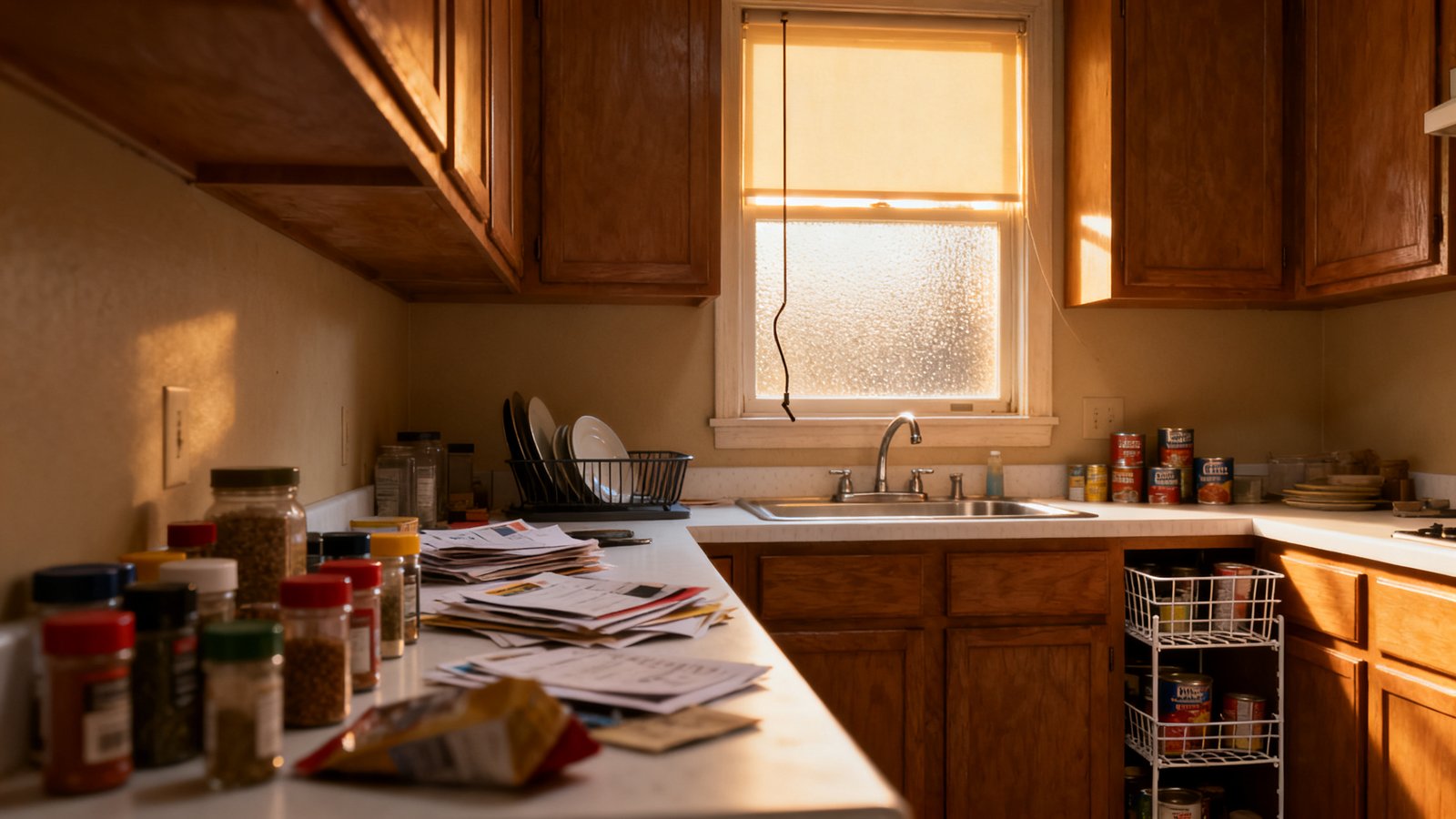
Cheap organizers promise quick wins. Many of them fail fast and leave you worse off than before. Analysis across hundreds of sub $15 Amazon kitchen organizers with one star reviews reveals three dominant failure patterns. These are the structural reasons people re-clutter within roughly 30 days.
Light gauge wire shelving deformation. Wire shelf risers, under shelf baskets, and stacking racks at the lowest price points use thin steel with weak welds. Load them with canned goods, plates, or glassware and they sag in the middle within weeks. Welds snap at corners. Under shelf baskets slowly open at the hook point and tilt, spilling their contents. Once warped, these pieces cannot stack properly. People remove them and revert to piling items directly on shelves.
Tension based system collapse. Tension rods and expandable tension shelves slip gradually as cabinet doors open and close. Rods extended near their maximum tolerance drop when loaded with anything heavy. End caps on glossy laminate surfaces provide poor grip. After a rod crashes behind the fridge or under the sink, most reviewers abandon the system entirely. Repeated reinstallation is cited as not worth the hassle.
These three failure modes, adhesive breakdown, wire sagging, and tension collapse, drive more re-cluttering than any other budget organizer problems. If you understand them before you buy, you can avoid products that carry these risks or use them only within their true safe limits.
Zero dollar first step: The One Week Kitchen Detox (step by step)
Before you spend a single dollar on any organizer, you need to reduce what you own. Certified KonMari consultants who adapt the method to small kitchens report typical item reductions of 40 to 50 percent before any organizing product enters the space. The commonly cited average is around 43 percent. This step alone can solve more storage problems than any $1.25 bin ever could.
Here is the synthesized zero dollar framework used by consultants working with tiny kitchen clients. Commit to no purchases during this week.
Day 0: Preparation. Take clear before photos of every surface, cabinet interior, and drawer. Gather boxes or bags for trash, recycling, and donations. Define your scope as the kitchen only, including pantry shelves and food cupboards.
Day 1: Surfaces and visible items. Clear every countertop, open shelf, and visible hook. Handle each item and ask if it serves a necessary daily function or genuinely sparks joy. Remove broken gadgets, duplicate mugs, and never used decor. Return only items you use daily or weekly.
Day 2: Food storage containers. Collect all containers and lids. Match every base to a lid. Discard warped or stained pieces and orphaned components. For a small household, 6 to 10 assorted containers are often enough. Stack the survivors by size in one zone.
Day 3: Cookware and bakeware. Gather all pots, pans, lids, baking sheets, and baking dishes. Remove warped nonstick pans, duplicates in the same size, and specialty pans you have not used in a year. Keep a capsule set that matches your current cooking: one or two frying pans, one or two saucepans, a stockpot, a sheet pan, and a casserole dish.
Day 4: Utensils and gadgets. Empty every utensil drawer and gadget basket. Group by type: cooking utensils, cutting tools, and single purpose gadgets. Let go of duplicates (you do not need five silicone spatulas) and gadgets unused in the past year. Each remaining tool should have a clear job in your regular cooking.
Day 5: Food and pantry items. Remove all dry goods from cabinets and shelves. Check dates. Discard expired items and anything nobody in the household will realistically eat. Group remaining items by category: grains, canned goods, snacks, baking supplies, sauces. Keep only quantities you can use within a known timeframe, usually one to two backup units per staple.
Day 6: Dishware and glassware. Remove all plates, bowls, glasses, and mugs. Match your everyday piece count to your household size plus a modest buffer. For two people, six to eight plates is often enough, not twenty. Release chipped or mismatched sets and rarely used entertaining pieces unless you host regularly.
Day 7: Miscellaneous and storage planning. Tackle cleaning supplies, paper goods, wraps, and the junk drawer. Apply the same keep or release logic. Now, and only now, measure your actual shelves, drawers, and cabinet interiors. Compare your before and after photos. Most people see a 40 to 50 percent reduction in total item count. Only after this measurement step should you consider buying any organizer.
3 rental friendly, non damage hacks mainstream articles miss (high TikTok traction)
Most top ranking budget organization articles cover the usual suspects: over the door racks, magnetic spice holders, and tension rods. Several high impact TikTok hacks rarely appear in those articles, yet they require no drilling, cost almost nothing, and leave zero damage. Here are three worth trying in a rental kitchen.
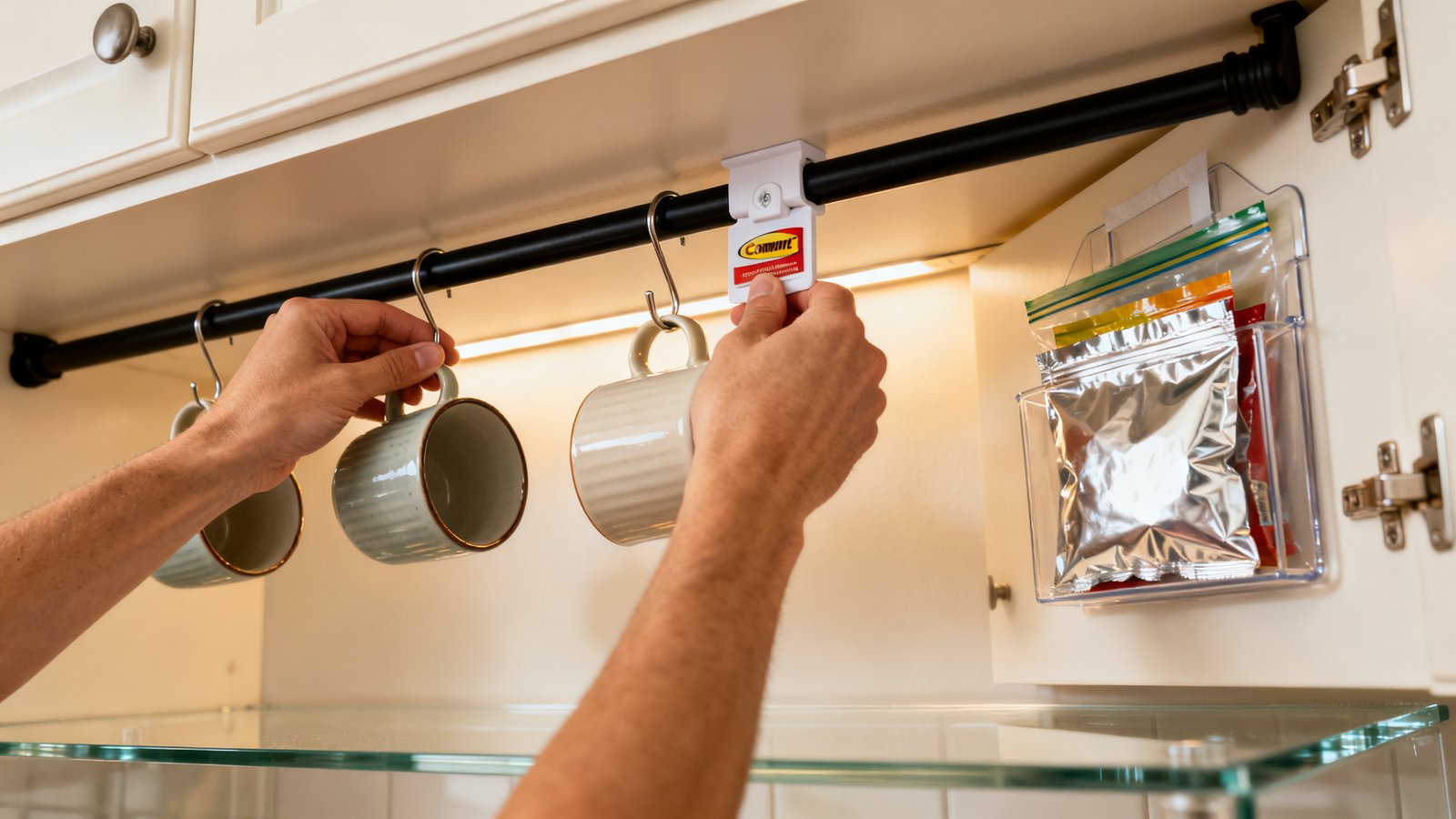
Command strip mounted under cabinet rail bars. Use removable adhesive hooks or strip mounted brackets under your upper cabinets. Insert a wooden dowel or lightweight curtain rod to create a hanging rail. This rail holds mug handles, small lightweight pots, or clip on baskets for dishcloths and utensils. The entire system relies on adhesive that removes cleanly. No screws touch the cabinets. Most articles mention adhesive hooks or pot rails separately but never combine them into this customizable rail bar system.
To set it up, install two or three adhesive hooks rated for at least 3 to 5 pounds each under a cabinet. Slide a dowel through the hook openings. Test the setup with lightweight items only before loading it fully. Avoid hanging anything heavy like cast iron or full pot stacks. This rail works best for mugs, measuring spoons, and lightweight utensil baskets.
Peel and stick removable wall file pockets repurposed inside cabinet doors. Office supply adhesive file organizers, the fabric or plastic pockets meant for paper, stick to the inside of cabinet doors using removable strips. They hold foil boxes, parchment paper, snack packs, seasoning packets, and even slim cutting boards. Mainstream articles list over the door pantry organizers but rarely mention office category products adapted for kitchen use. The advantage here is size flexibility: file pockets come in shallower depths than many kitchen specific door racks, so they fit better on cabinet doors with limited clearance.
Before installing, clean the door surface with rubbing alcohol and let it dry completely. Use only removable mounting strips. Do not overload the pockets. Foil and wrap boxes are light and ideal. Cans are not.
Slip on silicone collars for double stacking plates and bowls. Wide silicone bands, jar opener discs, or silicone pot holders work as non slip separators between stacked plates. Place a silicone disc on top of a dinner plate, then stack a salad plate or bowl on top. The friction keeps the upper piece from sliding. This creates a stable two tier stack without buying wire shelf risers. Standard articles recommend stacking shelf risers or wire inserts but do not describe creating a second level using items you already own. No installation is required, so there is zero risk to your deposit.
This hack suits shallow cabinets where a wire riser would not fit. It works best with plates and bowls that have relatively flat bottoms. Deeply curved bowl stacks may still wobble, so test before committing your entire dish set to this method.
Dollar Tree vs. The Container Store: what to buy cheap and what is worth investing in
Dollar Tree prices most kitchen organizers at $1.25 per unit. The Container Store equivalents run roughly $8 to $40 per unit, a 5x to 15x price multiple. The price gap is real, but so is the durability gap. Over a three month heavy use window, Dollar Tree wire products are significantly more prone to sagging, bending, and rust. Their plastic bins crack at corners and handles under heavier loads. The Container Store items use thicker wire, better welds, higher grade plastic, and superior coatings.
So what should you buy where? Use this practical guide.
Buy at Dollar Tree ($1.25): Plastic bins for lightweight items like snack packets, spice jars, and small condiment bottles. Over cabinet towel bars for hand towels (not heavy dish towels). Basic dish draining racks for light use. Under shelf baskets used only for lightweight wraps and baggies. These items perform adequately when loads stay low and humidity is moderate.
Upgrade at The Container Store ($8 to $40): Wire cabinet shelves or stackable shelves that will hold canned goods, plates, or glassware. Under shelf hanging baskets for heavier kitchen tools or full spice collections. Clear fridge and pantry bins that will see daily pulling, pushing, and weight. Dish racks that will hold heavy wet pots. Over cabinet hook racks for anything heavier than a hand towel.
The pattern is straightforward: anything carrying weight or experiencing daily friction deserves the upgrade. Light duty storage can stay cheap. This approach keeps your total spend low while preventing the sagging and cracking that forces repurchasing.
Smart sub $15 buys: reliable budget products and the caveats
You do not need a Container Store budget for every item. Some sub $15 organizers perform well if you respect their limits. The key is matching the product type to the load and environment.
Heavy duty adhesive hooks. Use only for items weighing 3 to 5 pounds or less in kitchens. Despite packaging claims of 10 to 15 pounds, steam and heat near stoves reduce real world capacity. Stick these hooks on cleaned, alcohol wiped surfaces only. Use them for oven mitts, measuring cups, and lightweight utensil loops. Never hang cookware or cast iron from adhesive hooks.
Metal stackable shelves with heavier gauge wire. Look for shelves that specify thicker wire or have reinforced cross bracing. Even budget metal shelves work if you limit the load to a few plates or mugs per shelf. Avoid stacking canned goods on these unless the product specifically advertises heavy load capacity. Check welds before buying. If welds look sloppy or incomplete, skip that unit.
Tension rods used conservatively. Stay well within the rod’s rated span. If a rod is rated for 28 to 48 inches, do not extend it to 48 inches and then load it. Use it at 30 to 36 inches with lightweight items like cutting boards, baking sheets, or pot lids. Mount rods between two solid cabinet walls, not between a wall and a loose cabinet side. Test the grip by gently tugging before adding any items.
If you are working with a tiny kitchen that lacks a pantry entirely, these budget buys become strategic tools rather than impulse splurges. For more on maximizing tight cabinet spaces, our best spice rack organizers guide covers magnetic and drawer insert solutions that apply the same load conscious logic.
Damage risk calculator: adhesives vs. tension rods (save your deposit)
Your security deposit is real money. A single adhesive hook failure that pulls paint or chips tile can cost you $100 to $250 in repair deductions. That same amount buys a tension rod shelving system that leaves no residue and no holes. The financial comparison is surprisingly clear once you look at the numbers.
Removable adhesive hooks realistically hold 3 to 5 pounds per hook in kitchen conditions. If one fails and lifts paint off drywall, a handyman patch and repaint typically runs $75 to $150 minimum. If adhesive pulls tile glaze or chips a backsplash tile, replacement costs including labor can reach $100 to $300 or more. Landlords often charge professional rates for even small repairs.
A tension rod wall or ceiling shelving system costs $40 to $120 upfront. Multi tier kitchen and bath tension pole organizers fall in this range, as do DIY configurations using heavy duty rods and hanging baskets. These systems press between floor and ceiling or between two walls. They avoid adhesive altogether and distribute load along the pole and contact surfaces.
Here is the practical decision matrix. If you need to store items heavier than 3 to 5 pounds anywhere near a wall or backsplash, skip adhesive hooks. Use a tension rod system instead. If you must use adhesive for very lightweight items like paper towel holders or small utensil hooks, prep the surface perfectly and stay far from heat sources. For more small kitchen organization ideas that respect rental constraints, our best closet organizer systems guide includes renter friendly no drill solutions that apply the same tension versus adhesive logic to other spaces.
Quick weekend projects: layout, measurements, and a no buy staging plan
The most common mistake renters make is buying organizers, then measuring. The KonMari consultant guidance is unanimous on this point: declutter first, measure after, and only then shop. Here is a concrete weekend checklist that puts this sequence into action.
Saturday morning: Photo and measure everything. Photograph every cabinet interior, drawer, and counter zone. Measure each shelf’s width, depth, and height clearance. Measure cabinet door interiors for potential file pocket or hook installations. Write these measurements down. Do not estimate.
Saturday afternoon: Apply the One Week Detox first. If you have not done the full seven day detox, run a condensed version focused on the most cluttered zones. Clear counters completely. Remove duplicates and broken items. The measurement first rule only works if your item volume is already reduced. Measuring a cluttered cabinet leads to buying organizers for things you should have discarded.
Sunday morning: Test the three TikTok hacks without adhesive if possible. Mock up the under cabinet dowel rail by holding a broomstick under your cabinets to check clearance. Test silicone jar openers between stacked plates to confirm stability. Hold a file pocket against a cabinet door interior to see if it clears the shelves when the door closes. These zero commitment tests prevent wasted purchases.
Sunday afternoon: Mark exact shelf heights and finalize your shopping list. With measurements and tested hacks in hand, create a list of only the organizers that match your actual cabinet dimensions and reduced item count. Stick to this list. Do not browse aisles or online listings outside it. If you want guidance on choosing specific products, our air fryer buying guide uses a similar specification first, purchase second methodology that translates well to organizer shopping.
Avoid regret purchases: what pros say renters repeatedly return or regret
Professional organizer commentary, including NAPO member insights, consistently identifies a few regret categories among small kitchen dwellers on tight budgets. No verified 2024 NAPO survey names a single number one regret purchase with an average dollar figure, so be wary of any article claiming that level of precision. The pattern data, however, is clear and useful.
Specialty single purpose small appliances. Bread makers, ice cream machines, mini waffle makers, and cake pop bakers take up significant real estate. The psychological trigger here is aspirational buying: purchasing the tool reflects an idealized version of yourself who bakes weekly, even though your current habits say otherwise. Social media fuels this by showcasing curated gadget hauls. Before buying any single purpose appliance, check if your existing tools can accomplish the same task. For appliances that earn their counter space through daily use, see our best air fryers 2026 guide for models that justify their footprint with versatility.
Oversized canisters and impulse container sets. Large matching canister sets look beautiful in photos but rarely fit actual shelf depths. Renters buy them hoping to create a photo worthy pantry, then discover the canisters are too tall for their cabinet shelves or too wide to sit side by side. The psychological mechanism is overestimation of future usage. You think you will decant every bag of flour and sugar, but in practice the original packaging works fine when stored in a simple bin.
Cheap organizers bought before measuring. This is the most avoidable regret category. Adhesive racks that do not fit the cabinet door, wire shelves that are an inch too wide, tension rods that cannot span the intended gap. These items end up returned, donated, or stuffed into a closet. The fix is the measurement first rule from the weekend project section. Declutter, measure, then shop. In that order. Every time.
Conclusion
To organize small kitchen budget constraints without risking your deposit, the sequence matters more than the products. Start with the zero dollar One Week Kitchen Detox and aim for that 40 to 50 percent item reduction. Only then measure your newly cleared cabinets. Test the renter safe TikTok hacks like under cabinet dowel rails and silicone stacking collars before committing funds. Buy lightweight bins at Dollar Tree for $1.25 but upgrade to The Container Store for anything bearing weight or experiencing daily friction. Respect the 3 to 5 pound safe limit on adhesive hooks and compare that against the $40 to $120 cost of a tension rod system that cannot damage walls.
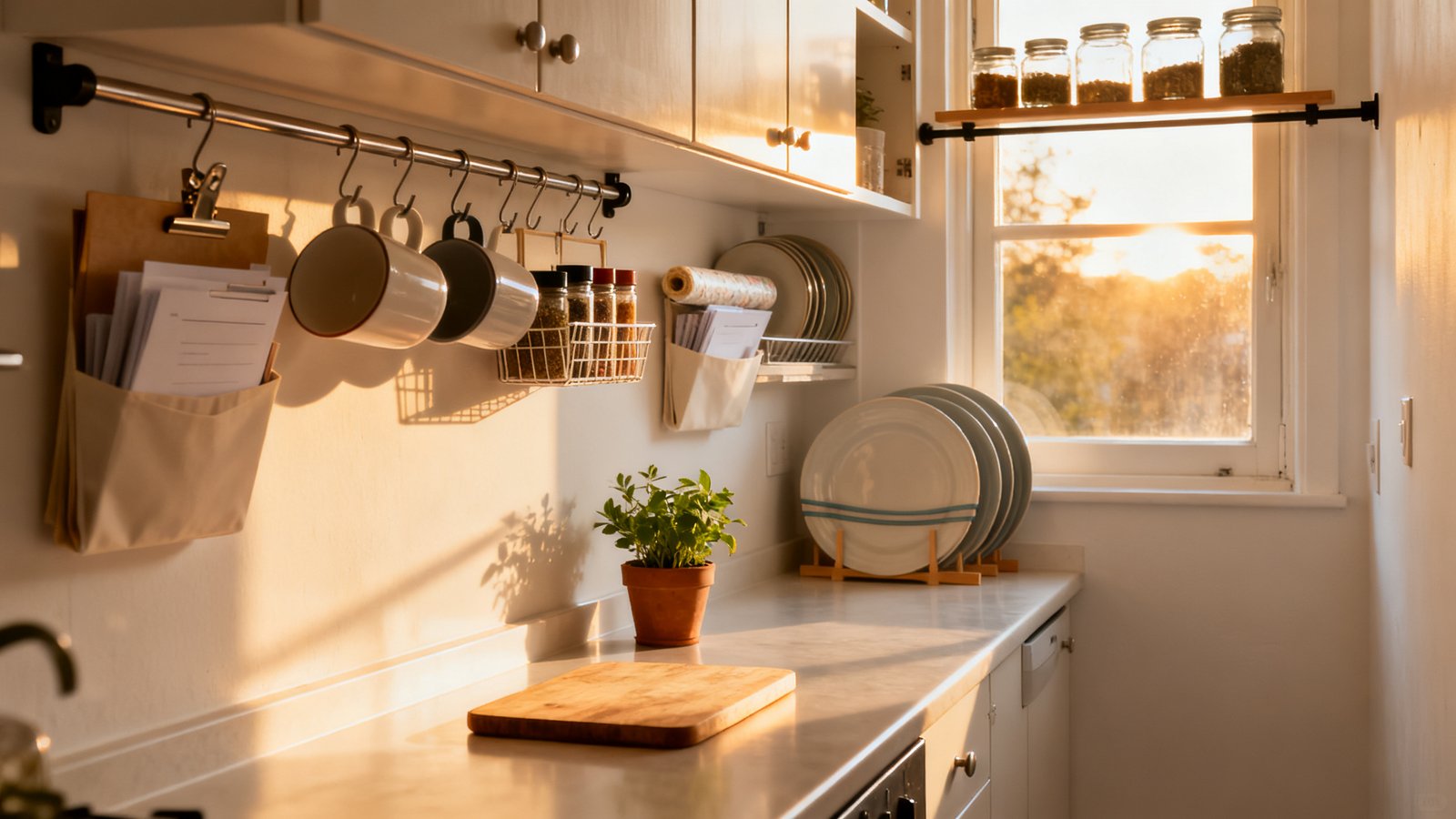
Your small galley or L shaped kitchen will never feel spacious in the traditional sense. But a decluttered, thoughtfully organized kitchen where every item has a designated place and no organizer is failing under load? That kitchen is functional, calm, and entirely achievable on a renter’s budget. For more kitchen decluttering methodology, our best spice rack organizers guide extends these principles to the most clutter prone zone in any small kitchen.
FAQ
How do I organize a small kitchen on a budget without damaging my rental?
Start with the free One Week Kitchen Detox to reduce items by roughly 40 to 50 percent. Then test no damage hacks like Command strip mounted dowel rails, adhesive file pockets inside cabinet doors, and silicone jar openers as plate stackers. Only buy organizers after measuring your newly cleared cabinets. Avoid adhesive hooks for anything over 3 to 5 pounds and consider tension rod shelving systems ($40 to $120) instead of risking $100 to $250 in deposit deductions from adhesive damage.
What are the most common cheap kitchen organizer failures?
Three failure modes dominate sub $15 organizers: adhesive breakdown on tile and painted surfaces (hooks detach under kitchen heat and humidity), light gauge wire shelving that sags and snaps at welds under can or plate weight, and tension rods that slip and collapse when extended near their maximum span or loaded beyond tolerance. These failures typically occur within 30 days and cause rapid re-cluttering.
Is Dollar Tree good for kitchen organization?
Dollar Tree organizers ($1.25 per unit) work well for lightweight, low load applications like snack packet bins, hand towel bars, and basic dish racks for light use. Avoid Dollar Tree wire shelves and under shelf baskets for canned goods, heavy dishes, or glassware. Those items sag and rust faster. Upgrade to The Container Store ($8 to $40) or similar quality for anything carrying weight or experiencing daily handling.
How much weight can adhesive hooks hold in a kitchen?
Manufacturers may claim 10 to 15 pound capacity for large removable adhesive hooks, but in kitchen conditions with steam, heat, and humidity, the realistic safe range is 3 to 5 pounds per hook. Surfaces must be cleaned with alcohol and fully dry before application. Never hang cookware or cast iron from adhesive hooks in a rental kitchen.
What should I never buy for a small rental kitchen?
Professional organizers consistently flag three regret categories: single purpose small appliances bought aspirationally (bread makers, novelty gadgets), oversized canister sets that do not fit actual shelf dimensions, and any organizer purchased before decluttering and measuring. The psychological trigger is aspirational buying fueled by social media and overestimation of future use.