

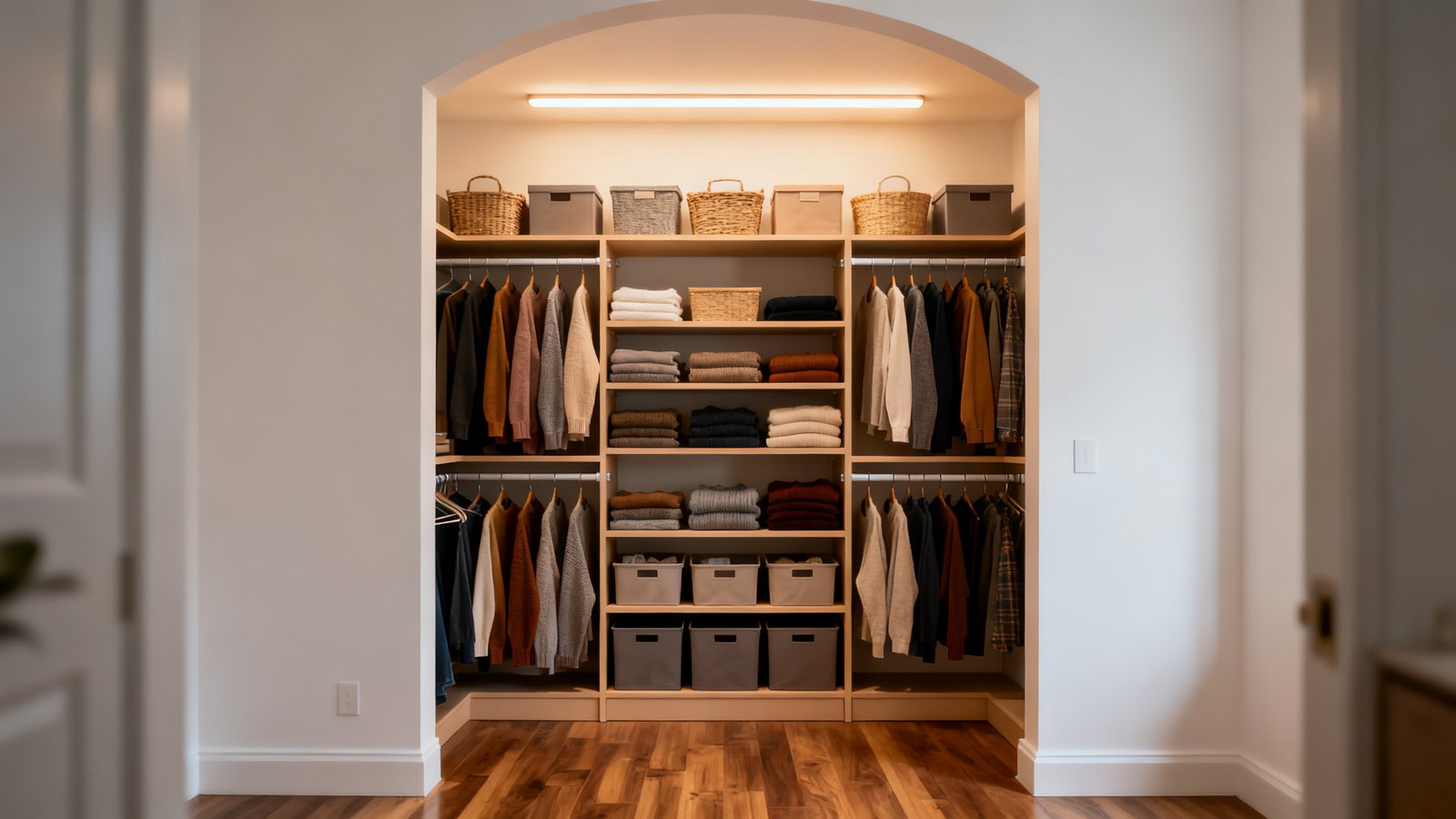
Finding the best closet organizer systems is rarely about buying the most expensive kit or the one with the prettiest photos. It is about matching a system to your exact closet geometry, your wall type, and how much weight you actually plan to hang. Get those three things wrong and you will be left with a sagging shelf, a lost rental deposit, or a weekend of frustration you did not anticipate.
For Emily, a 34 year old urban professional who rents but wants a polished and functional closet, the stakes are clear. She needs a system that fits a potentially awkward space, mounts without destroying the walls, handles real clothing loads, and does not secretly cost twice the sticker price after hardware upgrades and tools. This guide walks through every decision point she and shoppers like her will face, from measuring the closet to reading weight ratings honestly and choosing the right mounting method for a rental.
Key Takeaways
- The global closet organizer market sits between roughly USD 7 and 12 billion in 2024–2025, with modular and DIY systems driving the fastest growth segment.
- Most 1–2 star complaints trace back to three failures: unclear instructions and missing hardware, inadequate anchors that pull out of drywall, and shelf sagging when spans exceed 24–30 inches without center supports.
- True total spend for a reach-in system commonly lands between USD 150 and 600 for DIY installs, while entry-level laminate walk-in setups often reach USD 350 to 1,650 after add-ons and tools.
How to choose the best closet organizer systems (quick primer)
Before comparing brands or reading a single review, every buyer should run through four sequential decisions. Skipping any one of them is what leads to the return pile or the angry review.
Step 1: Measure and classify your closet. Determine whether you have a shallow reach-in (less than 22 inches deep), a standard reach-in (roughly 24 inches), a small walk-in, or a non-standard space with sloped ceilings or obstructions. The depth measurement is the most critical because it dictates which shelf depths and rod projections will actually let the door close.
Step 2: Choose a material preference. Wire systems cost the least and ventilate well, but they can sag under heavy loads and snag delicate fabrics. Laminate and engineered wood towers look more built-in and resist sagging better, but they are heavier, more expensive, and vulnerable to humidity damage. Freestanding systems eliminate wall drilling entirely but consume floor space.
Step 3: Decide between modular kits and fully custom. Modular systems from brands like IKEA BOAXEL, ClosetMaid ShelfTrack, and Rubbermaid Configurations let buyers mix components within a standardized ecosystem. Custom or semi-custom systems offer precise fit but cost significantly more and often require professional design and installation.
Step 4: Prioritize fit, load capacity, and mounting method before brand loyalty. A system that cannot span your closet width without an intermediate bracket, or that ships with weak drywall anchors, will fail regardless of the name on the box. Stud-mount capability, available shelf depths, and published weight ratings matter far more than the logo.
The modular and DIY subsegment is the fastest-growing slice of the closet organizer market, according to market analyses from Credence Research and Future Market Insights, both of which cite urbanization and shrinking living spaces as primary growth drivers. The same reports estimate a global market value between roughly USD 7 and 12 billion with a compound annual growth rate around 6.5 to 8.5 percent through the early 2030s.
Closet types and what systems work best for each
Closet geometry dictates which systems will work and which will waste money. Here is a practical breakdown.
Shallow reach-in closets (less than 22 inches deep)
These are common in older apartments and condos. Standard 12-inch-deep wire shelves may fit, but a hanging rod projecting 12–13 inches from the back wall will push clothes into the door. For these spaces, look for systems with shallower shelf options like IKEA BOAXEL (11 3/4-inch depth) or consider side-mounting the rod so clothes hang parallel to the door. Freestanding tension-post systems like IKEA ELVARLI can also work if floor space allows.
Dos: Measure door clearance with hangers on the rod before committing. Use shallow shelves only.
Don’ts: Avoid standard-depth laminate towers (14–16 inches). They will protrude.
Standard reach-in closets (roughly 24 inches deep)
This is the sweet spot for most affordable wire kits. Rubbermaid Configurations and ClosetMaid ShelfTrack systems fit well here. Shelf depths of 12 inches leave comfortable clearance for hanging clothes. Laminate towers around 14–16 inches deep can work if the door swing allows.
Small walk-in closets
Walk-in spaces give flexibility for laminate tower systems like ClosetMaid SuiteSymphony or IKEA ELVARLI. Multiple towers can be arranged along walls, and double hanging rods become practical. Weight capacity becomes more important here because walk-ins tend to accumulate heavier loads.
Sloped ceilings and non-standard spaces
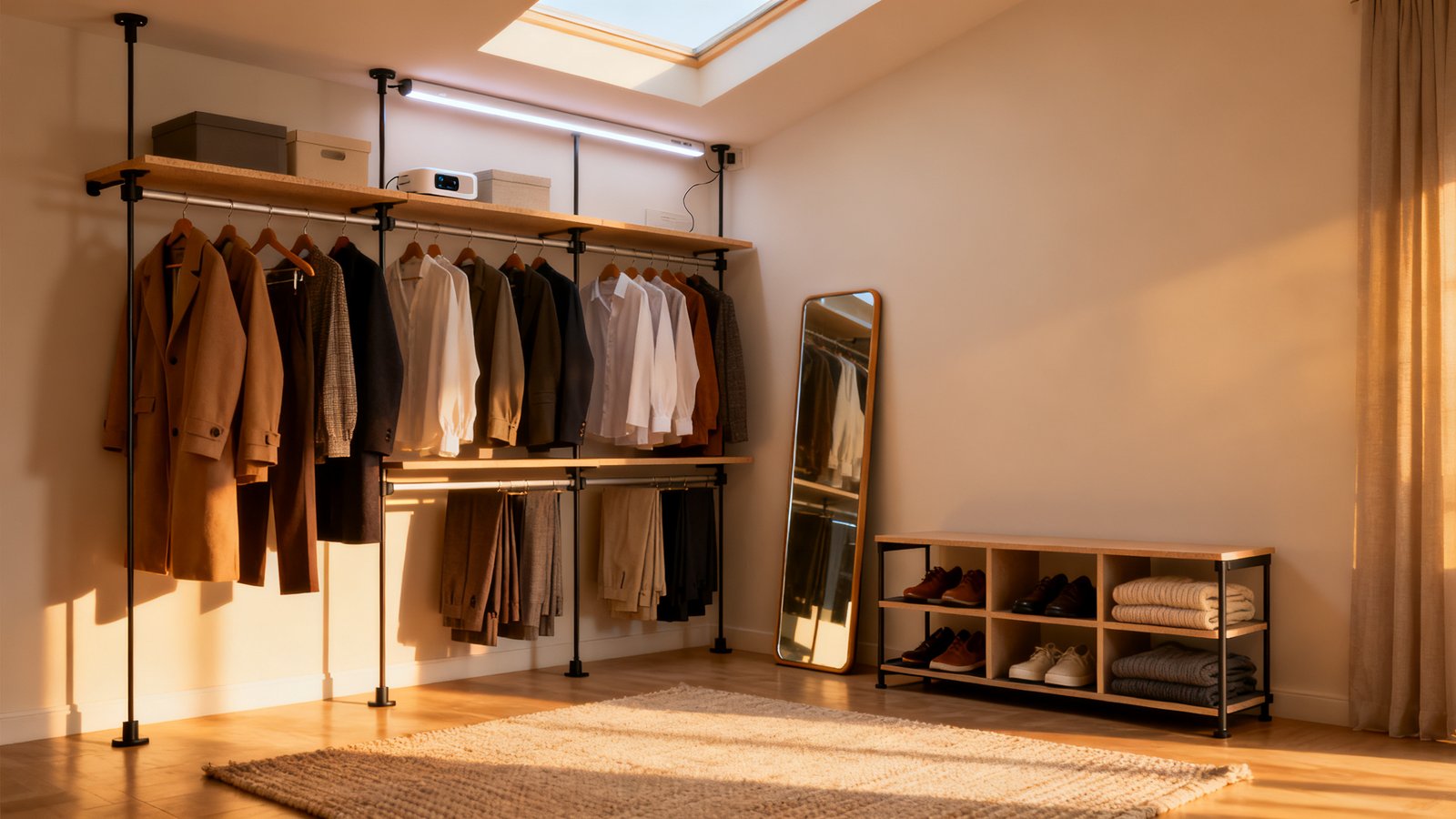
Attic closets, dormers, and under-stair spaces defeat most standard kits. Staggered towers, cut-to-fit shelves, and systems with adjustable-height posts (like ELVARLI, which adjusts from roughly 86 5/8 to 137 3/4 inches) are the realistic solutions. Few brands offer angled brackets, so expect some improvised bracketry or professional fabrication for truly odd angles.
Market research from The Freedonia Group placed the total U.S. home organization products industry at USD 14.2 billion in 2023, with closet systems representing a key growth category. The demand is clearly there, but the majority of buyers are still left guessing which system actually fits their specific closet shape.
Compare the top affordable systems: the real specs you must check
Below are five representative systems that dominate the affordable modular category. The specs come from manufacturer product pages and retailer listings. The “best” choice depends entirely on your closet depth and expected load.
| System | Shelf Depth Options | Material | Typical Shelf Weight Capacity | Best For |
|---|---|---|---|---|
| Rubbermaid Configurations | 12 in | Epoxy-coated steel wire | ~25–30 lb/ft (manufacturer rated) | Budget reach-ins, 4–8 ft widths |
| ClosetMaid ShelfTrack | 12–16 in | Epoxy-coated steel wire | ~50–80 lb per shelf (manufacturer rated) | Reach-ins needing higher load rating |
| ClosetMaid SuiteSymphony | 14–16 in | Particleboard + melamine laminate | ~15–25 lb per drawer/shelf (typical) | Walk-ins and dressier reach-ins |
| IKEA BOAXEL | 11 3/4 in and 15 3/4 in | Powder-coated steel | ~26–55 lb per shelf (varies by width) | Budget reach-ins, rental-friendly modular |
| IKEA ELVARLI | 15 3/4 in | Aluminum posts + fiberboard/steel | ~44–55 lb per shelf | Walk-ins, open wardrobes, rentals (floor-to-ceiling) |
The ELVARLI posts adjust from approximately 86 5/8 to 137 3/4 inches in height, making them uniquely suited for tall or irregular ceiling heights. BOAXEL offers the shallower 11 3/4-inch shelf depth that saves shallow closets from door clearance nightmares. Neither system eliminates wall drilling entirely, but ELVARLI distributes load between floor and ceiling, which reduces the number of wall anchors required.
The three product failure modes: what 1–2 star reviews consistently call out
After synthesizing hundreds of low-star reviews across Amazon, Home Depot, and IKEA product pages, three failure patterns dominate. All three are preventable with the right pre-purchase checks.
Failure 1: Unclear instructions and missing parts
Reviewers consistently describe opening the box to find no written instructions, only pictograms, or discovering that critical brackets and screws are missing. One reviewer paraphrased the experience bluntly: “The diagrams made no sense and I was missing two shelf clips. Had to watch three different YouTube videos just to figure out which screws went where.” Another common complaint targets IKEA PAX and BOAXEL systems: “The instructions are all pictures. If you make one wrong guess, you are taking the whole thing apart.”
Fix: Before starting assembly, inventory every part against the manual. Photograph the spread. If anything is missing, contact support before drilling the first hole. For picture-only instructions, search YouTube for the exact SKU plus “assembly” before unboxing.
Failure 2: Inadequate anchors causing sag and pullout
The included drywall anchors in most budget kits are the single most cited failure point. When shelves are loaded with jeans, sweaters, or storage bins, the plastic anchors deform or tear out of the drywall. One reviewer wrote: “The shelves started pulling away from the wall after two weeks. The anchors that came with the kit were cheap plastic. I had to buy toggle bolts and redo everything.”
Sagging becomes visible when unsupported wire shelf spans exceed roughly 24–30 inches. Consumers report that shelves “bowed in the middle” and “looked terrible” even when technically still attached to the wall.
Fix: Insist on mounting into studs wherever possible. For drywall-only sections, replace included anchors with heavy-duty toggle bolts or metal expansion anchors (budget roughly USD 10–30 extra). Add intermediate support brackets at least every 24 inches for wire shelves. Never trust the “no stud needed” marketing on its own.
Failure 3: Material and finish failures
Laminate systems like ClosetMaid SuiteSymphony draw complaints about edge chipping during assembly, especially when cam locks are over-tightened. In humid environments like closets adjacent to bathrooms, reviewers report swelling and peeling within months. Wire systems draw complaints about sharp edges that snag clothing and inconsistent powder coating that rusts.
Fix: Pre-check all panels for damage before assembly. For laminate systems in humid areas, consider wire or sealed aluminum alternatives. Run a finger along wire shelf edges before installing; file down any burrs with fine-grit sandpaper.
Hidden costs nobody tells you: true total spend after add-ons
The sticker price on a closet organizer kit is rarely the final number. Here is what the total actually looks like once realistic add-ons and tools are included.
Upgraded anchors and screws: USD 10–30. Almost mandatory for drywall installations if you want to avoid the failures described above.
Extra brackets and supports: USD 10–40. Required when shelf spans exceed 24–30 inches or when the kit includes only the minimum number of brackets.
Tools you may not own: A stud finder costs roughly USD 20–40. A drill with appropriate bits, if not already in your toolbox, runs USD 50–150. A hacksaw or bolt cutters for trimming wire shelves adds another USD 10–30.
Trim, filler boards, and paint: USD 20–100 plus if you want a built-in look. Basic kits leave gaps at the sides and top that many buyers end up filling.
Professional installation (if DIY goes sideways): Basic wire system installs typically cost USD 150–350 in labor. Laminate multi-tower installs run USD 300–800 or higher depending on complexity, according to installer reports tracked by Woodworking Network.
Realistic total ranges: A budget reach-in wire system, fully installed DIY with upgraded hardware and basic tools, lands between USD 150 and 600. An entry-level laminate walk-in system with extra drawers and accessories runs roughly USD 350 to 1,650.
Thinking through these numbers before buying is the difference between a satisfying project and a frustrating budget overrun. When we reviewed best spice rack organizers using a similar total-cost methodology, the same pattern appeared: advertised prices rarely tell the whole story.
Rental-friendly options and how to avoid losing your deposit
For renters like Emily, wall damage is the anxiety that keeps them from buying any organizer at all. The good news is that several systems dramatically reduce or nearly eliminate wall drilling.
Freestanding wardrobes (IKEA PAX with KOMPLEMENT interiors): These large cabinet units sit on the floor and store everything internally. They require only one or two anti-tip brackets screwed into the wall for safety. The wall damage is minimal: a couple of small screw holes that are easy to patch and paint. Clothes never touch the closet walls.
Floor-to-ceiling tension posts (IKEA ELVARLI): ELVARLI posts clamp between floor and ceiling, transferring load vertically rather than pulling outward on drywall. Some wall anchoring is still recommended for stability, but the number of holes is far lower than rail-based systems. Many tenants report using ELVARLI successfully in rentals by keeping wall screws small and documenting pre-installation wall condition with dated photos.
Portable garment racks and cube systems: Brands like SONGMICS and AmazonBasics offer freestanding racks that place all load on the floor. These are the safest option for deposit protection but have the lowest weight capacities and the least polished appearance.
What to avoid in rentals: Adhesive hooks and strips can pull paint or drywall paper off when removed, creating visible damage that landlords will deduct for. Over-tightened tension rods can dent drywall or crack plaster. Both are frequently cited in tenant forums as causes of deposit disputes. The evidence on deposit loss from closet systems is anecdotal rather than statistical, but the pattern is consistent enough across Amazon reviews and rental community discussions to take seriously.
Photograph the empty closet walls before installation. Keep those photos dated. If you do drill, use the smallest screws that will do the job and save the original hardware so you can patch cleanly on move-out.
Installation reality: tools, time, and who should hire a pro
The “easy afternoon install” promised on many kit boxes does not match the experience most buyers report. Consumer reviews across multiple retailers consistently describe assembly times of 3–6 hours for multi-section systems, often requiring a second person to hold rails level while brackets are secured.
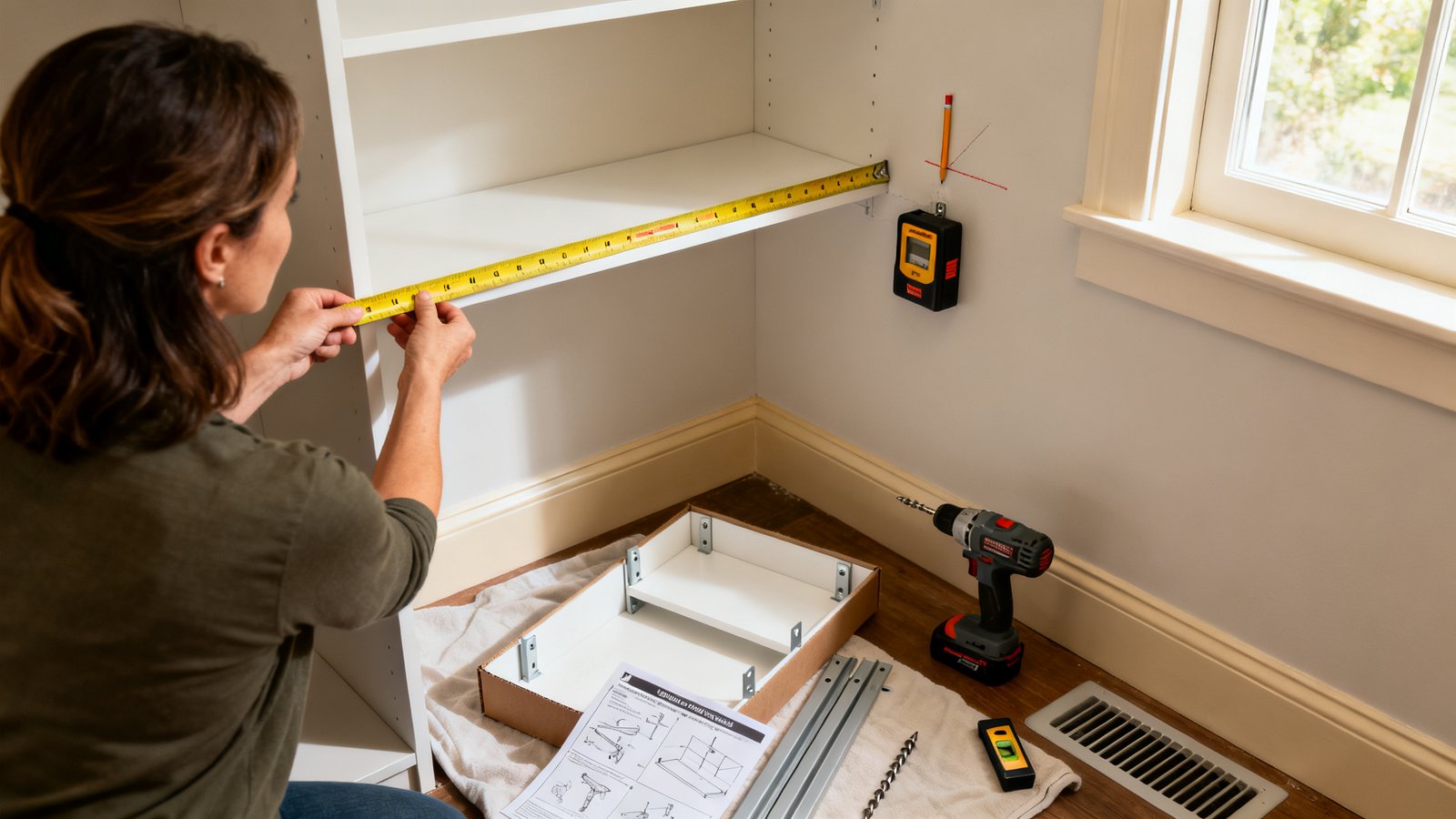
Critical tools checklist: drill with appropriate bits, stud finder, 4-foot level, tape measure, pencil, hacksaw or bolt cutters (for wire systems), screwdriver set, and upgraded anchors. A second set of hands is not optional for rail-based systems; attempting to level and drill a long wall rail solo leads to crooked results.
Red flags that mean hire a pro: Walls that are significantly out of plumb, masonry or dense plaster that a standard drill cannot penetrate, closet widths requiring spliced rails, and any configuration where shelf spans will exceed 36 inches without intermediate supports. Professional install costs for basic reach-in wire systems typically run USD 150–350, while multi-tower laminate installs range from USD 300 to over USD 800, according to industry surveys covered by Woodworking Network’s closet industry analysis.
If you enjoy projects like assembling an air fryer buying guide level of research and hands-on work, a moderate DIY closet install is within reach. If the thought of locating studs and drilling 30 holes makes you anxious, budget for the pro from the start.
How to evaluate load capacity and prevent sagging: engineering-lite advice for shoppers
Manufacturers quote weight ratings assuming evenly distributed loads attached to studs with all recommended brackets in place. Real closets rarely match those ideal conditions.
Distributed load versus point load: A shelf rated for 50 pounds evenly spread may fail under 25 pounds concentrated in the middle. If you plan to store heavy bins or stacks of books on a shelf, treat the published rating as an optimistic ceiling and aim to stay below 60–70 percent of it.
Span matters more than material: Wire shelves rated at 25–30 pounds per linear foot will sag visibly when unsupported spans exceed roughly 24–30 inches, regardless of brand. Adding a center bracket cuts the span in half and effectively doubles the usable capacity. ClosetMaid ShelfTrack systems, rated around 50–80 pounds per shelf when properly anchored, still require bracket spacing discipline.
When to prefer laminate or solid shelves: For heavy folded items, shoes, or storage bins, laminate shelves resist point-load deflection better than wire. IKEA BOAXEL shelves carry ratings from roughly 26 to 55 pounds per shelf depending on width, while ELVARLI shelves land around 44–55 pounds. For genuinely heavy loads (winter coats, multiple pairs of boots), floor-supported systems or stud-mounted laminate towers are the safer bet.
The best modular closet system for your situation is the one whose bracket spacing and stud layout you can actually achieve in your wall. No published rating matters if your studs are 24 inches on center and the system expects supports every 16 inches without an adapter.
Three important questions most roundups miss (and how to answer them)
After reviewing competitor roundups from major publishers, three recurring gaps became obvious. None of the major guides adequately address shallow closets, sloped ceilings, or lighting integration. Here are the practical answers.
1. How do I adapt a system for a closet less than 22 inches deep?
Standard shelves and rods will not work. Look for systems offering shallower shelf depths: IKEA BOAXEL at 11 3/4 inches is one of the few affordable options. For hanging rods, consider side-mounting so clothes hang parallel to the back wall. Alternatively, use a freestanding garment rack placed inside the closet that sits entirely within the footprint. Some buyers cut standard wire shelves to narrower depths using bolt cutters, but this exposes raw metal edges that need filing and repainting.
2. What works under a sloped ceiling or in a dormer?
No mass-market kit is designed for angled ceilings. The workable solution is to use staggered towers of different heights, with the tallest tower placed at the highest point of the ceiling. ELVARLI posts can be cut or adjusted to different heights within the same installation. For shelves that must sit under a slope, expect to cut them to fit on site. Some buyers build a simple angled bracket from wood and mount standard shelves to it, but this is an advanced DIY modification, not a kit solution.
3. How do I integrate lighting and accessories without code headaches?
Hardwired closet lighting must comply with NEC clearance requirements, meaning fixtures need adequate spacing from stored clothing and shelves. For most DIY installations, battery-powered or USB-rechargeable LED strips with motion sensors are the practical answer. They require no wiring, no permits, and zero wall damage. Look for strips with adhesive backing or magnetic mounts that can be repositioned. Some emerging DTC brands are beginning to integrate LED raceways into shelf designs, but these remain niche products in 2025, as Future Market Insights notes in their assessment of smart feature deployment.
Accessories like belt racks, valet rods, and pull-out mirrors need clearance testing before purchase. Measure the arc of any pull-out accessory and verify it does not collide with doors, adjacent shelves, or hanging clothes. These clearance issues are the kind of detail that separates a well-planned closet from a frustrating one, much like the considerations we mapped out in our best air fryers 2026 guide where capacity and counter clearance determined real-world usability.
Features to seek in modern modular and DTC systems (what’s worth paying extra for)
The market is moving toward several innovations that genuinely improve the installation and ownership experience. Here is what is worth the premium.
Tool-free or low-tool assembly: Snap-fit connectors, twist-lock posts, and cam-free designs reduce assembly time and frustration. White-label brands on Amazon and Wayfair increasingly use interlocking plastic or metal connectors that allow reconfiguration without unscrewing anything. If you anticipate moving or reconfiguring within a few years, tool-free designs save hours.
Adjustable and telescoping components: Telescoping rods with locking collars let one rod fit multiple closet widths without cutting. Adjustable-height shelves that reposition without removing brackets make it easy to adapt storage as your wardrobe changes. These features carry real utility, not just marketing appeal.
Pre-drilled universal hole patterns: Some DTC laminate systems now use standardized hole spacing that lets buyers snap shelves and accessories into different positions using shelf pins. This is the same convenience that makes best spice rack organizers with adjustable drawer inserts so popular for kitchen use.
Sustainable materials: FSC-certified wood, recycled metals, and low-VOC finishes are becoming selling points for brands targeting eco-conscious buyers. Credence Research and Global Market Statistics both identify sustainability as a growth vector in the custom and modular closet markets.
Smart features (still emerging): RFID-tagged hangers, app-based wardrobe logging, and motion-sensor LED strips exist in the market but remain early-stage and largely confined to luxury or prototype offerings. The technology is intriguing but not yet a reason to choose one system over another for most buyers.
Quick shopping checklist and measurement worksheet
Before clicking buy, run through this list. It will catch the mistakes that lead to returns and regret.
- Measure width, depth, and height in three places each. Walls are rarely perfectly square. Record the smallest depth measurement as your limiting dimension.
- Note every obstruction. Baseboards, HVAC vents, door casings, light switches, and outlet covers all affect where brackets and towers can sit.
- Locate and mark stud positions. Use a stud finder. Photograph the wall with stud locations marked in painter’s tape. (Link added: Locate and mark stud positions).
- Decide your heaviest load. Winter coats, stacks of jeans, and loaded storage bins are the stress-test cases. Design around the heaviest items, not the lightest.
- Choose material based on humidity and aesthetics. Wire for ventilation, laminate for a built-in look. Avoid particleboard in damp closets.
- Set a realistic budget including add-ons. Add USD 10–30 for upgraded anchors, USD 10–40 for extra brackets, and USD 20–150 for tools you do not already own.
- For rentals, photograph the empty walls before starting. Dated photos are your evidence if a deposit dispute arises.
- Verify the system’s shelf depth works with your door clearance. Hold a tape measure at the planned rod depth, extend it into the room, and check the door swing.
Expect most buyers to spend between USD 150 and 600 for a budget DIY reach-in, and up to roughly USD 1,650 for a larger laminate walk-in with accessories and professional installation. These ranges reflect real consumer experiences synthesized from retailer pricing, contractor estimates, and review patterns, not just kit sticker prices.
What to do next
The best closet organizer systems are not the ones with the highest ratings or the lowest price. They are the ones that match your closet depth, mount securely into your wall type, handle your actual clothing weight, and stay within a true total budget that accounts for hardware upgrades and tools. For renters especially, the right choice is a system that leaves minimal trace on the walls while delivering the polished, functional storage that makes mornings easier.
Take the measurements tonight. Locate the studs. Then revisit the comparison table above with your numbers in hand. The system that fits your geometry and load will stand out clearly once the specs are matched to the space.
For the next step, explore our detailed installation tools checklist or see how these systems compare when sorted strictly by total cost in our budget-focused closet organizer comparison. If your closet is unusually small, the same principles of measuring before buying apply just as rigorously as they do when choosing the right capacity air fryer for a family of four.
Frequently Asked Questions
What is the best closet organizer system for a rental apartment?
Freestanding systems like IKEA PAX wardrobes and floor-to-ceiling tension-post systems like IKEA ELVARLI are the safest choices for rentals. They minimize wall drilling and distribute load to the floor or ceiling. Portable garment racks offer the most deposit-friendly option but have lower weight capacity. Always photograph walls before installation and use the smallest anchors that safely handle the load.
How much weight can wire closet shelves actually hold?
Most wire shelf systems are rated for approximately 25–30 pounds per linear foot when properly anchored into studs. ClosetMaid ShelfTrack systems rate higher, around 50–80 pounds per shelf. Real-world performance depends heavily on bracket spacing. Unsupported spans over 24–30 inches will sag visibly even at loads below the rated capacity.
Can I install a closet organizer system without drilling into walls?
True zero-drill options are limited. Freestanding garment racks and some tension-pole systems require no wall penetration. Floor-to-ceiling systems like ELVARLI clamp between surfaces with minimal or no drilling. Adhesive-based solutions exist but frequently fail under clothing loads and can pull paint off walls, creating damage that landlords may deduct from deposits.
How long does it take to install a closet organizer system?
Consumer reviews consistently report 3–6 hours for multi-section systems, not the 1–2 hours some packaging claims. Laminate tower systems with drawers take longer than basic wire shelf kits. Having a second person to hold rails level during marking and drilling significantly reduces installation time and error rates.
What hidden costs should I budget for beyond the kit price?
Plan for upgraded wall anchors (USD 10–30), extra support brackets (USD 10–40), and basic tools like a stud finder and drill if you do not own them (USD 20–150). Trim boards and paint for a built-in look add USD 20–100 plus. Professional installation, if needed, ranges from USD 150–350 for basic wire systems to USD 300–800 plus for laminate tower setups.