

A coffee maker buying guide shouldn’t just list the shiny features you already see on the box. Most people don’t need a machine that grinds, froths, and sings a song. You need the right tool that fits your counter space, your actual morning patience level, and how much cleaning you’re willing to tolerate. I’ve watched too many friends buy a fancy espresso setup only to go back to instant coffee because the maintenance was a nightmare. This guide is built to help you cut through the noise and match a brewer to your real life, not an aspirational one.
Key Takeaways
- Your “best” machine balances your taste standards, the number of cups you actually drink, and your willingness to clean.
- Drip machines dominate the market for a reason: they are the low-effort king, holding nearly a third of global sales.
- Ignoring the long-term cost of pods or the maintenance schedule of a manual brewer is the fastest path to buyer’s remorse.
Table of Contents
- Quick decision framework — what to ask before you shop
- Types of coffee makers — brief overview and who each fits
- Drip vs pod (single-serve) — cost, convenience, taste and environmental tradeoffs
- Drip vs pour-over vs French press — flavor, control and daily routine fit
- Best coffee maker type for home — matching model to household size and habits
- Coffee maker features to look for (and worth paying more for)
- Maintenance & cleaning checklist — steps many quick guides skip
- Durability & common complaints — what to watch for
- Annual running cost — how to estimate per-cup cost
- Most common buyer’s remorse and how to avoid it
- Quick recommendation matrix (1‑line picks by priority)
- FAQs and final buying checklist
Quick decision framework — what to ask before you shop
Before you even look at a price tag, run through these four filters. They will immediately rule out half the options on the shelf. First, define your capacity: are you brewing just for yourself, or do you need to fuel a household of four adults who treat coffee like water? Second, honestly assess your time and skill in the morning rush. If you are fumbling in the dark at 6:00 AM, you probably shouldn’t buy a manual pour-over setup that requires a gooseneck kettle and a stopwatch. Third, check your taste preference. Do you crave the clean, bright notes of a light roast, or the heavy, gritty body of a diner cup? That single preference points you toward either paper-filtered methods or metal-mesh immersion. Finally, set a boundary for ongoing costs versus upfront price. It’s easy to buy a cheap pod machine and end up paying a small fortune in plastic capsules over three years.
The market data backs up the tendency toward low-friction brewing. According to Fortune Business Insights, drip filter machines held the largest market share in 2025 at 28% of the global coffee machines market. This isn’t because they make the absolute tastiest cup. It’s because they solve the “capacity versus convenience” equation better than anything else. When deciding what coffee maker should I buy, start by accepting that every brewer is a compromise between speed, volume, and quality.
Types of coffee makers — brief overview and who each fits
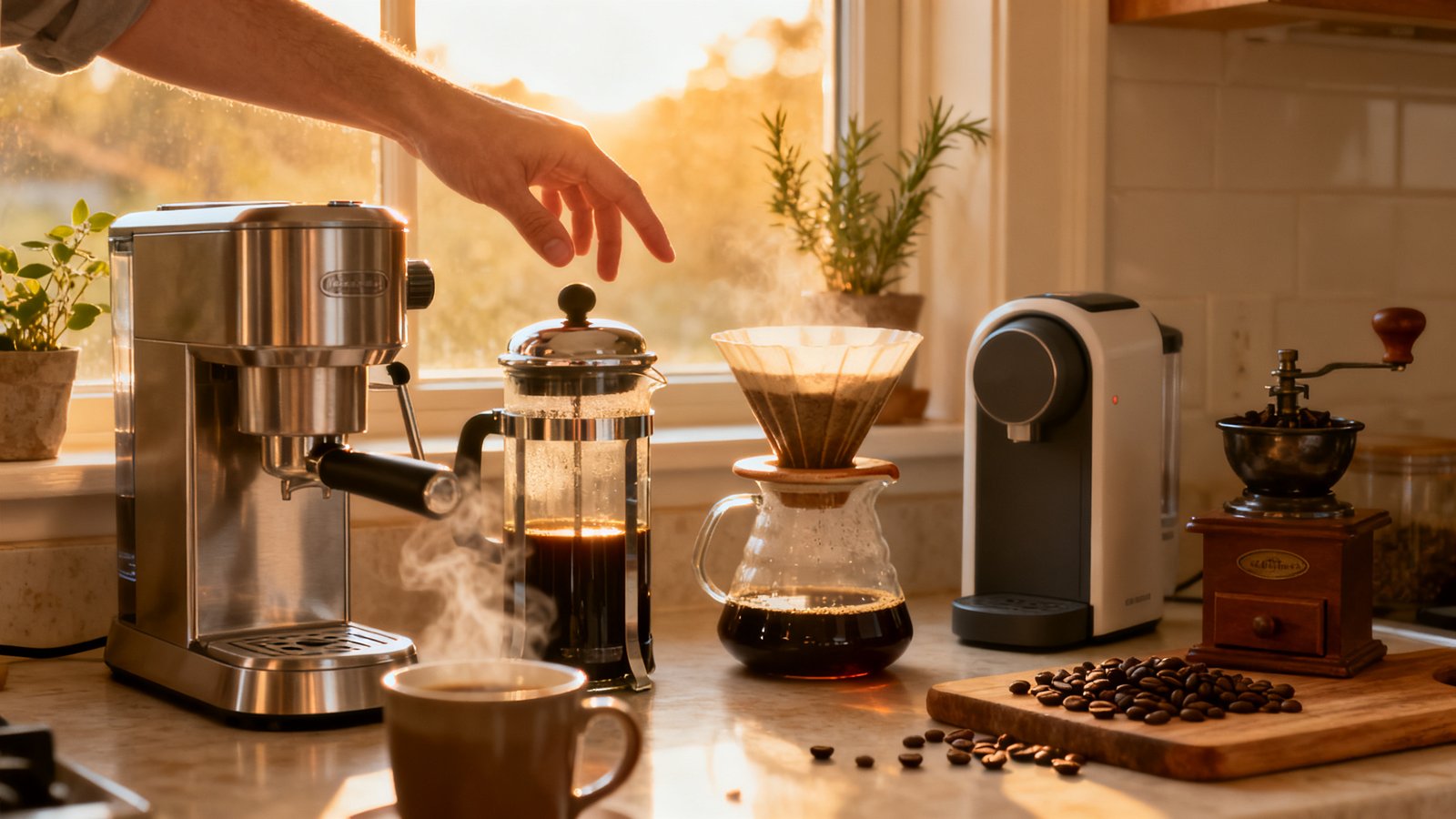
Understanding the landscape prevents you from getting lost in marketing jargon. Here are the main categories and the unvarnished reality of living with them. You don’t need to memorize these, just spot the one that sounds like your life.
- Drip (Auto Drip): The workhorse. Pros: massive capacity, set-and-forget timers. Cons: muddy flavors if the water temp is unstable; the hot plate can burn coffee after twenty minutes. Ideal for families or offices.
- Single-Serve (Pods): The speed demon. Pros: zero cleanup, instant variety switching. Cons: scaldingly hot but thin-bodied coffee, significant plastic waste, expensive per-pound coffee cost. Ideal for solo drinkers who value speed above all.
- Pour-Over (Manual): The purist. Pros: unmatched clarity and flavor separation, total control. Cons: requires a scale and a decent grinder; it takes five minutes of active attention to make one cup. Ideal for remote workers with a slow-morning routine.
- French Press: The body builder. Pros: rich, oily, heavy mouthfeel; no paper filters needed. Cons: sludge at the bottom of the cup; can over-extract if you forget it; cheap glass ones break constantly.
- Espresso Machines: The hobby. Pros: lattes and cappuccinos at home. Cons: steep learning curve, high maintenance, takes up half your counter. Ideal for the tinkerer.
- Stovetop (Moka): The middle ground. Pros: dense, strong coffee for pennies; zero footprint. Cons: easy to burn the coffee if the flame is too high; not true espresso. Ideal for small-space dwellers who drink strong coffee.
The revenue figures reinforce the dominance of the drip category. In 2025, drip/filter coffee makers generated a staggering USD 3.4 billion, underscoring that widespread household adoption is driven by sheer utility. While enthusiasts love manual methods, the masses simply want to press a button.
Drip vs pod (single-serve) — cost, convenience, taste and environmental tradeoffs
This is the central battleground for most households. If you live alone, the pod machine will whisper sweet nothings about making “just one cup.” But the math often tells a different story. A standard pod costs between $0.45 and $0.80 per serving. Meanwhile, a pound of quality whole-bean coffee costs roughly $14, giving you about 45 cups at $0.31 each. If you drink two cups a day, a pod habit can cost you over $500 more per year just in coffee. The gap widens further if you drink multiple cups.
However, the speed of a capsule machine is brutal to compete with. There is no filter to rinse, no grounds to scoop. In the single serve vs carafe coffee maker debate, the carafe wins on thermal flavor stability and the ability to host guests. Drip machines with a thermal carafe keep coffee hot for hours without a scorching hot plate turning your coffee acidic. Yet, for the person who never finishes a full pot, a pod machine or a single-cup drip unit prevents that guilty pour down the sink. Market context supports this split: in 2025, drip machines held ~28% market share while capsule machines held ~20%. Both are popular because they serve distinctly different household structures. One isn’t superior; they just require different sacrifices.
Environmental impact is the silent killer of the pod party. Plastic K-cup waste is a documented disaster, even with recyclable options. If you hate the idea of tossing a plastic shell every morning but refuse to give up the convenience, a reusable pod filled with fresh grounds is a non-negotiable upgrade.
Drip vs pour-over vs French press — flavor, control and daily routine fit
When you compare drip vs pour over vs french press, you’re comparing three different extraction philosophies that produce three different drinks.
A pour-over uses a paper filter. This traps the oils and micro-fines, giving you a cup that looks like tea and tastes crisp. You taste the blueberry note in that Ethiopian bean. But, the technique is ruthless. If your pour is unsteady, you agitate the bed unevenly and get a bitter, hollow cup. A lazy Sunday morning? Perfect. A chaotic Tuesday before a meeting? A recipe for a broken carafe.
A French press uses an immersion method with a metal screen. The coffee steeps directly in the water, and the screen lets the natural oils pass through. The result is a heavy, velvety body that coats your mouth. It’s forgiving to brew but a pain to clean. You have to disassemble the plunger and scrape the wet grounds into the trash (never down the sink unless you hate your plumbing).
The auto drip machine attempts to automate the pour-over. Good ones (SCA-certified) hit the right temperature and brew time, giving you 90% of the flavor clarity with zero effort. Bad ones drip lukewarm water onto the grounds, creating a sour, under-extracted mess. If you are a drip vs pour over vs french press fence-sitter, ask yourself: do you view coffee making as a chore or a hobby? If it’s a chore, drip wins.
Best coffee maker type for home — matching model to household size and habits
Let’s get specific about the best coffee maker type for home based on the people living there. A single person who works in an office and rushes out the door will suffocate under a 12-cup programmable unit. You’ll clean the pot once a month and hate the taste.
For a household of one or two, who want one strong cup each, a dual-capacity machine that does both a single mug and a carafe is the sweet spot. Or, frankly, a high-quality French press is the best coffee maker type for home if your mornings aren’t rushed. It uses zero counter space and makes two perfect cups. For a family of four, you need a thermal-carafe drip machine. You need to brew once before the chaos starts and have it stay hot while the kids argue about cereal.
If you want barista-style drinks but don’t want to learn the mechanical science of espresso, a semi-automatic machine with a steam wand is a trap. You’ll produce terrible foam, ignore the wand, and it will clog. Instead, look at a quality drip brewer paired with a standalone milk frother. It’s easier to clean and 80% cheaper to fix when it fails. The market-share context justifies this: drip/filter machines’ 28% share proves most households prioritize multi-cup efficiency over specialty drinks for their daily driver.
Coffee maker features to look for (and worth paying more for)
When scanning the spec sheet, ignore the buzzwords and hunt for these specific coffee maker features to look for. A programmable timer is essential for drip machines, but useless without a quality grinder. Pre-ground coffee goes stale in minutes, so if you rely on a timer, you’re waking up to the aroma of flat, cardboard-scented water unless you grind fresh the night before.
The brew-strength selector isn’t marketing fluff; it simply extends the brewing time to allow more extraction. This is vital if you like a bold cup from cheaper beans. A built-in grinder saves counter space but introduces a mechanical point of failure. If the grinder breaks, the whole machine is a brick. I usually recommend a separate grinder for better reliability, similar to how we break down appliance choices in our evidence based air fryer guide.
The thermal vs glass carafe debate is easy: pay the extra cash for a thermal carafe. A hot plate scorches coffee, turning it bitter within twenty minutes. A thermal carafe preserves the flavor profile for hours. Auto-shutoff is a safety must, brew pause is a gimmick that usually dribbles coffee on the warming plate, and a small footprint matters more than you think. You should also prioritize removable parts; if you can’t easily take the filter basket to the sink, you won’t clean it, much like the challenges we highlight in our piece on best spice rack organizers where accessibility dictates success.
Maintenance & cleaning checklist — steps many quick guides skip
Most coffee maker buying guide articles tell you to buy a machine and stop there. They omit the maintenance schedule that determines if your machine lasts three years or twelve. Neglecting this checklist is the primary reason coffee starts tasting “off.”
A daily rinse is non-negotiable for drip machines. Dump the grounds and rinse the basket immediately. Wet grounds grow mold within 48 hours. Once a week, deep clean the carafe and filter basket with hot, soapy water. Coffee oils go rancid and cling to plastic. If your carafe is cloudy, those oils are already building up and negatively impacting your brew.
Once a month, descale the internal parts. Even if you think your water tastes good, mineral deposits restrict the heating element. Mix white vinegar and water in a 1:1 ratio, run it through a brew cycle, stop midway to let it soak for 30 minutes, then finish. Run two full tanks of fresh water to rinse. Vinegar works but requires aggressive rinsing; commercial descalers dissolve mineral buildup faster and leave no smell. For espresso machines, backflush with a blind disc. Inspect any rubber gaskets or O-rings for cracking. If a portafilter gasket feels brittle, replace it immediately to avoid a violent coffee spray across your kitchen.
Durability & common complaints — what to watch for
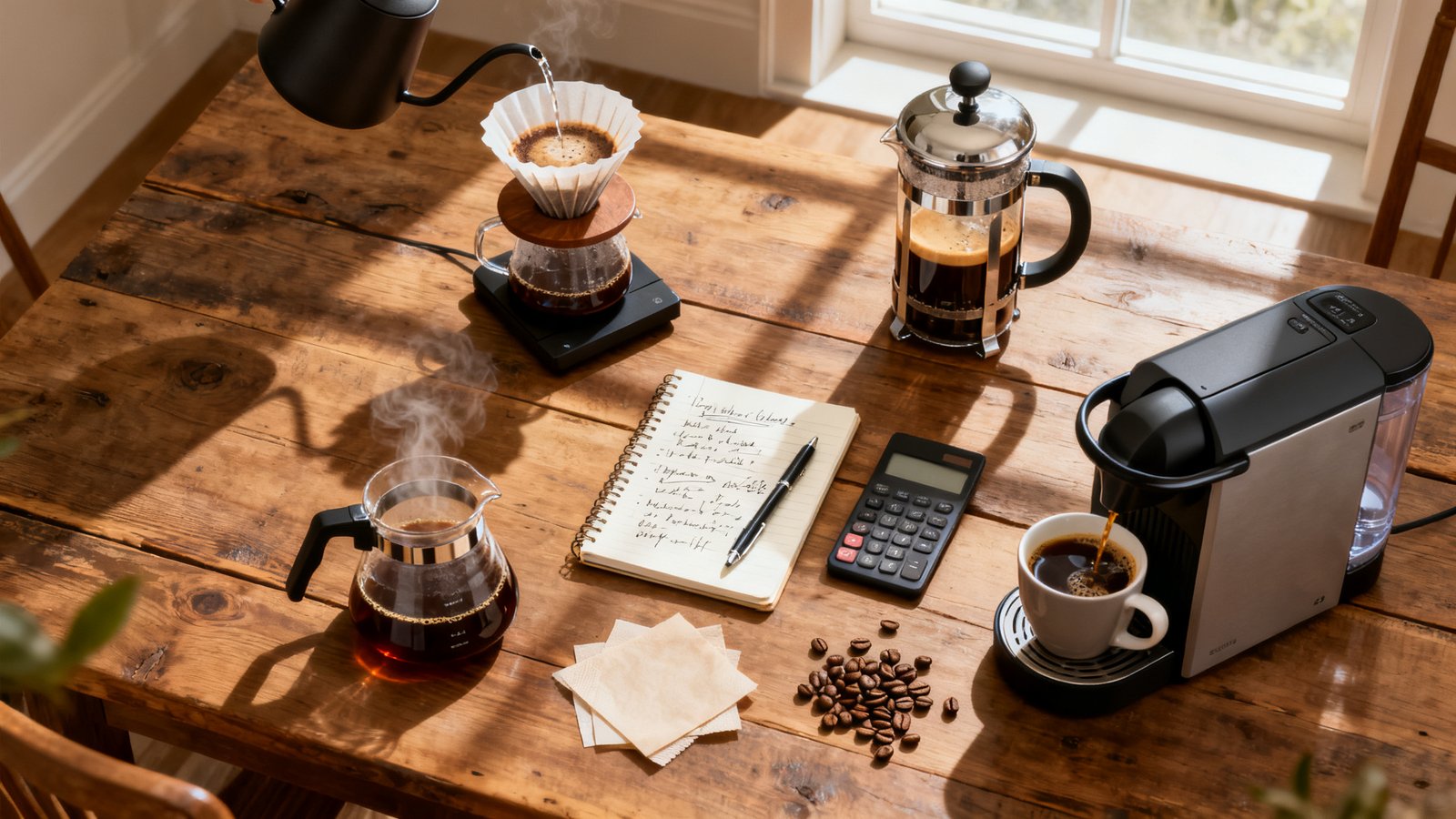
To avoid landing on the unboxing-to-landfill pipeline, you need to spot the durability red flags we see across the different types of coffee makers. The most common failure in cheap drip machines isn’t the pump; it’s the clogged internal plumbing or the check valve failing, leading to a “basket overflow” on your counter at dawn.
For French presses, the fragile glass carafe is the obvious villain. A minor tap on the sink edge while washing and you’re left with a plunger and a bad morning. This is a concrete hardware failure, not an anecdote; the thin borosilicate glass used in budget models is prone to thermal shock and impact fracture. To avoid it, buy a double-walled stainless steel press instead. It retains heat better and is indestructible. The other hidden French press complaint revolves around the filter screen. The cheap mesh screens warp or detach from the plunger after a few months of vigorous cleanup. In the manual vs automatic drip vs pour over vs french press debate, durability often tips the scale toward simple, mechanical designs with replaceable parts.
With single-serve machines, be wary of the “plastic taste.” This is a real problem with generic, off-brand budget pod brewers. The internal water lines are made of low-grade plastic that leaches a chemical flavor into the water, especially when the machine is new. Burn through three cycles of plain water before you brew consumption-ready coffee. Always check the warranty terms; a two-year warranty usually signals a motor or heating element rated for daily use, while a three-month warranty is a warning sign.
Annual running cost — how to estimate per-cup cost
Creating a budget based only on the sticker price ignores the real cost of owning the machine. When you examine the single serve vs carafe coffee maker tradeoff, you must do the math on a per-cup basis.
Consider a basic drip setup. You buy a $20 thermal carafe model that lasts 5 years, and you buy whole beans for $14 per bag that yields 45 cups. Adding in the cost of 100 paper filters ($5) and descaling tablets ($10 per year), your annual cost for roughly 600 cups is about $210, putting your per-cup cost around $0.35. Now consider a pod machine. The machine might cost $70. However, if you buy pods at an average of $0.60, those same 600 cups cost you $360 annually, plus machine depreciation and the occasional descaling run. You aren’t just paying for coffee; you are paying a premium for waste encapsulation.
This is the gap that market reports often miss. The upfront cost of a drip machine might be higher, but the running return on investment is immediate. This logic mirrors our advice on picking best blenders under 100, where we prioritize the actual blending horsepower over the flashy digital displays that don’t improve the smoothie. The electricity cost is negligible for both (a 1000W machine running for 10 minutes is a fraction of a cent), but the consumables supply chain is where your wallet gets drained.
Most common buyer’s remorse and how to avoid it
I see the what coffee maker should I buy regret cycle repeat itself constantly. The first regret is capacity mismatch. You buy a massive 12-cup drip brewer because it was on sale, but you live alone. You end up making three cups of stale-tasting hot plate coffee every morning because scaling the recipe down never works. The fix is to look for a model with a “1-4 cup” setting that adjusts the water pulse.
The second and most passionate regret hits pour-over newbies. They buy a beautiful glass V60 and a gooseneck kettle because they saw it on social media. Then they realize manual brewing requires a $150 burr grinder to get the particle size right. Without it, the water rips through the dry grounds too fast, and the coffee tastes like brown water. They wasted the kettle money. The safeguard here is brutally honest: if you don’t own a burr grinder, do not buy a specialty dripper. Stick to a French press, which is forgiving of cheap grinders, or go fully automatic.
Other silent regrets include neglecting the maintenance we covered earlier (leading to a sour taste that can’t be fixed) and overpaying for a feature-rich espresso machine whose steam wand never gets used. We see the same feature fatigue in kitchen organization; we tackled it in our breakdown of best drawer organizers kitchen, where a simple modular system often beats a complicated custom setup that gets ignored.
Quick recommendation matrix (1‑line picks by priority)
If you are still undecided, match your primary priority to the recommended type below. This matrix leans into the market reality that different priorities require different machines; there is no “one perfect brewer.”
| Your Priority | The Pick | Why |
|---|---|---|
| Best for sheer convenience | Single-serve pod machine | Speed and zero cleanup trump flavor nuance here. |
| Best flavor/control | Flat-bottom pour-over dripper | Unrivaled clarity when you control the variables. |
| Best low maintenance | Stainless steel French press | No paper filters, no descaling, no plastic; nearly immortal. |
| Best for a large family | Thermal carafe drip machine | High capacity (12 cups) with no burnt hot plate taste. |
| Best for tight budget | Moka pot combined with an auto-drip | Strong coffee for cents, plus volume when guests arrive. |
Just like when you choose best pantry storage containers, you must prioritize airtight sealing over aesthetics, here you must prioritize the brewing mechanism most aligned with your daily rhythm. A beautiful appliance that you fail to use is just a countertop statue.
FAQs and final buying checklist
Do I really need a burr grinder?
It depends on your brewer. If you use a French press or an auto-drip with a metal filter, a burr grinder prevents the sludge that a blade grinder creates. If you only drink pour-over, a burr grinder is mandatory because uneven particle size destroys the flavor. For pod machines, you don’t need a grinder at all. We explore tool requirements in depth in our instant pot beginners guide, where we find the right accessory often makes the difference between usage and abandonment.
How often should I descale my machine?
Every one to three months. If you have hard water, treat descaling like a monthly mortgage payment. Neglect it, and the calcium will choke the heating element until the thermal fuse blows.
Is the plastic waste from pods a serious issue?
Yes. The billions of non-recycled pods produced annually are a documented environmental stressor. If you go the pod route, budget time to scrape out the grounds and recycle the shell, or buy a stainless steel reusable pod. It defeats the convenience argument slightly, but it keeps your footprint reasonable.
When is a built-in grinder actually worth it?
Only when counter space is your absolute highest priority and you are buying a premium unit from a brand known for burr grinders. Avoid built-in grinders on cheap units; they use false “burrs” that smash beans, creating dust that clogs the exit chute.
The bottom line on picking your brewer
This entire analysis distills down to a single truth: the machine needs to fit the room’s rhythm. If you are the only coffee drinker and you hate cleaning, a stainless steel French press is the weapon of choice. It takes up no footprint, makes a bold cup, and won’t break if you drop it. If you have four mouths to feed at 7:00 AM, a thermal drip machine that holds 12 cups and turns itself on before you wake up is the only logical investment.
Don’t fall for the trap of buying a complicated manual dripper because you want to become a “coffee person.” That’s a hobbyist purchase. Buy the machine that solves your current problem with the least amount of friction. A coffee maker buying guide is useless if you ignore your actual tolerance for scrubbing grounds out of a metal filter or waiting for water to boil. Be honest about how much time you have, buy the sturdiest version of that machine you can afford, and descale it religiously. That’s the secret to a perfect cup every single morning.