

Best garage storage systems are no longer a luxury—they are an essential upgrade for any suburban homeowner looking to protect investments, save time, and even boost property value. But with the average full-garage install costing about $3,800, you need practical advice to separate long-term value from marketing hype. Below, you’ll find actionable comparisons, real-world cost breakdowns, and honest strategies to avoid the classic frustrations of a new garage organization setup.
Key Takeaways
- Over 80% of buyers now expect durable, well-specified garage organization systems, so get clear on load ratings, footprint, and warranty first.
- The best garage storage systems balance upfront cost against long-term performance—avoid “best of” lists that skip real capacity, sustainability, or value metrics.
- Thoroughly audit your existing space (measure height, check vehicle clearance, map out studs) before shopping to avoid the top installation headaches.
- Why invest in garage organization now?
- What “best garage storage systems” really means — features that determine value
- What top product roundups miss (and why it matters)
- Wall-mounted vs ceiling racks vs freestanding shelving — which to choose
- Cabinets and shelving — materials, weight capacity, and real durability
- Pegboards, tool walls and modular organizers — organizing tools and small parts
- Installation cost and timeline — DIY vs professional breakdown
- The top user frustrations — and how to avoid them
- Smart, sustainable, and warranty considerations — the features reviewers skip
- Side-by-side value metrics to ask for when comparing systems
- Best configurations by use-case (tool-heavy DIYer, sports family, minimalists)
- Quick shopping checklist & installation readiness audit
- FAQ and buyer decision flow (should I DIY, what to prioritize, red flags)
- Final checklist + call to action (how to choose the right system today)
Why invest in garage organization now?
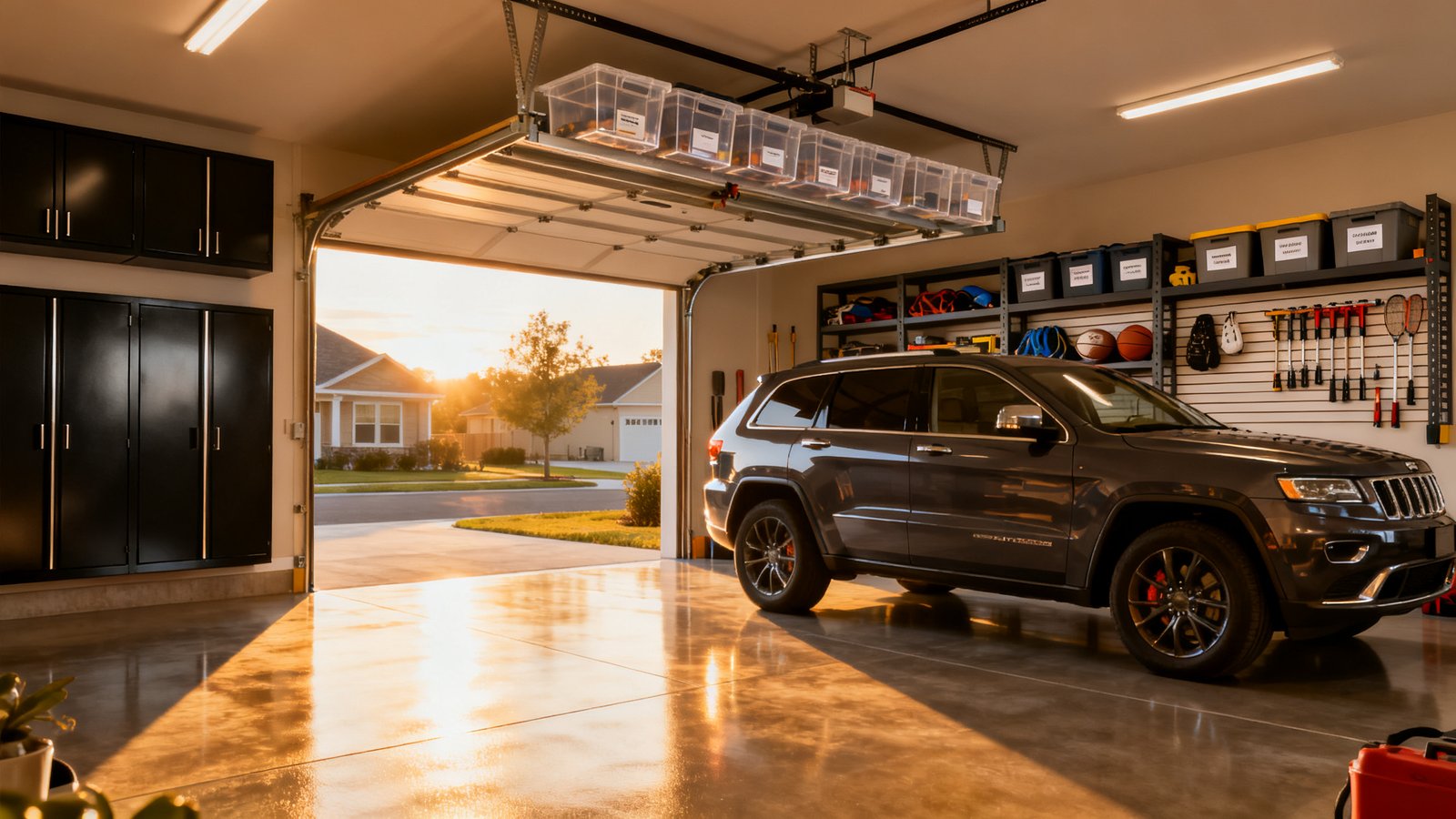
Garage organization has moved from a nice-to-have to a must-have. In 2024, U.S. homeowners spent roughly $3.5 billion on garage-organization products, up significantly from previous years [source]. More than 80% of home-buyers now consider garage storage an essential feature—not just a bonus. For today’s suburban homeowner, a clean, efficiently organized two-car garage doesn’t just make daily life easier, it lifts resale value and reduces risk of damage to expensive gear, tools or sporting equipment. With over half of homeowners using garages as active DIY or hobby spaces, a good system is about protecting your tools, saving time, and clearing floors for safe vehicle parking.
What “best garage storage systems” really means — features that determine value
When you search for the best garage storage systems, ignore flashy photos and start with the features that will actually impact safety and long-term satisfaction:
- Stated load capacity (per shelf, per rack, per cabinet): Can it safely handle your heaviest bins?
- Material quality: Steel and heavy-gauge metal outperform wire and plastic for durability—steel modular cabinets now exceed 600 lb capacity in some models [source].
- Footprint/clearance: Make sure your car fits without risking dings or broken doors (measure twice, buy once).
- Modularity & expandability: Can you add hooks, bins, and shelves as your needs change?
- Warranty and after-sales service: Will the company actually help you when a part wears out?
- Installation ease: Hidden costs like drilling, wall anchors, or joist alignment shouldn’t surprise you after unboxing.
The typical full-garage system costs about $3,800 to install, so you need each of these features to justify that spend [source]. Metal cabinets account for about 46% of installations and about 37% of market value, a strong vote for durability.
What top product roundups miss (and why it matters)
Many high-ranking “best garage storage systems” lists gloss over the details that actually determine long-term value:
- No verified load ratings. Without per-shelf or per-rack ratings, you risk collapse under heavy bins.
- Lack of longevity testing. Most reviews never check how shelving or brackets perform after several years—or under real, daily use conditions.
- Ignore smart integration or sustainability. If you plan to add LED lights, app-based inventory tracking, or care about recycled materials, you need to dig deeper. In 2024, smart system upgrades (IoT, inventory, LED) improved adoption among premium buyers by nearly 10% [source].
- Poor or missing cost breakdowns. Most lists don’t separate DIY installation costs from professional labor—or discuss price-per-square-foot as a metric for real value.
- Vague or absent warranty terms. Always ask for specifics on warranty length, coverage, and what triggers exclusion.
Research shows many top articles omit these critical details—forcing buyers to make assumptions. Insist on these specs before purchase.
Wall-mounted vs ceiling racks vs freestanding shelving — which to choose
Most modern systems combine several types, but choosing the right anchor component protects your vehicles and maximizes your budget:
- Wall mounted garage storage system: Ideal for tools, sports gear, smaller bins. Keeps floors clear but can limit hanging space if wall has windows or doors. Enables good vehicle clearance if installed above mid-door height.
- Garage ceiling storage rack: Excellent for seasonal totes or infrequently accessed items—just verify you have 20-24″ of clearance over the highest vehicle or garage door. Overhead racks saw a 13% rise in demand in 2024. Urban garages increasingly adopt slat-wall and compact modules (about 11% growth) to leverage vertical space [source].
- Freestanding shelving: Fast setup and flexible. Watch for stability—bolt shelving units to floor or wall if you have kids, pets, or heavy bins.
Generally, you’ll need at least two types: wall or slat modules for daily use, and ceiling racks or cabinets for long-term storage.
Cabinets and shelving — materials, weight capacity, and real durability
Metal cabinets account for about 46% of installations and 37% of market value, largely thanks to their superior durability and load-bearing design [source]. Here’s how materials stack up:
- Steel modular cabinets: Top choice for strength. Some exceed 600 lbs per cabinet. Expect powder-coated finishes and robust locks, but they cost more and can be heavy for DIYers.
- Wire shelving: Low cost, air flow (good for drying), but can sag under heavy loads and often lacks child safety features.
- Plastic cabinets: Budget-friendly and rustproof, but lower in load rating and prone to warping in hot/cold cycles.
Always look for manufacturer-stated load ratings per shelf or per unit—and verify mounting kits or anchor systems are included. When in doubt, over-spec: heavy-duty is rarely regretted.
Pegboards, tool walls and modular organizers — organizing tools and small parts
For the 53% of homeowners who use their garage as an active DIY workspace, organizing small hand and power tools is non-negotiable. A pegboard garage organizer makes tool access fast and visible, but standard pegboards tend to have modest weight ratings—about 15-25 lbs per hook array. For heavier items, a garage tool organizer wall using steel slatwall or modular hook panels is a smarter upgrade.
- Pegboard: Budget-friendly, easy to cut—good for light and medium tools.
- Slatwall: Expensive, but much higher strength and great for future expansion. Add baskets, bins, or vertical bike hooks later.
- Purpose-built tool organizers: Use drawer inserts, rolling chests, or wall racks for specialized items (wrenches, drills, power tool batteries).
Don’t forget modularity—future-proof your layout by leaving open slots or blank panels for new tools as needs grow.
Installation cost and timeline — DIY vs professional breakdown
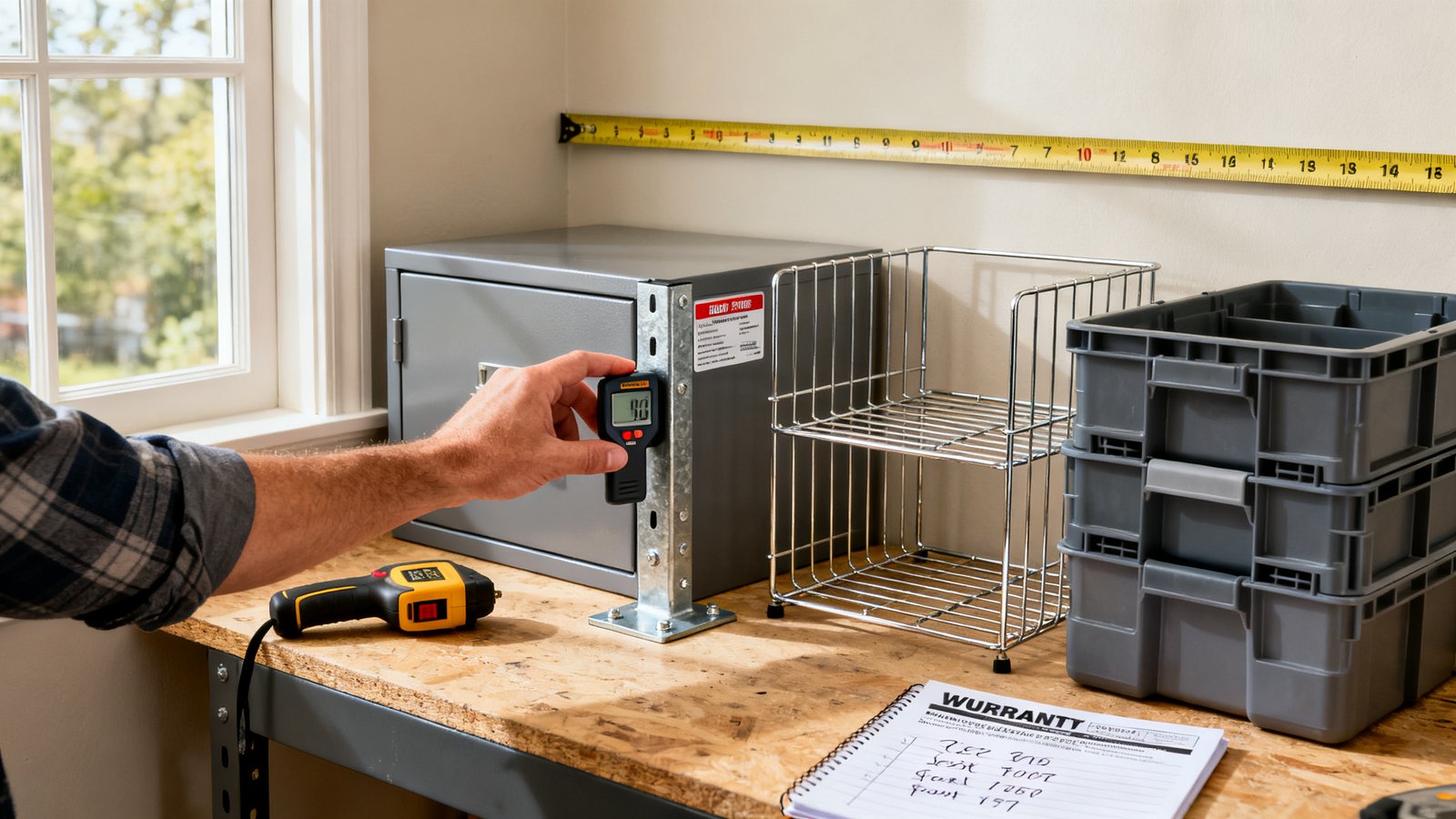
In 2024, the average cost to install a full garage organization system (materials, labor, customization) was about $3,800 [source]. Here’s a more realistic breakdown:
- DIY: Save on labor, but budget $200–$800 for extra hardware (anchors, screws, reinforcements), plus tools if you lack impact drivers or stud finders. Timeline: 2–4 weekends for a two-car garage if working solo.
- Professional install: Fast (often 1–2 days), but labor adds $1,200–$2,500 depending on region and system complexity. Pros will handle ceiling joist checks, safe anchoring, and warranty compliance.
- Hidden costs: Permit fees, disposal of old shelving, wiring upgrades if adding any LED or smart tech.
If you’re handy and have the right tools, DIY is feasible—but factor in your time and tolerance for detail work. If in doubt, professional installation can pay off in peace of mind and warranty protection.
The top user frustrations — and how to avoid them
Based on real user reviews and market analysis, these are the complaints that most often sour garage storage upgrades, plus prevention tips:
- Difficult, time-consuming install: Avoid systems with vague or missing instructions. Look for brands that offer detailed, video-based guides.
- Poor instructions or missing parts: Double-check product reviews for installation feedback before buying.
- Vehicle clearance problems: Always measure with vehicles parked inside. Mock-up locations with painter’s tape before drilling.
- Unstable/low-capacity shelves: Prioritize heavy-duty systems with published load ratings; use additional anchors on drywall walls.
- Stiff or cheap caster wheels: For rolling chests or bins, choose rubberized casters rated for smooth concrete—not just any floor.
- Price feels high for perceived durability: Always compare price-per-square-foot and warranty details to judge real value.
Consult honest reviews, product forums, or video walkthroughs to avoid surprises on day one. For insight into kitchen storage pitfalls, see our Best Spice Rack Organizers Guide.
Smart, sustainable, and warranty considerations — the features reviewers skip
Today’s garage organization isn’t just shelves and hooks. Advanced buyers now demand features like:
- Smart integrations: Bluetooth inventory tags and app-enabled LED lighting simplify item search and add security. These options improved adoption by nearly 10% among premium buyers during recent upgrades [source].
- Sustainability: Products using recycled steel, reclaimed materials, or low-VOC finishes are growing fast. Demand for eco-friendly and recyclable garage materials grew by 48% in 2024 [source].
- Warranty/after-sales: Good brands now offer 5-10 year coverage, but details matter—make sure hardware, powder-coat finishes, and moving parts are all covered.
Ask explicitly for: full warranty documentation, details on available smart accessories, and sustainability credentials before purchase.
Looking for similar considerations in other rooms? Our Best Closet Organizer Systems guide covers eco-friendly storage for closets as well.
Side-by-side value metrics to ask for when comparing systems
Comparison charts let you see through the marketing fluff. Insist on the following fields when you evaluate options:
| System | Price per sq ft | Stated Load Capacity | Material Type/Thickness | Warranty Length/Terms | Installation Difficulty | Replacement Parts Availability | Ongoing Maintenance |
|---|---|---|---|---|---|---|---|
| Example A | $11.25 | 300 lbs/shelf | 18-gauge steel | 10 years, limited | Intermediate (DIY) | Easy, online order | Wipe down, annual check |
| Example B | $8.40 | 120 lbs/shelf | Plastic composite | 3 years, parts | Easy (DIY) | Replacement fee | None |
Research finds that buyers lack side-by-side price-per-square-foot and long-term value analyses—a key way to justify the typical $3,800 install cost. If you need more side-by-side kitchen gear shopping tips, see our Best Air Fryers 2026 guide.
Best configurations by use-case (tool-heavy DIYer, sports family, minimalists)
Match your storage system to real needs. Here are three proven layouts:
- Tool-heavy DIYer: Wall cabinets + pegboard garage organizer + bench area with modular drawers. Pros: Maximizes accessibility. Cons: Can be expensive.
- Sports family: Garage ceiling storage rack + freestanding shelving + open bins. Pros: High volume for bulky seasonal items. Cons: Lower daily accessibility; must watch for overhead clearance.
- Urban/minimalist: Slim wall mounted garage storage system with compact slatwall modules + single row open shelving. Pros: Saves floor space—compact slatwall units grew 11% in urban garages. Cons: Limited weight handling.
For small kitchens with similar space constraints, visit our Organize Small Kitchen Budget guide.
Quick shopping checklist & installation readiness audit
- Measure ceiling height and verify vehicle clearance with garage doors fully open.
- Check for wood studs or ceiling joists at standard spacing—will you need extra anchors?
- Request manufacturer warranty documentation in writing.
- Compare price-per-square-foot, not just overall price. Avoid budget systems with poor expansion options.
- Make sure replacement parts are widely available—ask before you buy.
- For complex installs, ask locally about permit or code requirements.
Because installations can be costly and complex (average ~$3,800), a readiness audit reduces the risk of errors, costly reinstallations, or product returns.
FAQ and buyer decision flow (should I DIY, what to prioritize, red flags)
Should I install my garage storage system myself or hire a professional?
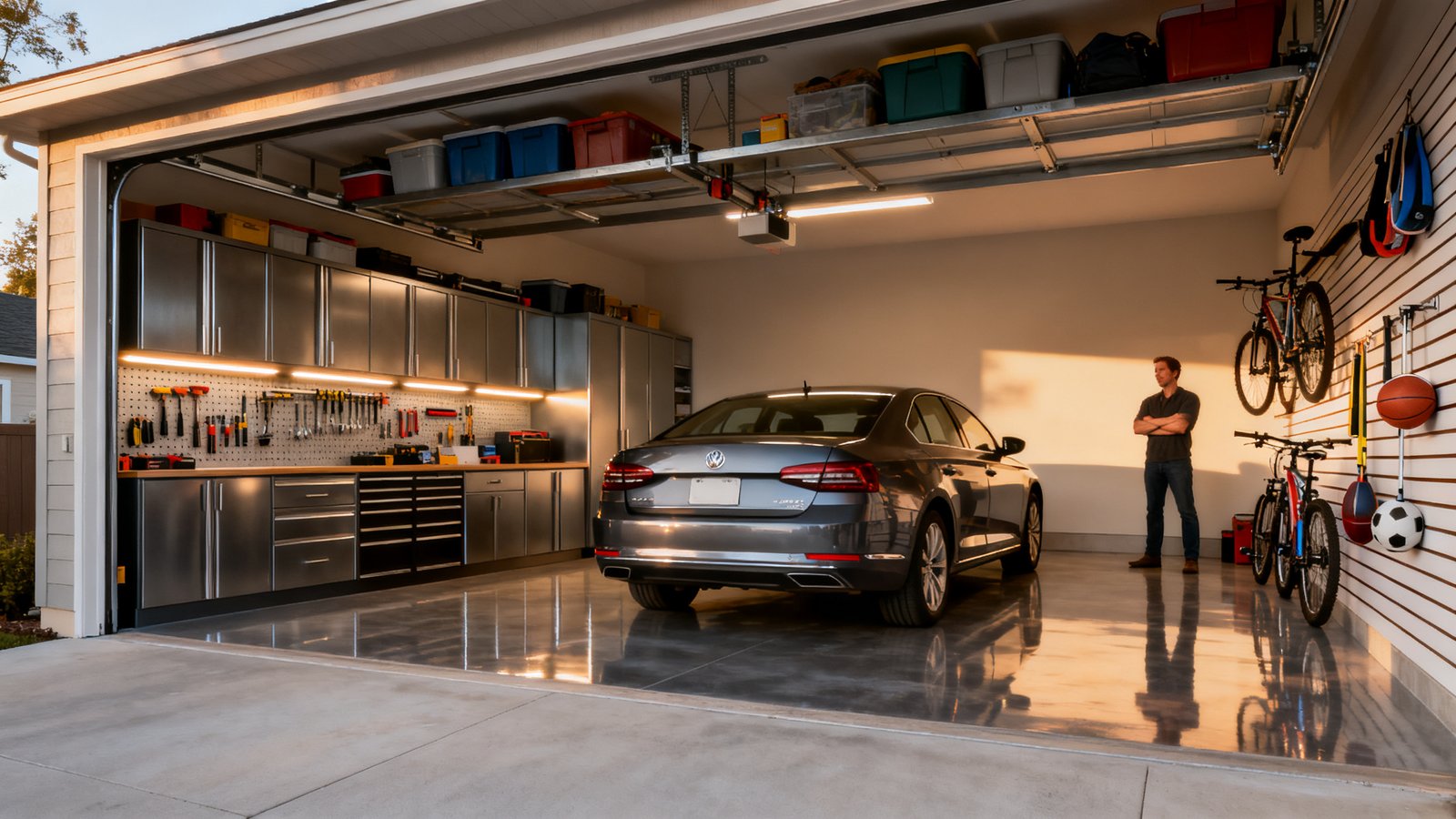
DIY is realistic for simple shelving or wall panels, especially if you’re comfortable with tools. For ceiling racks, heavy cabinets, or if warranty requires certified install, hiring a pro often saves time and avoids costly mistakes.
What’s the single most important metric when comparing garage systems?
Always verify per-shelf or per-cabinet load capacity, and insist on seeing tested ratings—not just marketing claims.
What red flags mean I should skip a system?
Vague instructions, lack of published load capacities, flimsy materials, no written warranty, or reviews noting missing parts or instructions are all red flags.
How can I protect my investment if I plan to sell my home?
Choose systems with modular, durable metal cabinets, clear warranty, and features like soft-close doors or smart lighting—these stand out to potential buyers.
Are sustainable/eco-friendly garage systems really available?
Yes—many brands now offer cabinets or wall systems made from recycled steel, low-VOC finishes, or modular designs for reduced waste. Check for certifications and request details from the manufacturer.
Final checklist + call to action (how to choose the right system today)
Before deciding, use a three-step method: measure & audit your space, compare per-shelf load, warranty, and price-per-square-foot using a side-by-side chart, and choose DIY or professional install based on your skills and risk tolerance. With a $3.5B market and rising demand for modular and overhead garage organization, the right research will help you avoid the common frustrations and get the best long-term value. If you need strategies for kitchen or small space storage, see our Best Drawer Organizers Kitchen post for actionable tips. Upgrade smart: the best garage storage systems pay off for years—both in daily use and resale value.