

If you want to organize pantry steps into a system that actually holds up after Tuesday night grocery runs, you are in the right place. Most pantry guides show you pretty bins and skip the hard parts: measuring shelf depth so containers fit, building zones that match how your family reaches for food, and setting up rotation routines so cans do not expire in the back row. This walkthrough covers all of it, from a 15 minute triage sweep to a full digital inventory system, with real product advice drawn from one star review patterns and 2024 pricing data.
Key Takeaways
- Start with a fast 15 minute trash sweep and a “before” photo. You need a baseline to measure progress, and clearing obvious garbage creates momentum without decision fatigue.
- Measure your actual usable shelf depth and width before buying a single bin. Most product returns come from containers that are half an inch too deep for the cabinet.
- Pair simple budget bins with pro systems like FIFO can racks, zone maps taped inside the door, and a monthly date audit. Pretty pantries fall apart without maintenance triggers.
Table of Contents
- Quick Triage — The 15‑Minute “Before” Sweep
- Step 1 — Empty, Sort, and Declutter (What to Toss, Donate, Keep)
- Step 2 — Measure, Map, and Plan (Quantitative Space Planning)
- Step 3 — Zone Mapping: Frequency + Ergonomics Template
- Step 4 — Containers & Cost: Selecting Clear Bins, Labels, and Risers on a Budget
- Step 5 — Best Way to Organize Canned Goods (Practical FIFO & Can Strategies)
- Step 6 — Fit & Install: Pull‑outs, Drawers, and How to Avoid Items Falling Off the Back
- Step 7 — Product Buyer’s Guide: What to Avoid (Top One‑Star Complaints)
- Step 8 — Small Pantry Organization Hacks (Solutions for the Most Annoying Categories)
- Step 9 — Pro Systems (FIFO, Zone Maps, & Digital Inventory You Can Actually Use)
- Step 10 — Maintenance Routines & Accountability (Make It Stick)
- Final Checklist & Before/After Capture (50‑Point Quick Audit)
Quick Triage — The 15‑Minute “Before” Sweep
Do not overthink this first pass. Set a timer on your phone for 15 minutes, grab a paper towel to wipe dusty surfaces as you go, and open every cabinet door. The goal is speed, not perfection.
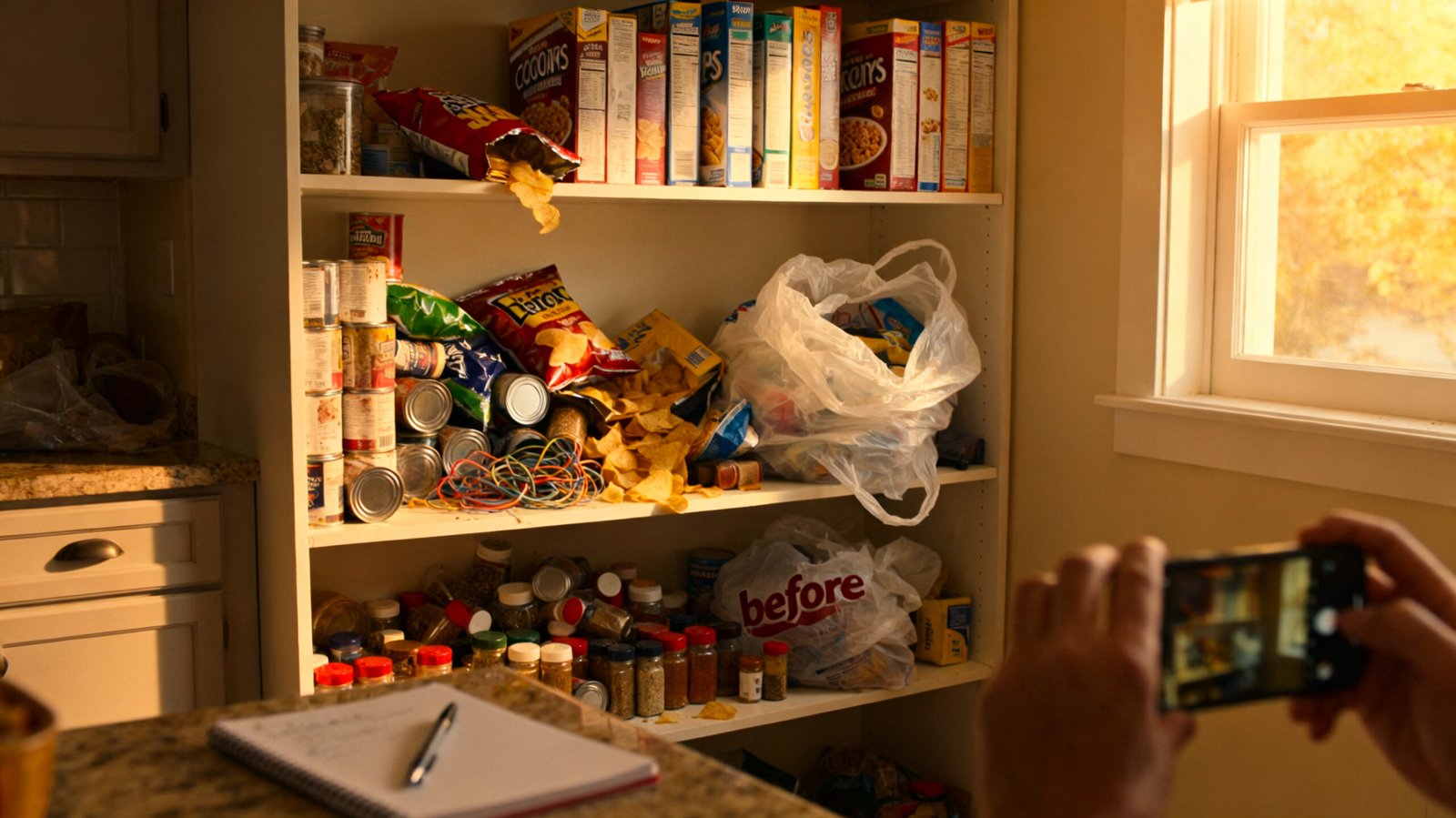
Scan each shelf left to right. Pull anything obviously expired, stale, or sticky. If you cannot identify the contents of a container, toss it. If a bag of chips has been open since last month and is now half crumbs, dump it. This is also the moment to snap a quick “before” photo. Nearly every successful pantry makeover before and after post leans on that initial messy shot to show real progress later. A phone snapshot takes ten seconds and gives you a concrete reference point.
Work in timed blocks. Here is a simple checklist for three time budgets:
15 minute sweep: Trash only. Expired cans, stale snacks, empty boxes, mystery jars. Do not organize anything yet. Just clear the obvious waste.
30 minute sweep: Trash plus category spotting. As you clear, mentally note which shelves hold the “hot mess” zones. Bulk snack bags piled on the left? Spices scattered across three shelves? Write these down on a sticky note.
60 minute sweep: Trash, category spotting, and a rough grouping. Push all cans toward one area, all baking supplies toward another. You are not buying containers yet. You are just creating visual clusters so the next step goes faster.
After the sweep, take a second photo. Even this small change feels good and proves the system works.
Step 1 — Empty, Sort, and Declutter (What to Toss, Donate, Keep)
Now the real work begins. Clear every single item out of the pantry. Every can, every bag, every stray tea packet. Place items on the kitchen counter or floor in four piles: keep, donate, throw, and relocate. Relocate means items that belong elsewhere, like cookware that drifted into the food storage zone.
For the keep pile, apply a simple test. Have you used it in the last six months? Will you realistically use it in the next six? If both answers are no, it goes to donate. Unopened, non expired food can go to a local food bank. Opened but still good snacks can go to a neighbor or school lunchbox stash.
Research from community forums like Reddit and Houzz consistently identifies the top clutter categories in small pantries. Bulk snack bags, spices and seasoning packets, mixed size canned goods, and baking back stock are the worst offenders. Pay extra attention to these during your sort. Duplicate spices, half empty chip bags, and three open bags of chocolate chips are the sneaky space thieves that stack up unnoticed.
For small pantry organization hacks that help during this phase, keep a Sharpie nearby. If you find an item you are unsure about, write today’s date on it and set a calendar reminder for 30 days. If you have not used it by then, donate it without guilt.
Step 2 — Measure, Map, and Plan (Quantitative Space Planning)
This step separates functional pantries from frustrating ones. Most top ranking guides say “measure your shelves” but never explain how to calculate usable depth. Here is the missing math.
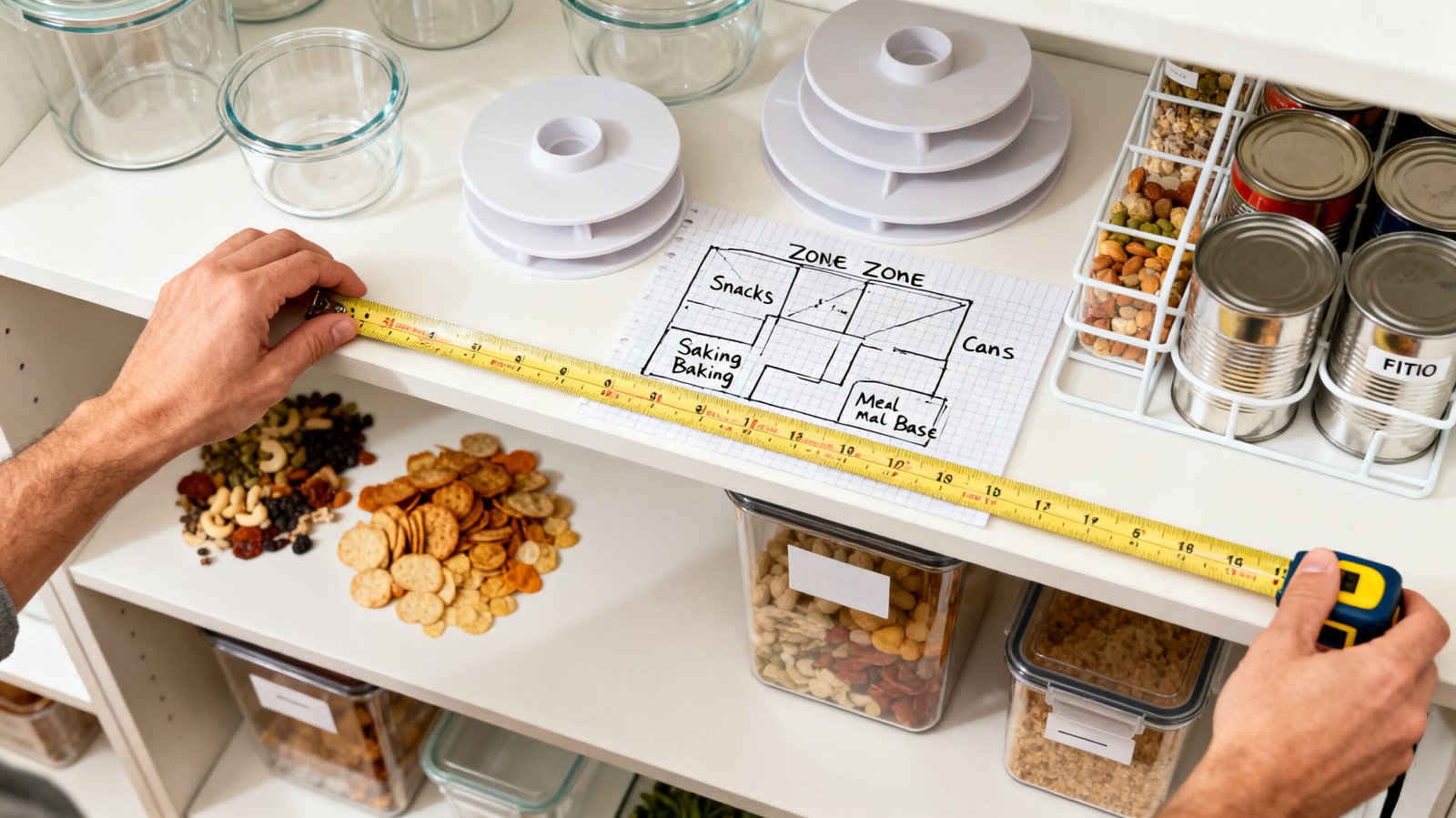
Grab a tape measure and measure each shelf’s total depth from the back wall to the front edge. Then measure the door clearance. If your cabinet has face frames, subtract the frame thickness. If the door protrudes slightly when closed, subtract that too. What remains is your functional depth. For a standard 24 inch deep pantry cabinet, your actual usable depth might be 22 to 23 inches. If you plan to install pull out trays, plan for 20 to 22 inch deep trays, roughly 83 to 92 percent of cabinet depth. Leave half an inch to one inch clearance at the back for slide hardware.
Measure shelf height too. Account for any fixed shelf brackets or hinges that reduce vertical clearance. Write every measurement on a notecard and tape it to the inside of the pantry door. You will reference it constantly when shopping.
Step 3 — Zone Mapping: Frequency + Ergonomics Template
Zones are where most guides get vague. They say “create zones” and move on. You need a map tied to how often your household actually reaches for things and who is reaching.
Divide your pantry into four frequency bands. Daily use items go at eye level and within easy arm’s reach. This includes breakfast cereals, coffee supplies, kid snacks, and cooking oils. Weekly use items sit one shelf above or below eye level. Monthly use, like baking supplies or backup condiments, go higher or lower. Seasonal or rarely used items, like holiday sprinkles or bulk paper goods, go on the very top shelf or deep in the back.
Ergonomics matter just as much. Heavy items like canned goods and large bottles belong at waist height. Light items like chip bags and paper towels can go higher. If you have young kids, place their snacks on the lowest shelf so they can self serve without climbing. If you are considering broader kitchen storage upgrades, our best drawer organizers kitchen guide covers complementary solutions for utensil and tool zones.
For shallow reach in pantries, map shelves as single rows. Nothing gets hidden behind anything else. For 24 inch deep shelves, plan front row as daily items and back row as backup stock, with clear labels on both. For small walk in pantries, assign each wall a category: one for dry goods, one for canned, one for snacks and paper goods.
This zone mapping approach dovetails with broader best closet organizer systems principles. The same frequency plus reach logic works for closets, garages, and linen cabinets.
Step 4 — Containers & Cost: Selecting Clear Bins, Labels, and Risers on a Budget
Now you can shop, but only with your measurements in hand. Ignore product photos. Check the listed interior dimensions against your shelf measurements. A bin that is half an inch too deep will not close behind your cabinet door.
Match container types to food categories. Airtight canisters with rubber gaskets work for flour, sugar, and baking staples. Medium clear bins with straight sides hold snack bars and pouches. Narrow bins keep seasoning packets upright. Avoid tapered bins for anything you want to stack. The sloped sides reduce usable floor space and cause items to lean.
Label strategy splits into two camps. Pre printed sticker sets cost eight to twenty dollars and look uniform. A basic electronic label maker costs twenty five to forty dollars plus ten to fifteen dollars per tape cartridge, but gives you flexibility to relabel as categories shift. Both work. Pick one and commit.
Based on 2024 observed retail pricing, here are two sample budgets for a standard reach in pantry:
Minimal refresh: $65 to $100 total. One canister set for dry goods, three to four medium bins for snacks, one shelf riser for cans, and a sticker label set.
Fuller redo: $105 to $210 total. A larger canister set, six to eight bins in mixed sizes, two to three tiered risers for spices and cans, plus a label maker with one tape cartridge.
For more budget conscious kitchen projects, see our organize small kitchen budget guide, which covers dollar store hacks and rental friendly solutions that overlap with pantry organization on a budget.
Step 5 — Best Way to Organize Canned Goods (Practical FIFO & Can Strategies)
The best way to organize canned goods combines a physical rack system with a rotation habit. Without both, you will still find expired soup in the back row six months from now.
Measure your shelf depth to decide between single depth and double depth layout. For single depth, tiered risers let you see every can at a glance. Look for risers with a front lip, so cans do not slide off when you grab one from the back. For double depth, dedicated FIFO racks are the gold standard. New cans go in the top or back, older cans roll forward. This automates rotation without you thinking about it.
One star product reviews reveal consistent failures. Many FIFO racks advertise holding 36 cans but only work well with one specific can diameter. Standard soup cans jam if the rails are too narrow. Short tuna cans tip sideways. Before buying, check the rail width against the cans you actually stock. Durable metal racks with solid welds outlast plastic models that warp under weight.
For mixed can heights, label the front row with the month and year the can was purchased or its expiration date. This small habit prevents the “what is even back there” problem. If you need a quick DIY fix, cut a pool noodle into segments and place them behind the back row of cans to push everything forward toward the shelf edge.
Step 6 — Fit & Install: Pull‑outs, Drawers, and How to Avoid Items Falling Off the Back
If you are adding pull out trays to a 24 inch deep pantry cabinet, follow the numbers first. Standard pull out trays for these cabinets run 20 to 22 inches deep. That leaves roughly 2 to 4 inches of clearance from the back wall for slide hardware and prevents the tray from hitting the cabinet back when closed.
Mount the slides level and square. Even a slight tilt causes the tray to drift open or closed on its own, which is maddening at 6 a.m. when you are grabbing coffee. Use a bubble level and take your time. If your cabinet has face frames, you may need spacer blocks to bring the slide flush with the frame edge.
Rear stops or full backs are non negotiable. Without a back panel or rear rail on the tray, items slide off the back when you pull the drawer out. A simple L shaped bracket or a piece of quarter round trim screwed to the back edge of the tray solves this. Some manufactured trays come with integrated backs. Check the product listing for “rear stop” or “full back” before purchasing.
Common installation mistakes include mounting slides too far forward, which prevents the door from closing, or forgetting to account for door hinge protrusion. Test close the cabinet door slowly after mounting one slide, before attaching the second. This saves you from drilling holes you will need to patch.
This section ties directly into how to organize deep pantry shelves. Without pull outs, deep shelves create hidden back rows. With properly sized and installed pull outs, everything becomes visible.
Step 7 — Product Buyer’s Guide: What to Avoid (Top One‑Star Complaints)
Scanning hundreds of one star reviews across Amazon, Walmart, and home improvement retailers reveals recurring failure patterns. Avoid these three product types unless you verify specific details.
Can organizers: The top complaints are poor fit with real cans and flimsy construction. Rails that are too narrow jam standard soup cans. Plastic frames warp when loaded. Before buying, measure your most common can diameter and check reviews for that exact measurement. Avoid organizers where reviewers mention needing pliers to bend rails into shape. If you are also working on kitchen drawer layouts, our best drawer organizers kitchen guide covers similar measurement pitfalls for utensil trays.
Stackable clear bins: The biggest issue is stacking instability. Many bins advertised as stackable only nest loosely. When you pull a bottom bin forward, the top bin slides off. Check for bins with locking grooves or interlocking ridges. Also verify interior dimensions. Handles and tapered sides reduce usable space more than product photos suggest.
Lazy Susans: Poor bearing quality tops the complaint list. Cheap turntables grind, stick, or require two hands to spin. When loaded with tall bottles, they scrape the shelf above. Look for ball bearing turntables with a raised lip. The lip keeps bottles from flying off when you spin. Measure your shelf height clearance, not just the turntable diameter.
Quick pre purchase checklist: measure your shelf, read the negative reviews for fit complaints, verify materials in the description, and check whether the product weight matches your load. A turntable rated for five pounds will not handle six glass jars of pasta sauce.
Step 8 — Small Pantry Organization Hacks (Solutions for the Most Annoying Categories)
Small pantries magnify clutter because there is no margin for error. These targeted hacks address the categories that Reddit and Houzz users consistently name as their biggest frustrations.
Bulk snack bags: Use magazine holders turned on their side. Chip bags stand upright and stay contained. Alternatively, decant family size bags into resealable containers, but be honest about whether you will actually do this every time. For most households, upright magazine holders are the realistic fix.
Spices and seasoning packets: Tiered spice risers let you see every label at a glance. Magnetic strips mounted inside the cabinet door hold small spice tins and free up shelf space. For a deeper dive on spice specific solutions, see our best spice rack organizers guide, which covers drawer inserts, wall mounted racks, and pull out cabinet options.
Mixed size canned goods: Group cans by height first, not by food type. Short tuna cans together, medium soup cans together, tall evaporated milk cans together. This creates stable rows that do not tip. Use tiered risers for single depth and FIFO racks for double depth layouts as described in the canned goods section above.
Wraps, foil, and cutting boards: Vertical file holders or tension rod dividers keep these items upright and accessible. No more digging through a pile of aluminum foil boxes.
Packet mixes: Narrow clear bins, about 4 to 6 inches wide, keep taco seasoning, gravy packets, and sauce mixes standing upright. A bin with a front cutout handle makes it easy to pull out and flip through.
Step 9 — Pro Systems (FIFO, Zone Maps, & Digital Inventory You Can Actually Use)
Most pantry guides stop at pretty bins and labels. Professional organizers add three systems that turn a tidy shelf into an operational kitchen command center.
Structured FIFO: First in, first out goes beyond “put new cans behind old.” Dedicated FIFO can racks automate rotation. For dry goods, use a simple labeling convention: write the purchase month and year on the front of every container. When you restock, place dated containers behind undated ones. During weekly grocery put away, move older items to a “use first” bin in the most accessible zone.
Zone maps: Draw a simple diagram of each shelf and write the assigned category on it. Tape this map inside the pantry door. Every household member can see where items belong and where to return them. Update the map when categories shift. This single piece of paper prevents the slow drift toward chaos that happens when people guess where things go.
Digital inventory: Several phone apps now support barcode scanning for pantry items, expiration tracking, and auto generated shopping lists. Popular options include Pantry Check, Out of Milk, and KitchenPal. The workflow is simple: scan items as you put groceries away, set expiration alerts, and let the app surface items nearing their use by date. Shared household access means your partner or teenager can see what is in stock without opening cabinets.
Implementation timeline: Week zero, set your zones and tape the map to the door. Week one, scan your pantry into the app. Week four, run your first audit comparing the digital list to actual shelves. By week eight, the system runs on autopilot. For related kitchen tech decisions, our air fryer buying guide walks through a similar research based selection process for appliances that earn their counter space.
Step 10 — Maintenance Routines & Accountability (Make It Stick)
A pretty pantry falls apart without scheduled maintenance. Professional organizers recommend three tiers of upkeep, and most online guides skip the specifics entirely.
Weekly (5 minutes): Do this right after grocery shopping. Move new items behind older ones. Check the “use first” bin for anything that needs to move into meal planning. Wipe one shelf. That is it.
Monthly (15 minutes): Quick date audit. Scan for anything expiring in the next 30 days and move it to the front. Check for duplicates. If you have three open bags of brown sugar, consolidate or plan baking. Update your digital inventory if you use one.
Quarterly (30 to 45 minutes): Deep reset. Empty each shelf, wipe it down, check all dates, and reassess zones. Are the categories still working? Did snacks creep into the baking zone? Adjust the door map if needed.
Assign roles to household members. Kids can be responsible for their snack zone staying tidy. A partner can handle the monthly date audit. The weekly five minute sweep works well as a shared task after grocery unpacking. Triggers matter more than willpower. Attach the maintenance task to an existing habit, like “after groceries” or “before taking out recycling,” and it sticks.
Final Checklist & Before/After Capture (50‑Point Quick Audit)
Before you start: Take a “before” photo. Open all doors. Set a timer for 15 minutes for the initial sweep.
Declutter phase: Empty every shelf. Sort into keep, donate, trash, and relocate piles. Check expiration dates. Apply the six month rule. Wipe all shelves clean.
Measure and plan: Measure shelf depth, width, and height. Account for door clearance and face frames. Draw a zone map. Assign frequency bands to each zone.
Shop and install: Buy containers based on measurements, not photos. Choose labels. Install risers and pull outs with proper clearances.
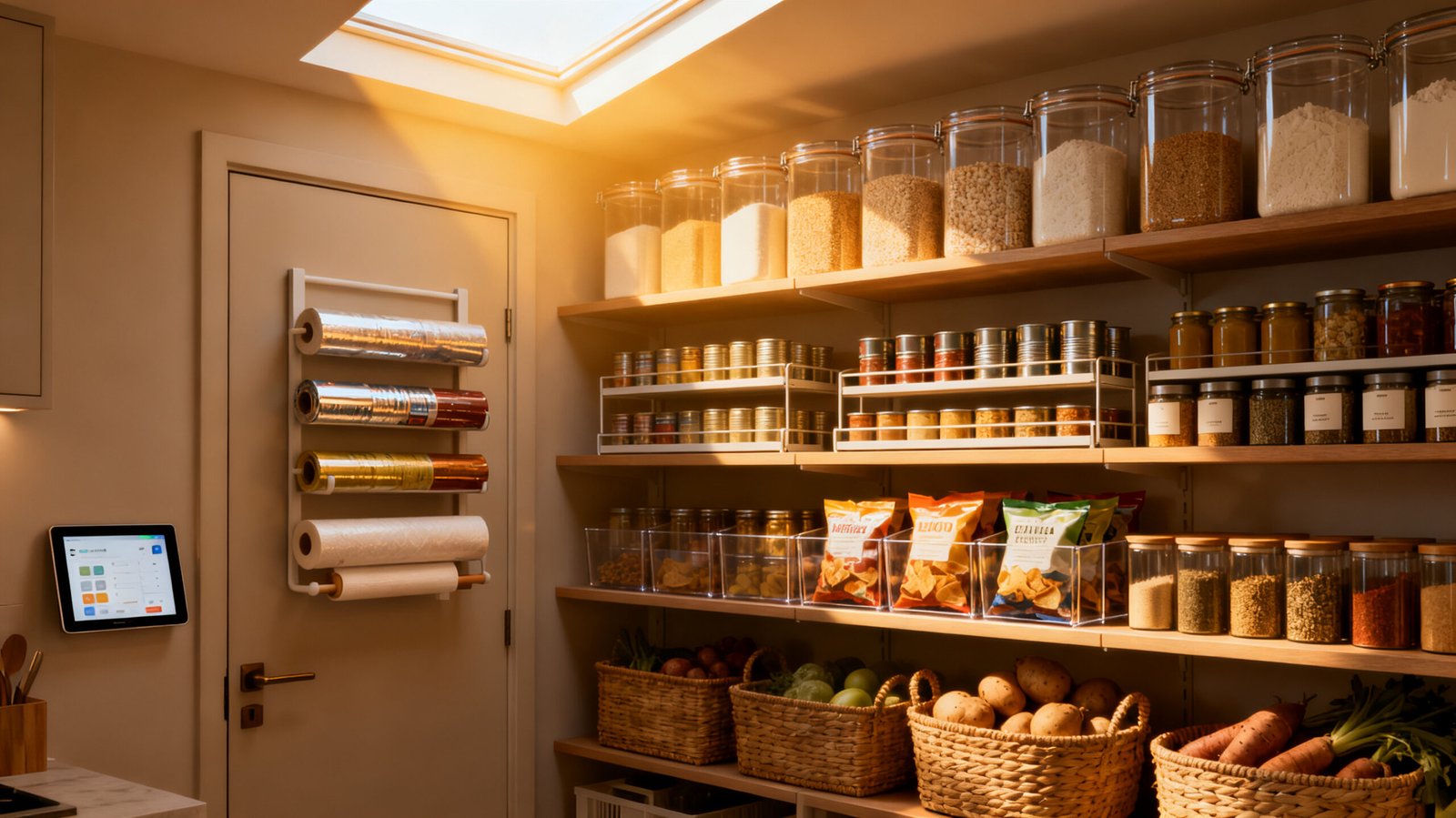
Stock and map: Load items into zones. Label containers. Tape the zone map inside the door. Take an “after” photo.
Maintain: Set a recurring phone reminder for the weekly five minute tidy. Schedule the monthly date audit. Plan a quarterly deep reset.
For additional pantry organization ideas and before and after inspiration, revisit your own photos at the 30, 60, and 90 day marks. Progress photos reveal whether your zones are holding up or need adjustment. A pantry makeover before and after is not a one time event. It is a system that evolves with your household’s eating and shopping habits.
Conclusion
An organized pantry is not about matching bins or Instagram worthy shelves. It is about walking up to your cabinet, seeing everything you have in five seconds, and never again finding a can of beans that expired two years ago. When you organize pantry steps into a measurable, repeatable sequence, starting with a quick triage sweep and ending with a digital inventory and quarterly maintenance routine, you build a system that survives busy weeks and grocery hauls. Use the checklist above, trust your tape measure over product photos, and give yourself permission to adapt zones as your household changes. The best pantry system is the one your family actually uses.
Frequently Asked Questions
How long does it take to organize a pantry from start to finish?
A full pantry makeover takes three to five hours for a standard reach in pantry, spread across two sessions. The declutter and sort phase takes the most time, roughly 60 to 90 minutes. Measuring, shopping, and installing containers takes another 90 minutes to two hours. Stocking and labeling takes 30 to 45 minutes. You can break this into a weekend project with the triage sweep on Friday evening, declutter on Saturday morning, and setup on Sunday afternoon.
What is the most common mistake people make when buying pantry containers?
Buying containers based on product photos instead of measuring their actual shelf depth first. The second mistake is choosing tapered bins for stacking. Tapered sides reduce usable floor space and cause items to lean or tip. Always check interior dimensions, not exterior, and leave half an inch of clearance on each side for your fingers to grab the bin.
Do I need a label maker or are stickers enough?
Stickers work perfectly well and cost less upfront. An eight to twenty dollar sticker set covers a standard pantry. A label maker is worth the investment if you expect to reorganize frequently or want consistent, clean text across bins. If you already own a label maker, use it. If not, start with stickers and upgrade later if needed.
How do I organize a pantry with very deep shelves so nothing gets lost in the back?
For 24 inch deep shelves without pull outs, use tiered risers so back row items are elevated and visible. Group shorter items in front and taller items in back. Label the front edge of each shelf with what lives in the back row. Better yet, install pull out trays sized to 20 to 22 inches deep with rear stops to prevent items from sliding off. If pull outs are not in the budget, clear bins with handles that you can pull out like drawers are a solid alternative.
What is the best way to maintain an organized pantry long term?
Attach maintenance to existing habits. Do a five minute tidy after every grocery run, moving new items behind older ones. Schedule a monthly 15 minute date check. Do a quarterly deep reset where you empty, wipe, and reassess zones. Tape a zone map inside the door so everyone in the household knows where items belong. The map alone prevents most of the slow drift toward disorganization.