

Cast iron vs non stick is the kitchen debate that has shifted from mere cooking preference to a genuine health and value calculation. If you cook three to seven times a week and have seen the headlines about PFAS, you are probably standing in the cookware aisle right now wondering which pan deserves your money and your trust. This guide walks through the evidence, the gaps in that evidence, and the practical realities so you can decide with confidence.
Key Takeaways
- Buy cast iron if you want a lifetime pan that handles high heat and oven use, and you are willing to maintain the seasoning.
- Buy nonstick if eggs and low fat cooking are daily priorities and you want fast cleanup with minimal learning curve.
- Neither category is flawless. The safety data on nonstick is concerning but still evolving, and cast iron requires care that not everyone wants to give.
- Quick verdict: which to buy and when
- Market and safety trend that matters
- Health and safety: what the evidence and headlines actually say
- Cooking performance: eggs, release, and real world tests
- Durability, maintenance and lifetime cost considerations
- Nutrition detail: iron leaching and who benefits or should avoid it
- Safety gaps and tests readers and brands should demand
- Practical buying checklist and product recommendations
- Quick decision flow and maintenance cheat sheet
- Sources, gaps and suggested further reading
- Conclusion
- FAQ
Quick verdict: which to buy and when
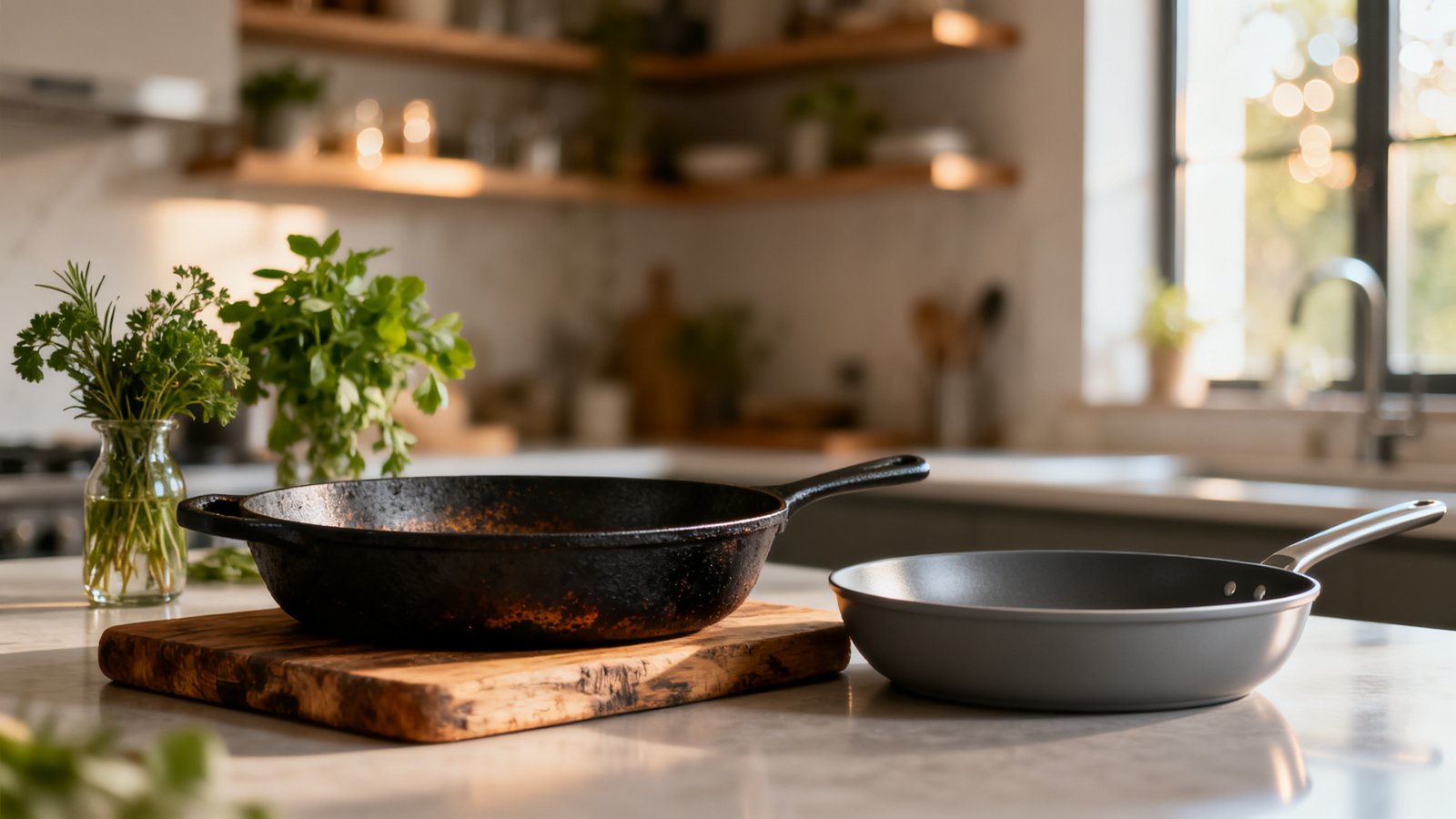
The decision rule is straightforward once you strip away the marketing noise. Choose cast iron if you value lifetime durability, high heat and oven capability, and you do not mind a small maintenance routine. Choose nonstick if low fat egg cooking and effortless cleanup matter more to you than decades of service from a single pan.
If you only want one pan for your kitchen, a 10 or 12 inch pre seasoned cast iron skillet is the most versatile choice. It can sear, bake, fry, and roast. It transitions from stovetop to oven without complaint. The tradeoff is that you will need oil for eggs and you will need to dry it immediately after washing. For many home cooks, that small ritual is worth the payoff of a pan that never needs replacing.
When you are clear on your cast iron vs non stick priorities, the purchase becomes simple. Use cast iron when you are cooking with high heat, finishing in the oven, or want a single pan that handles almost everything. Use nonstick when you are making eggs, delicate fish, or want to cook with little to no oil and clean up in seconds.
The market data supports this split. Cast iron cookware was valued at $5.08 billion in 2023 with a projected 8.9% annual growth rate, while nonstick remains dominant in unit volume at 457 million units sold globally in 2024. Consumers are not abandoning nonstick. They are becoming more selective about which nonstick they buy.
Market and safety trend that matters
The cookware market is telling a story that most product review sites miss. Cast iron is not just a nostalgic comeback. Search interest for “cast iron skillet” peaked at 97 in December 2024, reflecting a surge in consumer curiosity that goes beyond holiday gifting. The global cast iron market sits at $5.08 billion with an 8.9% projected CAGR through 2030, and skillets represent 41.6% of those sales.
Meanwhile, the nonstick market valued at $4.24 billion in 2024 is still massive but shifting internally. Of the 457 million units sold, Teflon coated pans still led with 274 million units. But ceramic coated pans surged to roughly 160 million units as consumers actively sought alternatives to PTFE based coatings. This is the cast iron vs non stick conversation playing out in real purchasing behavior.
What is driving this shift? PFAS concerns are no longer niche. State level disclosure laws are emerging. Consumers are reading labels. The cookware aisle is no longer just about price and performance. It is about long term health.
If you are also thinking about broader kitchen upgrades, our air fryer buying guide covers similar safety and performance tradeoffs for the appliance side of your kitchen.
Health and safety: what the evidence and headlines actually say
The health conversation around cast iron vs non stick centers on two very different questions. For nonstick, the question is whether the coating harms you. For cast iron, the question is whether the pan helps you.
On the nonstick side, the concerns are real but require nuance. A 2025 study estimated up to 6,864 additional cancer cases per year in the United States linked to PFAS exposure from drinking water and cookware combined. The health risks cited in the research include kidney cancer, testicular cancer, liver and kidney toxicity, immune system dysfunction, and hormonal imbalances tied to thyroid disruption.
PTFE itself is not classified as carcinogenic at normal cooking temperatures. The risk emerges when pans overheat, typically above 500°F, at which point the coating can break down and release fumes. Polymer fume fever is a documented short term illness from inhaling these fumes, though it is rare in home kitchens. The International Agency for Research on Cancer has classified PFOA, a chemical formerly used in PTFE production, as “possibly carcinogenic to humans.”
Cast iron presents a contrasting picture. Rather than introducing synthetic chemicals, it may add dietary iron to food. This is a qualitative benefit noted across multiple sources, though no reliable published figure exists for milligrams of iron leached per serving. The effect is real but variable, depending on the acidity of the food, cooking time, and the seasoning condition of the pan.
If you want to explore safer nonstick alternatives in depth, our guide to the best non stick pans 2026 covers ceramic and PTFE free options with updated safety data.
Cooking performance: eggs, release, and real world tests
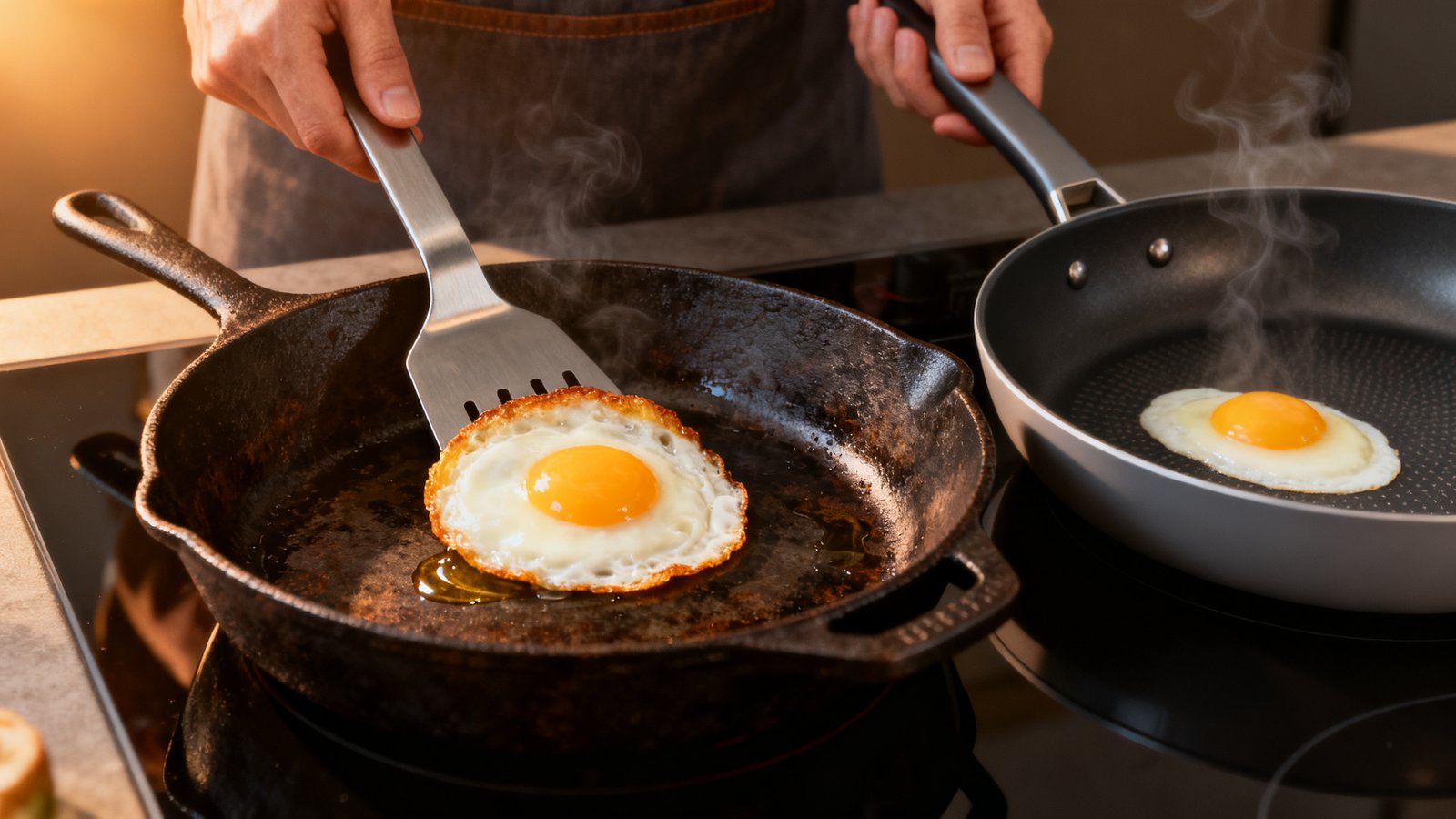
Eggs are the ultimate test for any pan surface, and they expose the core difference between cast iron vs non stick cookware with brutal honesty.
Consumer Reports ran a standardized nonstick test where four eggs were fried consecutively with no oil. On top performing pans like the GreenPan Spectra ThermoBond Hybrid Ceramic Nonstick, every egg slid off using only gravity. No spatula. No oil. No sticking. That is the benchmark nonstick delivers.
Bon Appétit tested cast iron skillets using oil for both sunny side up and scrambled eggs. Their conclusion was that a well seasoned cast iron pan “might get pretty darn close” to nonstick performance, but they did not test without oil. No published lab test exists where eggs were cooked without oil in cast iron and released cleanly.
This is where realistic expectations matter. A well seasoned cast iron pan with a teaspoon of butter or oil will cook eggs beautifully and release them with minimal sticking. But it will not match the zero oil release of a fresh ceramic nonstick surface. If you cook eggs daily and refuse to use oil, nonstick is the pragmatic answer.
The heat limits create another practical divide. Nonstick pans have a ceiling, usually 400°F to 500°F depending on the coating. Cast iron can handle temperatures far beyond what any home burner can produce and moves seamlessly into a 500°F oven. For searing steak, blackening fish, or baking cornbread, cast iron has no competition from coated pans.
When it comes to everyday cooking across multiple food types, many home cooks find that owning one of each is the best small kitchen budget strategy rather than trying to make one pan do everything.
Durability, maintenance and lifetime cost considerations
The durability conversation is where cast iron separates decisively from nonstick. A budget cast iron skillet from Lodge costs between $15 and $25, while a Victoria model runs about $30. These pans are marketed as lasting a lifetime, and in practice they routinely outlive their owners with minimal care beyond seasoning maintenance.
Nonstick pans at similar budget price points, generally $20 to $40, have an expected lifespan of two to three years under regular use. The coating wears down. Scratches appear. Release performance degrades. Even with careful use, the replacement cadence is measured in years, not decades.
No reliable published lifetime cost per year calculation exists comparing a $30 nonstick pan to a $40 cast iron pan. But you can estimate your own easily. Take the purchase price and divide by the number of years you expect to use it. A $25 cast iron skillet used for 30 years costs $0.83 per year. A $30 nonstick pan replaced every three years costs $10 per year, or $300 over those same three decades.
| Factor | Cast Iron | Nonstick |
|---|---|---|
| Upfront cost (budget) | $15 to $35 | $20 to $40 |
| Expected lifespan | Lifetime (30+ years) | 2 to 3 years |
| Maintenance | Season, hand dry, oil after use | Hand wash, no metal tools, replace when scratched |
| Oven safe | Yes, to any temperature | Limited, usually to 400°F |
| Dishwasher safe | No | Some, but shortens lifespan |
Cast iron maintenance is less intimidating than its reputation suggests. After cooking, rinse with hot water, scrub gently with a chainmail scrubber or stiff brush, dry thoroughly on the stove, and rub a thin layer of oil on the cooking surface. The whole process takes under two minutes once it becomes habit.
Nonstick maintenance is simpler day to day but terminal in the long run. Hand wash only, use silicone or wood utensils, avoid cooking sprays that leave residue, and retire the pan when the coating shows visible wear. No amount of care prevents eventual degradation of the coating.
Nutrition detail: iron leaching and who benefits or should avoid it
One of the most frequently cited benefits in the cast iron vs non stick discussion is that cast iron adds dietary iron to your food. This claim is real but imprecise.
Multiple sources confirm that cooking in cast iron can transfer iron into food, particularly when cooking acidic ingredients like tomatoes, vinegar based sauces, or citrus. The effect is qualitative, described as a bonus for people with iron deficiency. But the supplied research contains no specific measurement of iron leaching per serving. No reliable published figure exists for how many milligrams of iron transfer into a typical meal.
This matters because the benefit is not uniform. For menstruating women, pregnant individuals, and those with diagnosed iron deficiency anemia, even a small dietary iron increase may be helpful. For individuals with hemochromatosis or other iron overload conditions, that same leaching effect could be harmful. Without quantified data, the recommendation must be cautious.
If you want to estimate your own iron exposure, cook a tomato based sauce in your cast iron pan for 30 minutes and compare the taste to the same sauce cooked in stainless steel. The metallic note some people detect is dissolved iron. It is not dangerous for most people, but it is real.
For those who prefer to avoid this variable entirely, enameled cast iron provides the thermal benefits of cast iron without any iron transfer. The enamel coating creates an inert cooking surface. It also eliminates the need for seasoning, though it costs more and can chip if dropped.
Safety gaps and tests readers and brands should demand
The cookware industry has invested heavily in marketing claims but surprisingly little in the standardized tests that would help consumers make informed decisions. Here are the gaps that matter.
First, no published lab test exists where eggs were cooked without oil in cast iron and released without sticking. The Consumer Reports methodology for nonstick is rigorous and repeatable. A comparable test for seasoned cast iron would give buyers a real performance benchmark instead of relying on anecdotal forum posts.
Second, there is no specific measurement of iron leaching per serving when cooking acidic foods in cast iron. A simple lab protocol measuring iron content in tomato sauce after 15, 30, and 60 minutes of simmering would fill this gap. Brands that publish such data would earn trust.
Third, no standardized high heat PFAS off gassing test is widely available to consumers. Current warnings rely on general temperature thresholds. A test that measures airborne PFAS at common cooking temperatures (350°F, 400°F, 450°F, 500°F) across multiple brands would let buyers compare risk directly.
Fourth, no chef survey data exists on what percentage of culinary professionals avoid nonstick pans for eggs in 2025. Consumer Reports found that 20 percent of nonstick users cite eggs as a top reason for using nonstick, which measures usage, not avoidance. A survey of professional chefs would reveal whether those who cook for a living are quietly abandoning coated pans.
The cast iron vs ceramic non stick comparison suffers from the same evidence gap. Ceramic coatings are marketed as safer, but long term durability data and standardized release tests are sparse. If you are evaluating ceramic options, look for brands that publish their own test results rather than relying on general category claims.

Practical buying checklist and product recommendations
When you walk into a store or open a browser tab, here is what to look for in each category.
For cast iron, pre seasoned skillets from Lodge or Victoria are the best first pan for most people. They cost under $30, arrive ready to cook, and require only ongoing maintenance rather than initial seasoning. Choose enameled cast iron from brands like Le Creuset or Staub if you cook acidic foods frequently, want zero iron transfer, and are willing to pay $50 to $200 for a single pan.
For PTFE nonstick, check the label for explicit PFOA free and PFAS disclosure language. Some states now require this, but many brands still use vague “toxin free” marketing without specifics. Look for a stated oven safe temperature, ideally 450°F or higher. Avoid any pan that does not disclose its coating material.
For ceramic nonstick, the same labeling scrutiny applies. Ceramic does not automatically mean safe. Some ceramic coatings use a sol gel process that is free of PTFE and PFOA, but the binder chemistry varies by manufacturer. Choose brands that publish their coating composition and offer a warranty of at least one year, which signals confidence in durability.
If you time your purchase right, prime day kitchen deals 2026 and similar sales events often discount both cast iron and premium nonstick pans significantly.
As a practical first pan recommendation for each user type, buy a Lodge 10.25 inch cast iron skillet if you want one pan that lasts decades and handles everything. Buy a ceramic nonstick 10 inch fry pan from a brand with published safety data if eggs are your daily priority and you refuse to use oil. Buy both if your budget allows, because the best small kitchen organization strategy starts with owning fewer, better tools rather than a drawer full of compromised ones.
Quick decision flow and maintenance cheat sheet
Answer these three questions to pick your pan right now.
First, do you cook eggs more than three times a week and refuse to use oil? If yes, get a ceramic nonstick pan. If no, continue.
Second, do you regularly sear meat, finish dishes in the oven, or cook above 400°F? If yes, you need cast iron. If no, a quality nonstick pan will handle most of your cooking.
Third, are you willing to hand wash and dry your pan after every use, no exceptions? If yes, cast iron will reward you with a lifetime of service. If no, nonstick is a better fit, but expect to replace it every few years.
This flow is backed by data. Consumer Reports found that 20 percent of nonstick users cite eggs as their top reason for using nonstick cookware. If eggs are your dealbreaker, the decision is already made.
For cast iron care, memorize these six steps. Rinse with hot water immediately after cooking while the pan is still warm. Scrub with a chainmail scrubber, never soap. Dry on the stove over medium heat for two minutes. Apply a thin layer of high smoke point oil. Wipe off excess until the pan looks dry. Store in a dry place with the lid off.
For nonstick care, follow these six rules. Never preheat an empty pan. Use silicone or wood utensils only. Cook on medium heat or lower. Hand wash with a soft sponge. Never use cooking spray, which leaves a residue that builds up and degrades the coating. Retire the pan when you see visible scratches or flaking.
For further kitchen equipment decisions, our coffee maker buying guide uses a similar evidence first framework.
Sources, gaps and suggested further reading
This article draws on multiple research sources and explicitly notes where evidence is missing. The global cast iron market data and search trend analysis come from ShelfTrend’s 2025 market analysis. The nonstick market volume and ceramic coating shift are sourced from Market Reports World. Health risk data, including the 6,864 estimated additional annual cancer cases linked to PFAS, comes from Everhope’s review of nonstick pan safety. Consumer Reports provided the egg test methodology and the 20 percent user statistic. Bon Appétit supplied the cast iron skillet testing that used oil.
The gaps in the research are significant and worth noting. No direct lifetime cost per year calculation exists comparing a $30 nonstick pan to a $40 cast iron pan. The estimation method provided in the durability section is reproducible but not a published figure. No reliable published data exists for iron leaching in milligrams per serving when cooking acidic foods in cast iron. No published lab test exists where eggs were cooked without oil in cast iron and released cleanly. No chef survey data is available on avoidance of nonstick pans for eggs in 2025.
Suggested next step studies include a lab egg release test for seasoned cast iron without oil, a quantified iron leaching study across common acidic recipes, and long term PFAS migration testing under normal cooking conditions. Until these studies exist, consumer decisions must balance the available evidence with practical experience.
Conclusion
The cast iron vs non stick decision comes down to what you value most. Cast iron offers a lifetime of service, unmatched heat tolerance, and a small dietary iron boost that benefits many people. Nonstick offers effortless egg release, no oil cooking, and a lower maintenance barrier that fits busy mornings.
Neither choice is perfect. Cast iron demands a care routine. Nonstick carries health questions that, while still being studied, are serious enough that many consumers are shifting to ceramic alternatives. The market reflects this tension. Cast iron is growing fast. Nonstick is still dominant but evolving away from PTFE.
If you take one action after reading this, let it be to cook an egg in your current pan with no oil. If it sticks, you know which category you need. If it slides, you are already using the right tool for your priorities.
For more tested kitchen recommendations, see our guide to the best non stick pans 2026 and our air fryer buying guide, both built on the same research first approach.
FAQ
Is cast iron healthier than non stick?
Cast iron avoids synthetic coatings and may add dietary iron to food, which benefits those with iron deficiency. Nonstick pans carry PFAS related health concerns including cancer risk, liver and kidney damage, and hormonal disruption. A 2025 study estimated up to 6,864 additional cancer cases per year in the U.S. linked to PFAS exposure from drinking water and cookware. However, no reliable published data quantifies the iron leaching benefit of cast iron in milligrams per serving.
Can you cook eggs in cast iron without sticking?
With proper seasoning and a small amount of oil or butter, cast iron can deliver excellent egg release. Bon Appétit testing found a well seasoned cast iron “might get pretty darn close” to nonstick performance. But no published lab test exists where eggs were cooked without oil in cast iron and released cleanly. Consumer Reports tested nonstick pans with four consecutive eggs and no oil, and top performers released eggs using only gravity.
How often should I replace my non stick pan?
Most budget nonstick pans need replacement every two to three years under regular use. Visible scratches, flaking coating, or degraded release performance are clear signals to retire the pan. Ceramic nonstick pans may have a slightly shorter lifespan than PTFE pans, though this varies by brand and usage.
Does cast iron really add iron to your food?
Yes, cooking in cast iron can transfer dietary iron into food, especially when cooking acidic ingredients like tomatoes or vinegar based sauces. However, no reliable published figure exists for how many milligrams of iron leach per serving. The effect is real but varies with cooking time, acidity, and pan seasoning condition. People with hemochromatosis or iron overload conditions should consult a doctor before relying on cast iron as their primary cookware.
What is the safest non stick pan material in 2025?
Ceramic nonstick coatings, made through a sol gel process without PTFE or PFOA, are widely considered the safest nonstick option available. The market data shows ceramic coated pans surged to roughly 160 million units sold in 2024 as consumers shifted away from PTFE. However, ceramic coatings vary by manufacturer, so look for brands that publish their coating composition and safety testing rather than relying on category claims alone.