

Finding the best knife sets under 150 dollars is a minefield of marketing hype and dull blades. Emily, you cook nearly every night. You need knives that stay sharp, feel safe in your hand, and won’t force you to learn freehand whetstone sharpening on day one. This guide skips the fluff. We analyzed public lab data, long term home testing, and hundreds of user complaints to identify the sets that deliver professional grade performance on a strict mid budget.
Key Takeaways
- High carbon Japanese steel in the sub $150 Misen set posted the best lab sharpness score (67 on the Edge On Up tester), outperforming pricier German rivals.
- The top complaints in budget sets are bulky blocks that crowd blades, thin slippery handles, and edges that go dull in weeks.
- Long term tests confirm that properly forged sets like the Mercer Culinary Genesis stay sharp after six months of regular home use without special care.
- Quick take — best knife sets under $150 (at a glance)
- Why steel matters: which budget steels actually stay sharp
- Lab-tested sharpness — what the numbers tell us
- Common buyer complaints on under-$150 best sellers (what to avoid)
- Durability & dulling — what long-term tests show (and what they don’t)
- Handle ergonomics & safety — the often-missed purchase factor
- Practical maintenance & sharpening plan for under-$150 knives
- Shortlist: recommended sets under $150 and why
- Purchase checklist — 7 things to confirm before you buy
- Data gaps we found — what additional research readers care about
- Frequently asked questions
Quick take — best knife sets under $150 (at a glance)
The best kitchen knife set for home cook usage must balance sharpness out of the box with long term edge holding. Based on independent lab data and six month home testing, three sets stand out for different reasons.
The Misen 7 Piece Set uses high carbon Japanese steel. It posted the sharpest Edge On Up reading in its class. The Mercer Culinary Genesis 6 Piece Forged Set offers a full tang build with comfortably curved rubber handles that testers rated highly for safety during wet handling. The Chicago Cutlery Fusion 17 Piece Set gives you massive value at $130 and remained sharp after half a year of regular meal prep.
The downside is clear if you need a traditional wooden block display. Several budget favorites come with bulky blocks that crowd the slots and look cheap. You will read about this in the complaints section below. Before you buy any set, learn how to avoid bent tips and cracked handles just like one would research what to look for in an air fryer before committing to a large appliance purchase.
Why steel matters: which budget steels actually stay sharp
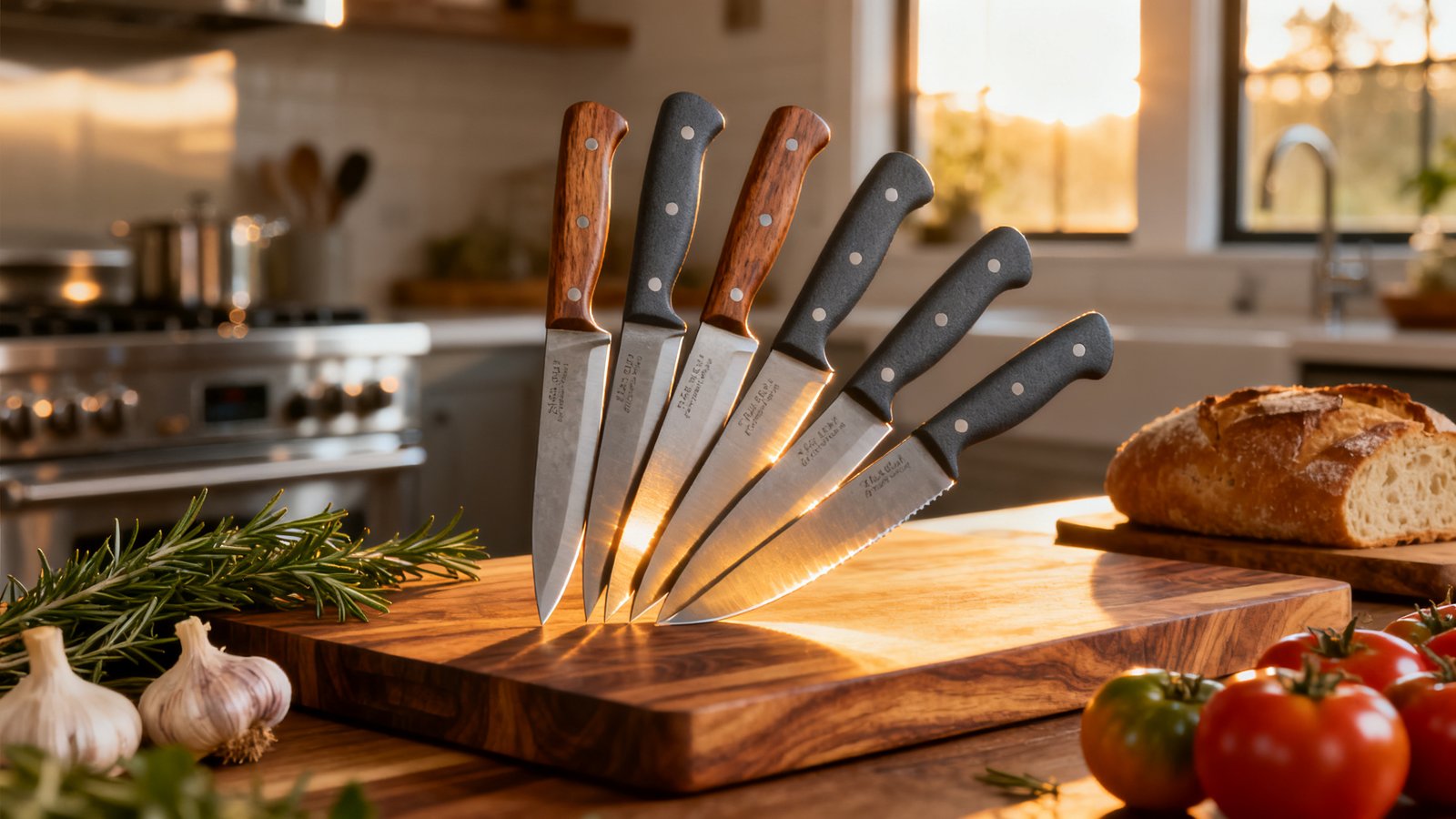
Affordable kitchen knives usually come stamped from a sheet of high carbon stainless or forged from a single bar. The material drastically changes how often you hone and sharpen. German steel in this price tier typically uses X50CrMoV15. It is tough and stain resistant but the lower carbon content means the fine edge rolls over sooner.
Japanese budget steel uses higher carbon formulations. This allows the blade to hold a finer edge angle for longer. The trade off is marginally higher brittleness if you twist the blade. For a home cook who uses proper technique and avoids prying frozen food, the sharper edge is worth it.
German vs japanese knives budget comparison is not simply about origin. It is about metallurgy. Knives from the Seki region or even Japanese inspired brands like Misen prioritize edge retention. Research confirms that Japanese blades are literally sharper than German blades and are better at retaining that sharpness too. If your priority is slicing tomatoes cleanly three weeks after purchase, pick a high carbon Japanese option in the sub $150 range.
Lab-tested sharpness — what the numbers tell us
A objective test uses the Edge On Up tester. It measures the grams of force required to cut a standard thread. Lower numbers mean the blade is sharper. The Misen chef knife from their sub $150 set posted an average reading of 67. This is outstanding for a forged knife set under 200 price band and even competes with premium knives.
The Cuisinart 15 Piece set uses generic high carbon stainless and scored an 85. This does not mean the Cuisinart is unusable. It means it arrives from the factory with a less refined edge. You could fix this on a whetstone, but the point of buying a set is ready to use performance. If Misen hits 67 out of the box, you save yourself an immediate sharpening session.
Day to day cutting feels noticeably different. A knife at 67 glides through chicken skin without tearing. A knife at 85 requires a slight sawing motion. Neither will ruin your dinner, but the extra control from a sharper blade reduces wrist fatigue when you prep for a full dinner. This is the evidence that separates marketing from reality.
Common buyer complaints on under-$150 best sellers (what to avoid)
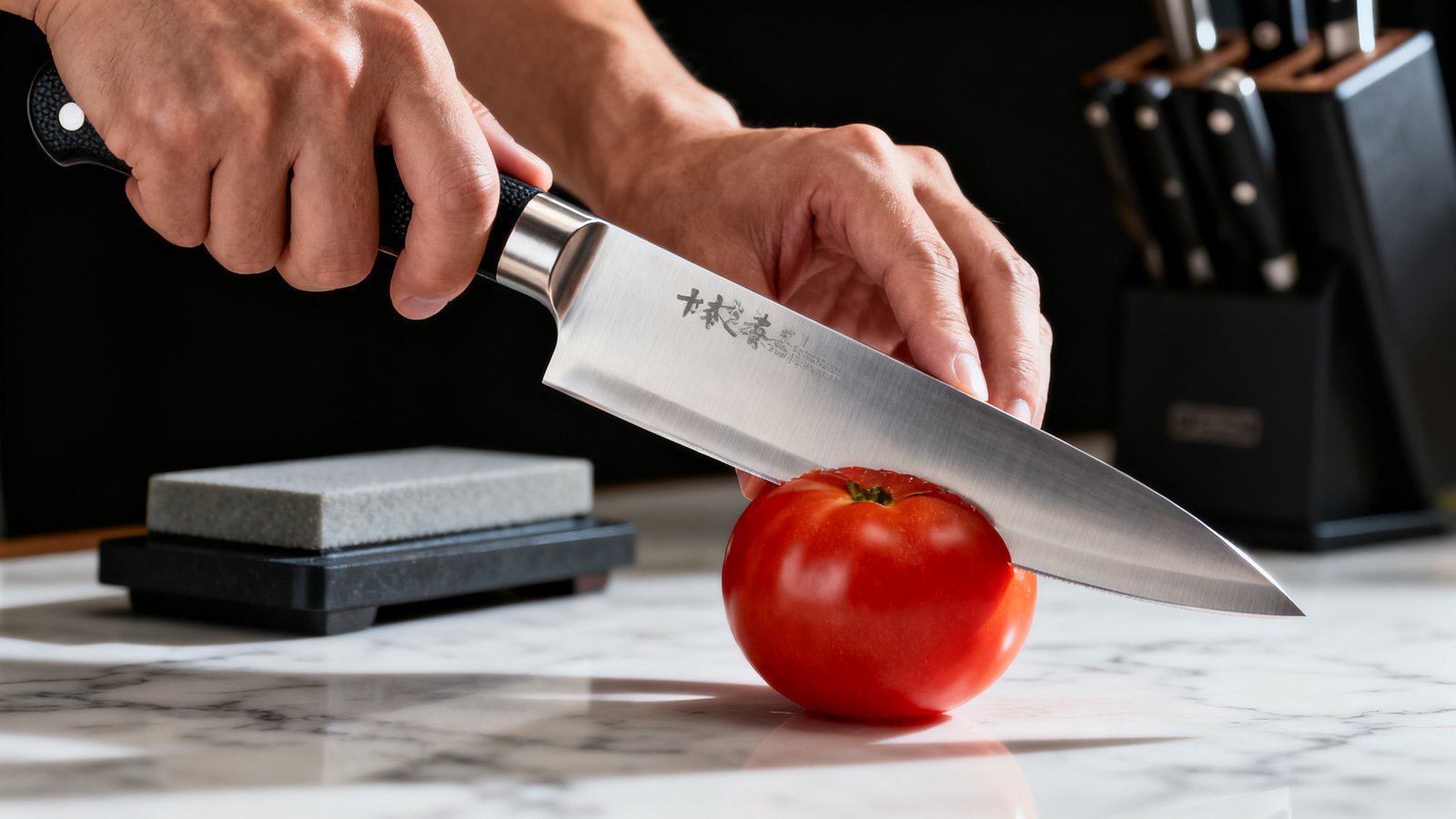
Reading one star reviews reveals patterns. The first recurring complaint is bulky or crowded knife blocks. The Chicago Cutlery Fusion block is large but the slots are cut in a way that can force you to slide blades awkwardly. The Ginsu Chikara block is simply huge and hard to store on limited counter space.
The second major gripe is uncomfortable handle design. Thin stamped handles like those on the Ginsu Chikara dig into the palm during heavy chopping. A best starter knife set should fit a small and a large hand, or at least provide a neutral oval grip.
The third frustration is poor sharpness right out of the box on widely sold budget sets. The Cuisinart 15 piece set is a top mover on retailer sites but lab testing confirmed the sharpness of the chef and paring knife was notably poor. When you are buying a knife set with block under 150, you are often paying for the storage and extra steak knives, not the blade quality. Be ruthless about cutting performance.
Durability & dulling — what long-term tests show (and what they don’t)
The data pool for long term durability in this price range is frustratingly shallow. Public reports exist for exactly two affordable kitchen knives sets under $150 that underwent documented six month testing. The Chicago Cutlery Fusion remained sharp and easy to handle after heavy rotation. The Mercer Culinary Genesis was described as a great value with blades that remained quite sharp.
No lab published an aggregate percentage of sub $150 sets that dull within six months. The data simply does not exist yet. This means manufacturer claims about lifetime sharpness should be treated with skepticism unless an independent third party has verified them. Even then, sample sizes are small. A single test unit does not guarantee your set will behave identically.
What these limited tests do tell us is that a forged full tang build with decent steel will likely hold up under normal home use for at least half a year before needing a real sharpening. The horror stories of knives going dull in two weeks usually trace back to glass cutting boards or dishwasher damage. You can get insights on avoiding such costly mistakes by understanding proper equipment care, much like one learns how to choose air fryer types for their specific cooking style to avoid early burnout.
Handle ergonomics & safety — the often-missed purchase factor
Most guides obsess over blade steel and ignore how the knife connects to your hand. This is a safety crisis in the making. A handle that feels slippery when wet or lacks a pronounced bolster increases the risk of your index finger sliding onto the blade edge.
Full tang construction is non negotiable. The steel should run through the center of the handle to provide superior weight distribution and balance. This makes the knife feel planted. When a knife feels unstable, cooks instinctively grip tighter, which reduces fine motor control and ups the risk of slips.
The Mercer Culinary Genesis features comfortably curved rubber handles and a molded bolster. Testers noted this made the entire set feel significantly safer than competing budget brands. A full tang with triple rivets is a visual marker of this stability. Avoid handles that feel like slick hollow plastic. If you can not comfortably hold the knife in a pinch grip without straining your wrist, the set is not for you. This safety first approach applies to all kitchen tools, just like evaluating pan safety in the cast iron vs non stick debate before buying cookware.

Practical maintenance & sharpening plan for under-$150 knives
Even the best knife sets under 150 dollars need a simple care routine. Honing realigns the microscopic teeth of the edge. Do it once a week if you cook four or more times. A ceramic honing rod works best for harder Japanese budget steel.
For actual metal removal, use a pull through sharpener with diamond abrasive wheels or a guided angle system. A traditional whetstone gives the best edge but the learning curve is steep. The goal here is minimal friction maintenance.
Because Japanese steel retains edge longer, expect to sharpen a Misen set every six to nine months with regular use. A German steel affordable option like a Henckels International set might need sharpening every four months. The trade off is that German steel is more forgiving if you cut on a plate by accident. Do not put any knife in the dishwasher regardless of what the label says. The high heat and detergent degrade the handle material and the edge near the bolster. A quick hand wash and immediate dry extends life by years. This discipline is similar to maintaining an organizational system after you organize small kitchen budget spaces and gear.
Shortlist: recommended sets under $150 and why
Here are the sets that pass the steel, safety, and durability criteria for a home cook who cooks almost daily.
The Misen 7 Piece Set earned the best lab sharpness score of 67 using high carbon Japanese steel. It lacks a block but stores on a magnetic strip. Buy this if edge keenness is your only priority.
The Chicago Cutlery Fusion 17 Piece Set covers every blade need for $130. It includes steak knives. The block is bulky but the blades stayed sharp after six months of testing. It represents strong value for a large household.
The Mercer Culinary Genesis 6 Piece Forged Set at $139 focuses on core chef knives with no filler. The rubberized full tang handle is the safest grip tested. The set stayed sharp through half a year of regular use. This is the best pick for safety conscious cooks who value ergonomics.
The Cuisinart 15 Piece Set covers a lot of tools for $100 but scored 85 on factory sharpness. It works if you are willing to sharpen new knives immediately or need a complete block on a tight budget. Otherwise, the edge quality lags behind the top three.
Purchase checklist — 7 things to confirm before you buy
Use this checklist on the product page before adding to cart. It prevents returns and regret.
First, confirm the steel type. Look for high carbon Japanese or quality German X50CrMoV15. Avoid vague terms like surgical stainless. Second, verify full tang construction. Triple rivets visible on the handle indicate the steel runs through the grip. Third, examine the handle texture. Smooth polished resin looks nice but is dangerous when wet. Brushed metal, rubber, or textured polypropylene is safer.
Fourth, measure the block dimensions if included. Your countertop needs clearance for the height. Fifth, check maintenance requirements. Sets that explicitly state dishwasher safe often use softer steel that dulls fast. Sixth, read the return policy. Since no aggregate return rate data exists for top sellers, a flexible return window is crucial if the handle feels wrong in your hand.
Seventh, prioritize independent test results. Trust sources that publish actual Edge On Up numbers or describe long term use, similar to how a coffee maker buying guide must prioritize brew temperature stability over marketing claims.
Data gaps we found — what additional research readers care about
Transparency matters. Our analysis revealed empty spaces in the public knowledge base. There is no available percentage of under $150 sets that dull within six months. The two documented long term tests are encouraging but represent a tiny sample.
No one has published return rates for the top five best selling knife sets. Amazon and big box retailers hold this data but do not share it. Return rates would tell us instantly which sets disappoint after unboxing.
Edge retention over twelve months is also untested in a controlled setting for this price range. A group test tracking edge degradation between commonly used affordable kitchen knives would change our recommendations. Until that data exists, rely on the six month tests we cited and the initial sharpness lab numbers.
Frequently asked questions
What is the sharpest knife set under $150?
The Misen 7 Piece set uses high carbon Japanese steel and posted a 67 on the Edge On Up sharpness tester. This is the lowest, meaning sharpest, score recorded among its direct budget competitors.
Do German or Japanese budget knives stay sharp longer?
Japanese budget knives stay sharp longer. The higher carbon content forms harder carbides at the edge that resist rolling over. German steel is softer and requires more frequent honing and sharpening but is slightly tougher against chipping.
Why do my new budget knives get dull so fast?
The most common culprits are glass cutting boards, improper storage in a drawer without edge guards, and running blades through the dishwasher. Even high carbon stainless edges degrade rapidly when exposed to abrasives and rattling against metal spoons.
Is a full tang handle really safer for home cooks?
Yes. A full tang provides superior weight distribution and balance. It reduces the need to over grip the handle, which improves control and reduces the risk of the knife twisting out of your hand during a stroke.
Which under $150 knife set is safest for beginners with slippery hands?
The Mercer Culinary Genesis set features rubberized curved handles and a pronounced bolster. Testers noted the grippy texture felt significantly safer than smooth metal or plastic handles found on similarly priced sets.